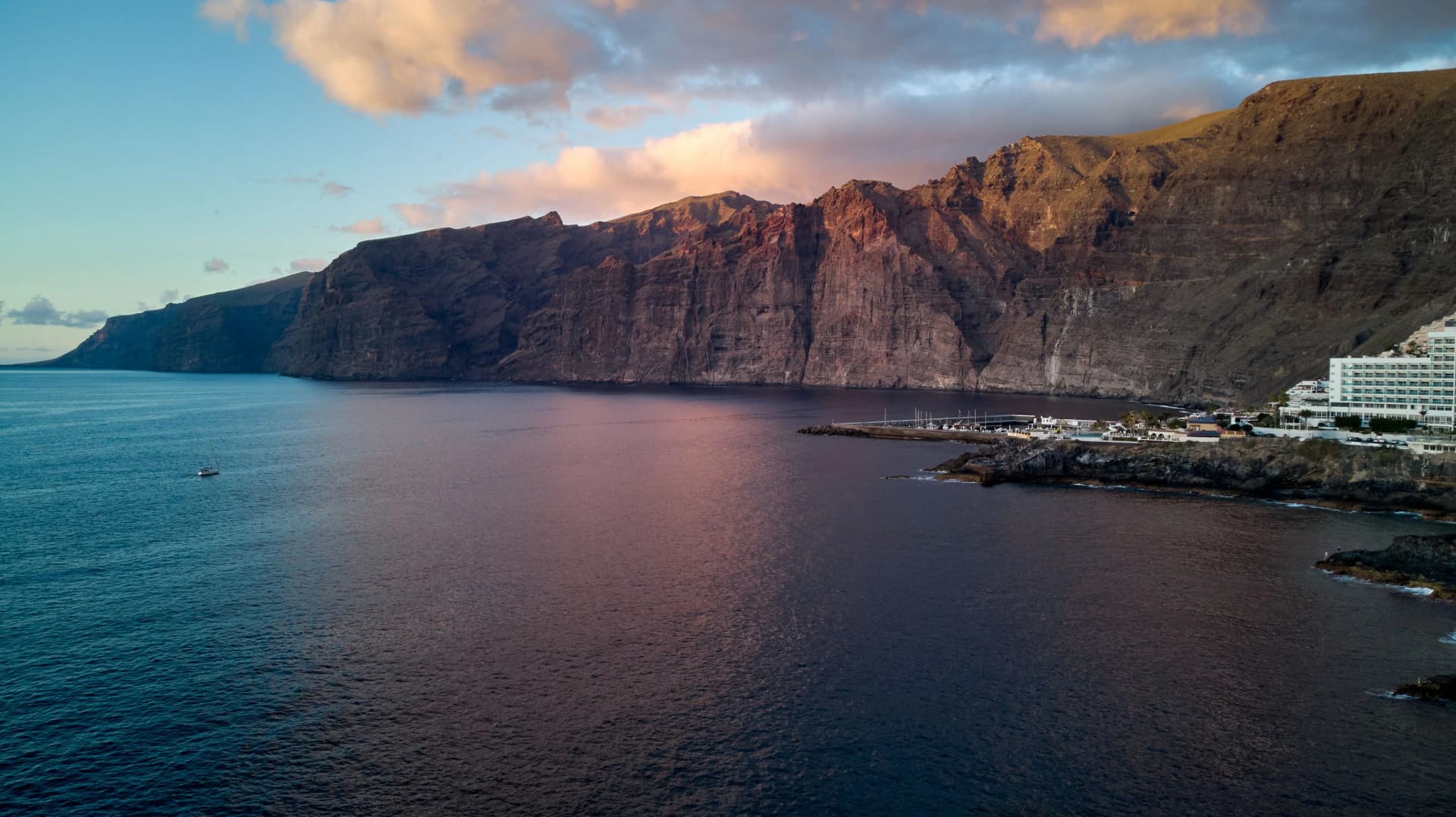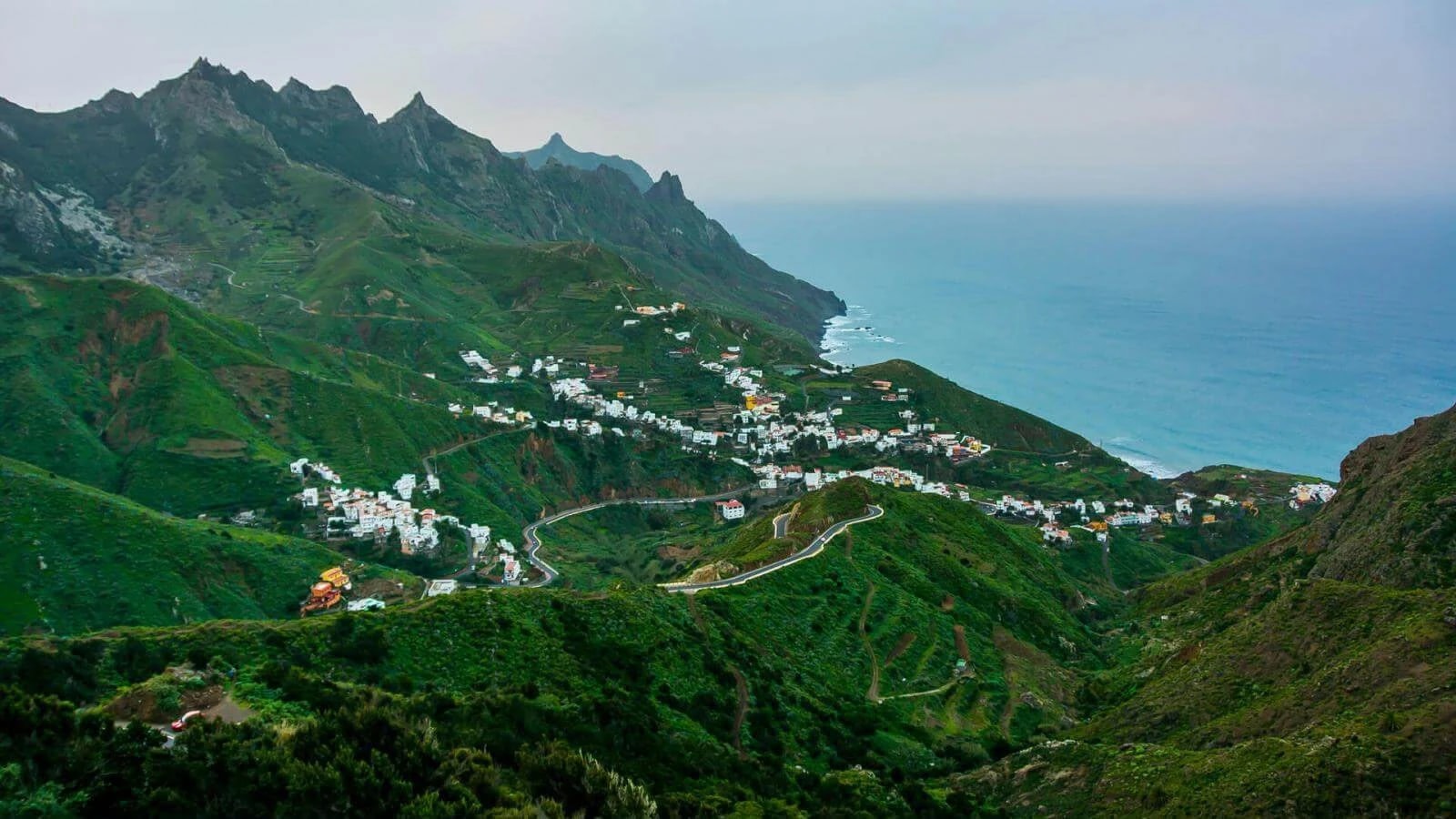
Taganana is the heart of Anaga: a handful of houses clinging to the slopes of Tenerife's oldest massif, inside a UNESCO biosphere reserve of laurel forest. It is the exact opposite of the touristy south — no seafront, no resorts, just hairpin bends, low cloud and an ocean that shows a much wilder side here.
The quick answer: what to do in Taganana in a day
- The hike: Las Vueltas de Taganana, the official route (4.5 km, about 2h30), or its longer circular variants through the laurel forest.
- The black beaches: Playa de Almáciga (volcanic sand, surf schools) and Playa de Benijo (dramatic cliffs, sunsets — check access status before you go).
- The village itself: a handful of streets, limited parking, a pace the south of the island no longer has.
- Getting there: TITSA bus route 946 from Santa Cruz, or by car along the TF-12 and TF-134 (a narrow, steep road).
The hike: Las Vueltas de Taganana
The best-known official trail in the area is Las Vueltas de Taganana: about 4.5 km, 2h30 of walking, moderate difficulty. It's not a loop but a one-way route, from the Casa Forestal down to the village of Taganana, through the laurel forest — one of the last of its kind in the world. It's currently going through official homologation by the Anaga Biosphere Reserve.
Online you'll also find longer routes that include this stretch combined with other trails (towards La Cumbrilla or Inchirés, for instance): those run 8-11 km and several hours, with considerably more elevation gain. They're real, very scenic variants, but they're not the same as the official "Las Vueltas" route — worth knowing before you set out expecting the same distance.
Anyone after something tougher can consider the Afur-Taganana route: 14.3 km, about 7 hours, 1,546 metres of elevation gain, moderate difficulty — still reserved for already-trained hikers, not a first mountain outing.
Practical tips: start early (Anaga's weather changes fast and cloud rolls in during the afternoon), wear proper hiking boots — not city trainers — and carry at least a litre and a half of water per person as a baseline: on the longer variants or in hot months, bring more. Phone signal is patchy or absent for much of the route.
Anaga isn't just one trail: the Biosphere Reserve marks out dozens of routes (PR-TF) linking Taganana, Almáciga, Benijo, El Draguillo and other hamlets. This guide covers the combination most common for a day trip from the south — not the whole network.
The black beaches: Almáciga and Benijo
Playa de Almáciga is the more accessible of the two: dark volcanic sand, popular with local surf schools, with a sharp contrast between the black beach and the turquoise Atlantic. It's the right spot for a long stop or a surf lesson.
Playa de Benijo is the most photographed beach on the island: sheer cliffs, sea stacks (the Roques de Anaga) and sunsets that explain on their own why so many travellers fall for the north of Tenerife. It's also a beach subject to temporary closures for rockfall — always check the current access status before heading down to the shore rather than assuming it's open.
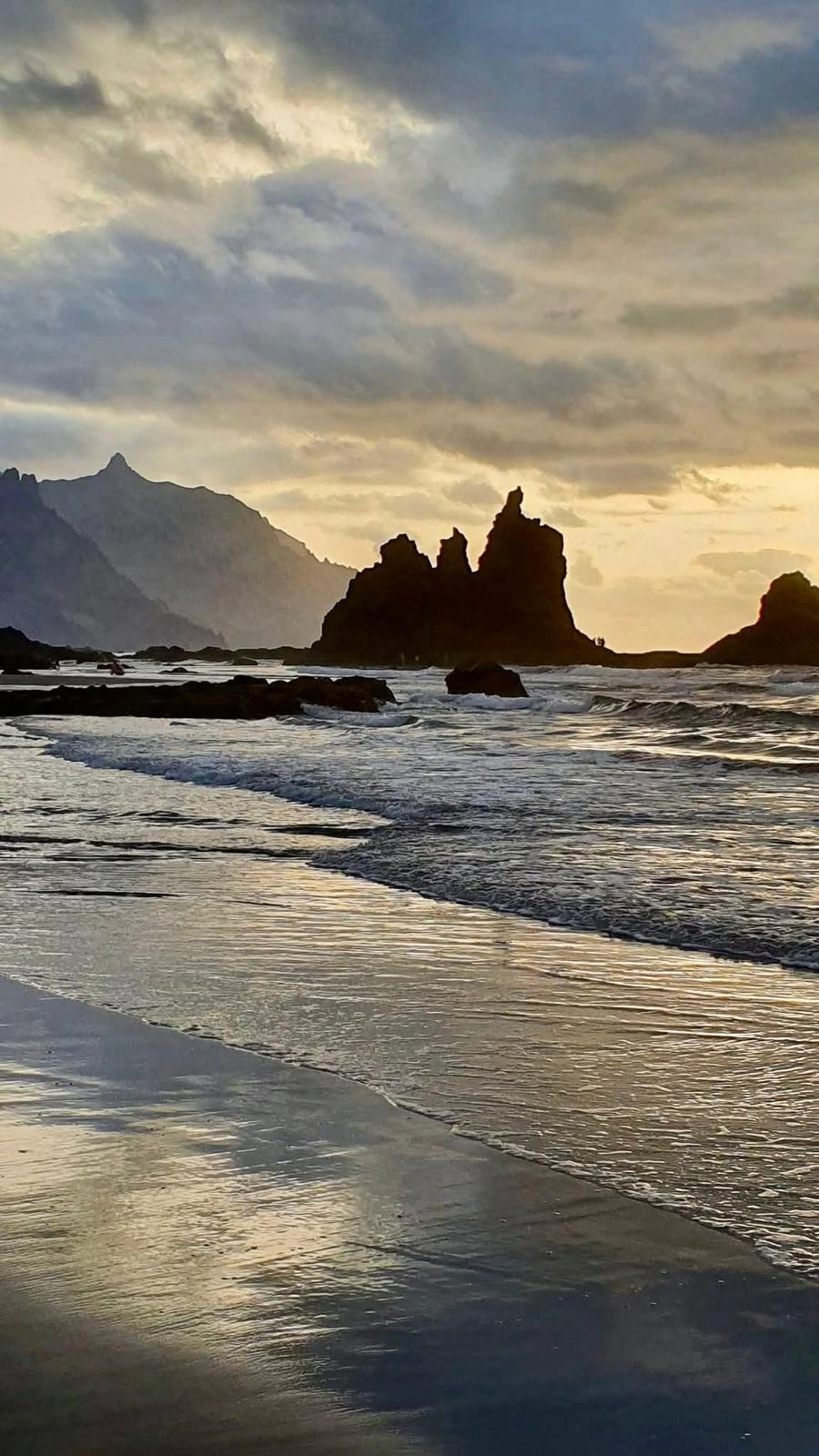
Neither is built for a relaxed swim: the Atlantic swell here is strong and the currents are unforgiving. They're worth visiting for the scenery, the photography and — at Almáciga — surfing with an instructor, not for swimming the way you would in the south. If a relaxed swim is the priority, the guide to quiet beaches in southern Tenerife remains the sensible choice.
Getting to Taganana
By car: follow the TF-12 from Santa Cruz or San Cristóbal de La Laguna to the Mirador de Bailadero, then the TF-134 into the village — about 25-30 minutes from Santa Cruz, but with sections at up to 16% gradient and the tight bends typical of the massif. It's not a road for a first go at mountain driving on the island. Parking is limited, especially at the busiest spots and peak hours: both Benijo and Almáciga have official but small car parks (under 50 spaces each), which fill up fast on clear weekends and in high season. In the village of Taganana itself, space is even tighter.
By bus: the TITSA 946 line connects Santa Cruz to Taganana through Anaga in about an hour, with departures from early morning, and continues on to Almáciga too. It's the simplest option for anyone who'd rather not tackle the mountain road, and fits naturally with a car-free trip to Tenerife — see also the guide to where to stay in Tenerife without a car.
How much time to allow: a day trip from the south
From a base in the south (Costa Adeje, Los Cristianos, Playa de las Américas), Anaga is a full-day trip, not a stop to squeeze between the beach and dinner. Allow at least 1.5-2 hours each way if you're driving, plus time for the hike and the beaches: it's best to start early and not pair it with another long excursion like the Teide on the same day.
For a wider picture of how to organise your days from the south, including which excursions are worth the drive, the guide to what to do in southern Tenerife as a couple places Anaga among the day trips "worth the drive," to alternate with slower days.
When to go
Northern Tenerife is cloudier and more humid than the south year-round, because the trade winds unload right over the Anaga massif — the price of an evergreen laurel forest. Clear mornings are the most common, one more reason to start early. Avoid days with wind or rain warnings: on narrow trails and clifftop edges, conditions matter more here than anywhere else on the island.
What to bring
- Hiking boots with real grip, not beach sandals or smooth-soled trainers.
- A light windbreaker: weather shifts fast with altitude and humidity.
- At least 1.5 litres of water per person, plus a snack — there are no refreshment points along the trail.
- Cash for the bus and the handful of local businesses: signal for digital payments isn't reliable.
If you're not used to driving mountain roads, public transport or an organised excursion can be simpler alternatives to a car.
TPCard brings the island's verified partners together in one place on your phone, useful for getting your bearings among the experiences available when planning your days in Tenerife.