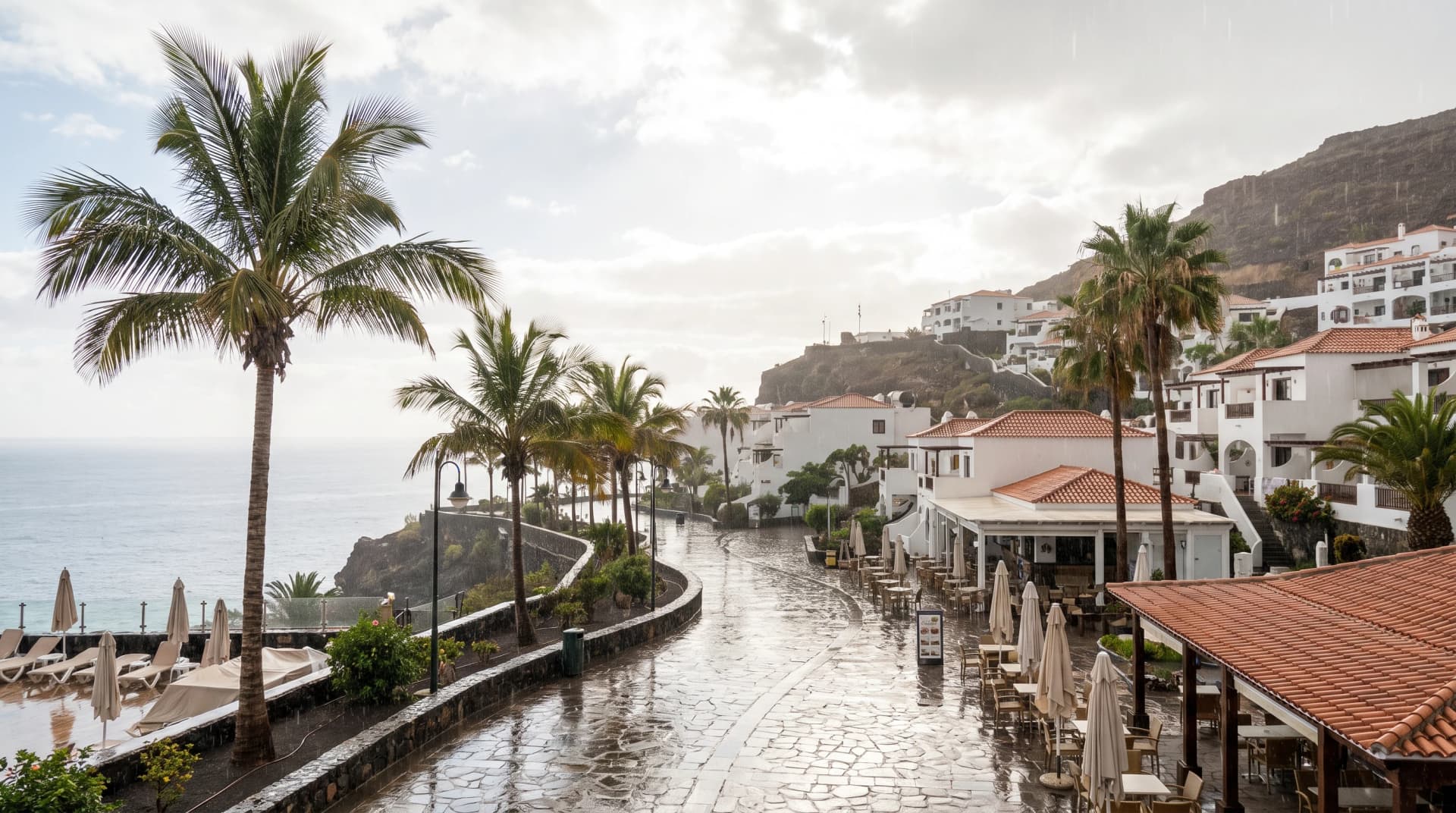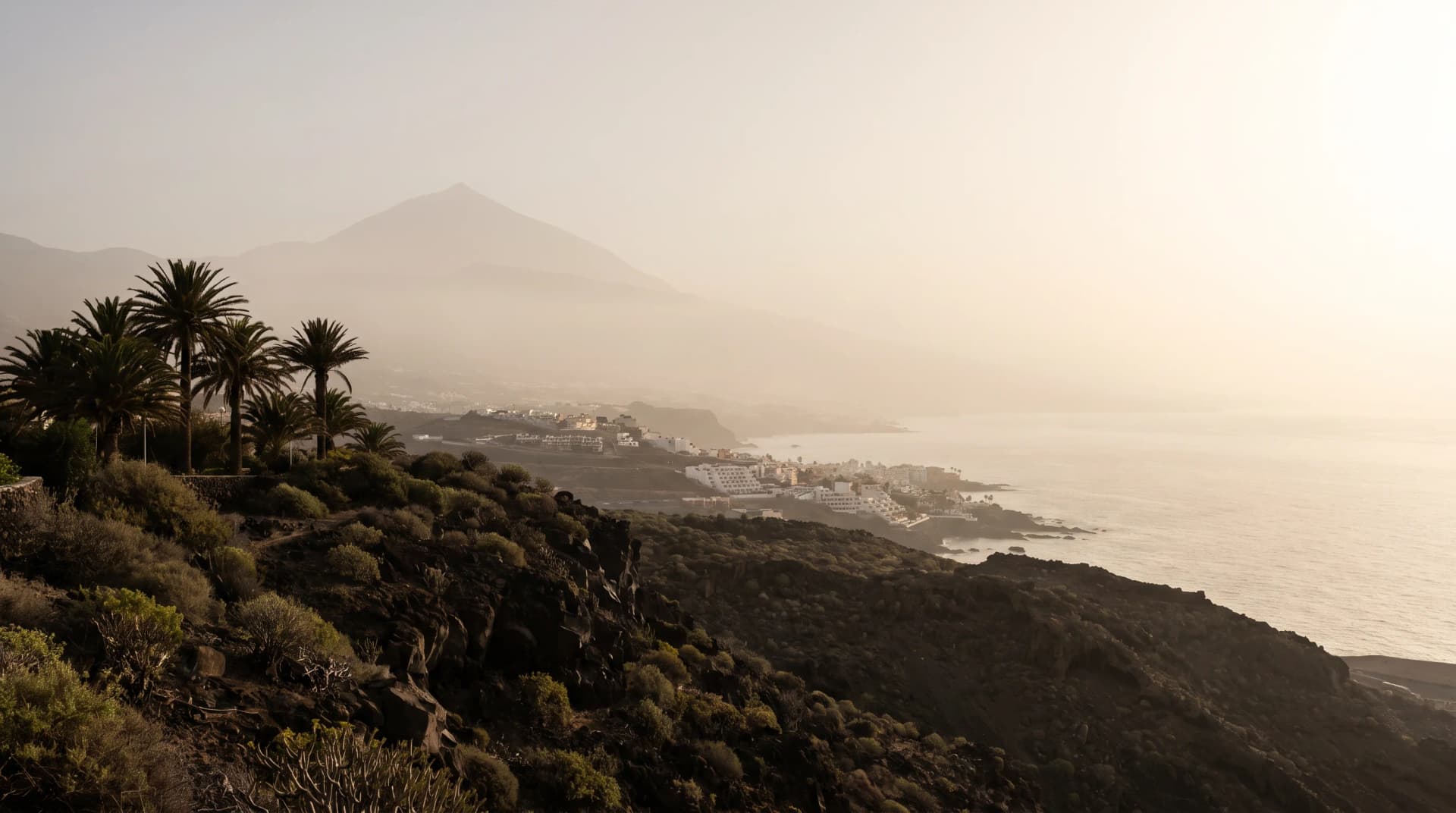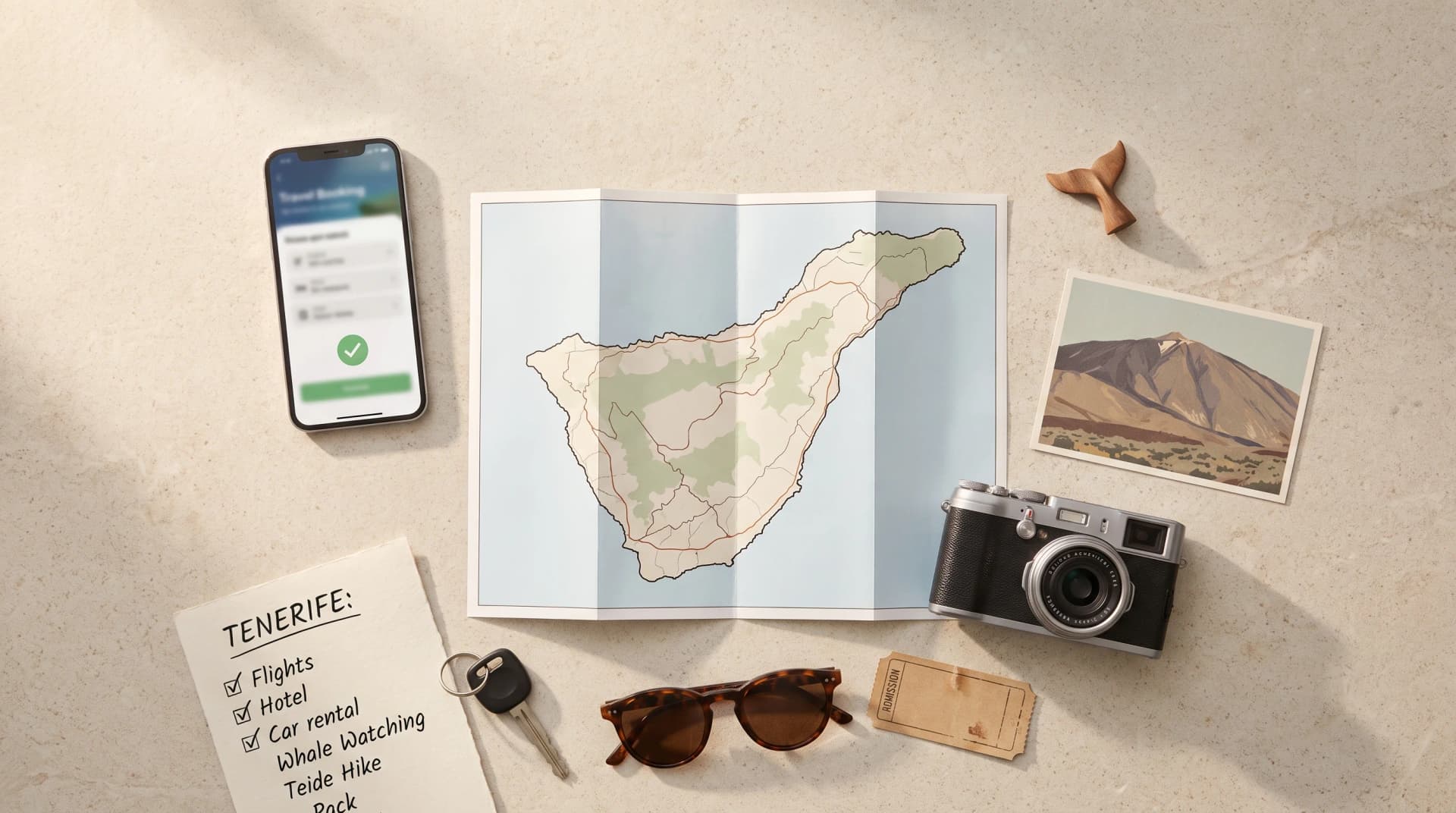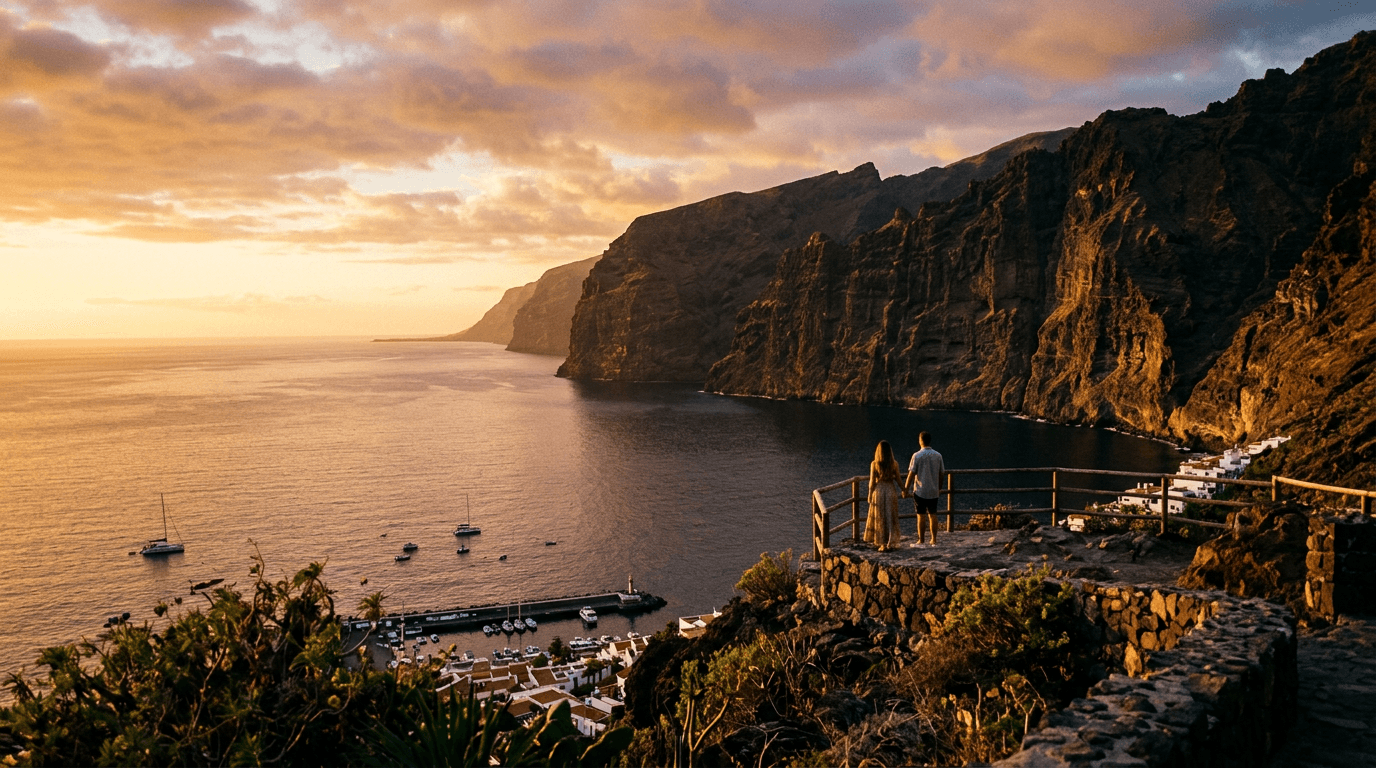
Southern Tenerife is the island's sunny strip: Costa Adeje, Los Cristianos and the quieter coves around La Caleta. For couples who prefer comfort, good food and scenery over nightlife, it works as a base for slow beach days and organised excursions inland or along the coast.
What is southern Tenerife?
Southern Tenerife is the warm, dry resort coast running from Los Cristianos and Playa de las Américas to Costa Adeje and El Médano. It has the island's most reliable winter sun, most of the large hotels and the main harbours for whale-watching boats. Anaga's laurel forest, La Laguna's old town and the natural pools of Garachico are an hour or more by car, but they are doable as day trips from here.
Where to stay calm: beaches without the crowds
Playa del Duque (Costa Adeje) suits anyone who wants wide sand, clear water and a promenade you can walk without much noise. Loungers and shade are easy to find; in the evening the area leans towards restaurants rather than bars.
La Caleta is a small fishing village between Adeje and Playa San Juan. A harbour, low houses and seafood restaurants make it a natural spot for a long lunch and a quick swim. It feels more local than the main resort strips.
El Médano, at the south-eastern tip, draws surfers and kiters, but also has a relaxed square and a long natural beach. Useful if one of you prefers walking along the shore while the other watches the sails.
For a slower pace away from the busier strips, see the guide to quiet beaches in southern Tenerife.
Avoid planning every day around the busiest stretches of Las Américas if conversation and unhurried meals are the goal — ten minutes away, the same coast is often much quieter.
Choosing your base: Los Cristianos or Costa Adeje
Los Cristianos sits next to the ferry port, with a compact centre and the main whale-watching jetties. Streets are walkable; climbs to hotels higher up can feel heavy after a long flight. It suits anyone who enjoys car-free evening walks and books boat trips often.
Costa Adeje spreads along cliffs and coves — Playa del Duque, Fañabé, La Caleta. Hotels and villas dominate; a car or taxi helps more than in Los Cristianos. It suits anyone after resort calm, golf or spa time, who prefers modern promenades to a traditional town grid.
Both are well connected to the TF-1 for the Teide and day trips. Splitting the week between them is possible but rarely worth the packing; better to pick one base and taxi to the other coast for dinner.
Where to eat well: dining for couples
The south has plenty of tourist menus; the useful skill is knowing where to sit.
- La Caleta harbour — grilled fish, papas arrugadas, tables by the sea. Book for sunset if the view matters.
- Adeje town (inland from the coast) — Canarian restaurants used by residents, not just people passing on the beach road.
- Abama and Costa Adeje Golf area — hotel restaurants and upscale terraces; for a special night with formal service without heading north.
Ask for the catch of the day, share a board of local cheese or mojo, and treat the wine as part of the meal — Tenerife's labels (Listán, Negramoll) are underrated off the island.
The Teide and the high mountain (from the south)
The Teide reaches 3,715 metres — Spain's highest peak — inside the Teide National Park, a UNESCO World Heritage site since 2007. Since 2026 the park is managed and conserved by the Cabildo de Tenerife, while the Canary Islands government keeps normative and planning powers. From the south, many couples join a guided coach or rent a car for the lunar landscapes around Roques de García and the cable car (weather permitting). Altitude affects everyone: warm layers, water and a slow pace matter more after 50.
To head up to altitude during the trip, see the guide on how to climb Teide.
Sunset tours and stargazing from the south are popular in winter, when the sky is often clear. Book ahead in peak weeks; dress for near-freezing temperatures at the viewpoint even if it was warm on the coast at lunchtime.
Vilaflor, the island's highest village, sits on the road up from the south — a pine-scented coffee stop before the caldera.
Whale and dolphin watching (Los Cristianos / Puerto Colón)
Boats leave daily from Los Cristianos and Puerto Colón (Costa Adeje). Resident pilot whales and dolphins are seen on most trips; responsible operators keep their distance and limit engine noise. Morning departures tend to have calmer seas. Bring seasickness tablets if either of you is prone to it — the Atlantic is not a lake.
Allow three hours door to door including boarding; avoid stacking a long car journey the same afternoon.
Day trips worth the drive
| Day trip | Why couples like it | Practical note |
| Garachico | Cobbled streets, natural pools (when calm), a quiet lunch | North-west; ~50–60 min from Adeje |
| La Orotava | Balconies, gardens, walks through the old town | Pair with lunch on the north coast, not the Teide the same day |
| Anaga (Taganana / Benijo) | Dramatic cliffs, laurel forest | Winding roads; skip if heights are an issue |
| San Miguel de Abona | Small town, nearby wineries | A short inland detour from the south |
The Tenerife Tourism website carries official information on areas, events and transport across the island — useful when comparing bases on the south coast and day-trip options.
One "big" excursion every two or three days keeps the trip restful. The advantage of the south is coming back to the same hotel room without repacking.
A slow five-day rhythm
1. Arrival — dinner in La Caleta, a short walk around the harbour. 2. Beach — Playa del Duque or El Médano; a simple lunch on the seafront. 3. Teide — a full-day excursion or cable car plus viewpoints; an early evening. 4. Whales — a morning boat trip; pool or spa in the afternoon. 5. Garachico or La Orotava — culture and lunch; an evening back in the south.
Leave empty slots for weather and jet lag. From December to March, visitors from the UK and northern Europe arrive chasing warmth; from April to June and September to November, crowds are gentler.
Getting around without stress
Taxis from Adeje or Los Cristianos to La Caleta, El Duque or the airport run on fixed or metered fares and are reliable. Titsa buses cover the south adequately for anyone with patience; timetables are easier to follow on Google Maps than at isolated stops. With a rental car, use the TF-1 for distance and local roads only when the map shows a clear coastal or village target — Anaga and Masca punish anyone driving in a hurry.
Parking at the Teide viewpoints fills up on clear weekends; arrive before mid-morning or join a tour that handles the logistics.
What to skip or approach with caution
- Nightlife strips if you want to sleep and talk.
- The Masca gorge trails without decent fitness for steep descents and the tight schedules of shared tours.
- Two long drives in a row — the Teide plus Anaga on the same day wears out most couples.
To plan the trip budget ahead of time, the guide to how much a week in Tenerife costs gives a full picture of the costs, category by category.