Underwater, Tenerife is another island: volcanic seabeds of arches, caves and lava flows, clear, mild water all year, and a real chance to swim alongside turtles. It's a very accessible destination, suitable both for first-timers on a try-dive and for experienced divers — and you can do it in any season. Here's where to dive, what you see and how to start, even without a licence.
Why dive in Tenerife
Three things make it special. The climate: the water is mild all year — cooler in winter, warmer in summer (roughly 18 to 24°C, highest from April to October) — so you dive in any season. The visibility: it can be very good, exceptional, generally up to 30 metres, but it varies with the site and sea conditions. And the seabeds: volcanic, with walls, sea mounts and lava formations that create unique underwater landscapes, unlike any tropical sea. If you love the ocean, it's the other side of the island beyond the best beaches.
What you see underwater
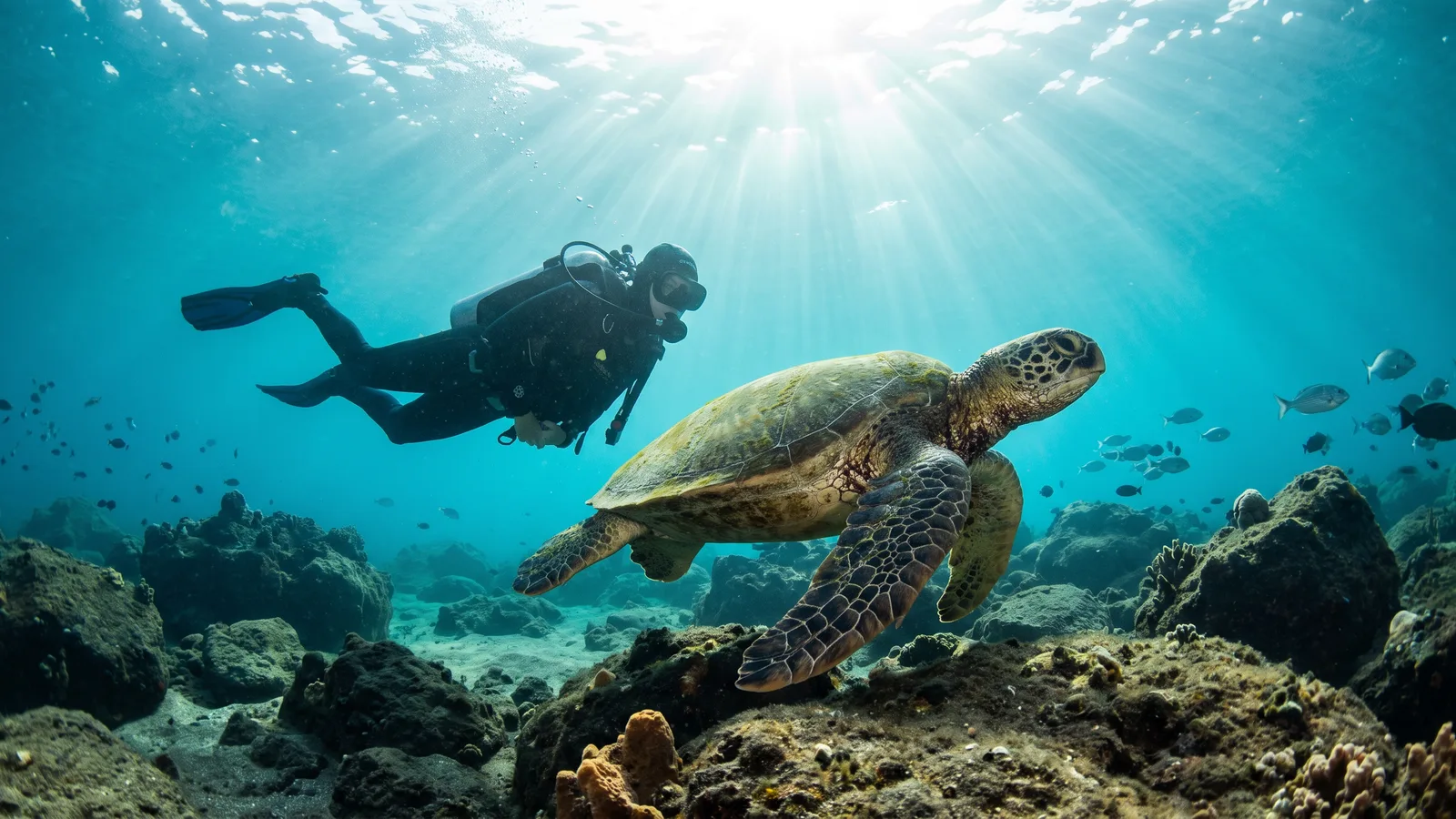
The marine life is why many keep coming back. The stars are the green turtles, seen at several spots (in some bays fairly consistently). But they're not alone: rays and butterfly rays gliding over the sand, moray eels, barracuda, octopus and cuttlefish, schooling fish. And above all the angelshark, an endangered shark species for which the Canaries are one of the still-important areas: meeting one thrills any diver. For the island's other great marine experience, there's whale watching.
The best sites, area by area
Many centres and sites are in the south, where several bays offer favourable conditions, but the choice of spot always depends on the day's sea; there are sites all over the island:
- El Puertito (Costa Adeje): a sheltered bay with a sandy bottom and shallow reefs, handy for beginners and try-dives — and one of the best-known spots for turtles.
- Las Galletas: one of the south's main dive hubs, with several sites (including Los Chuchos) where you see rays, morays and sometimes the angelshark.
- Radazul: a versatile bay in the east, with varying depths and plenty of marine life over rocky and sandy bottoms; suitable for beginners and experienced divers alike.
- Abades: a sheltered bay on the south-east side, also used for courses and introductory dives when conditions allow.
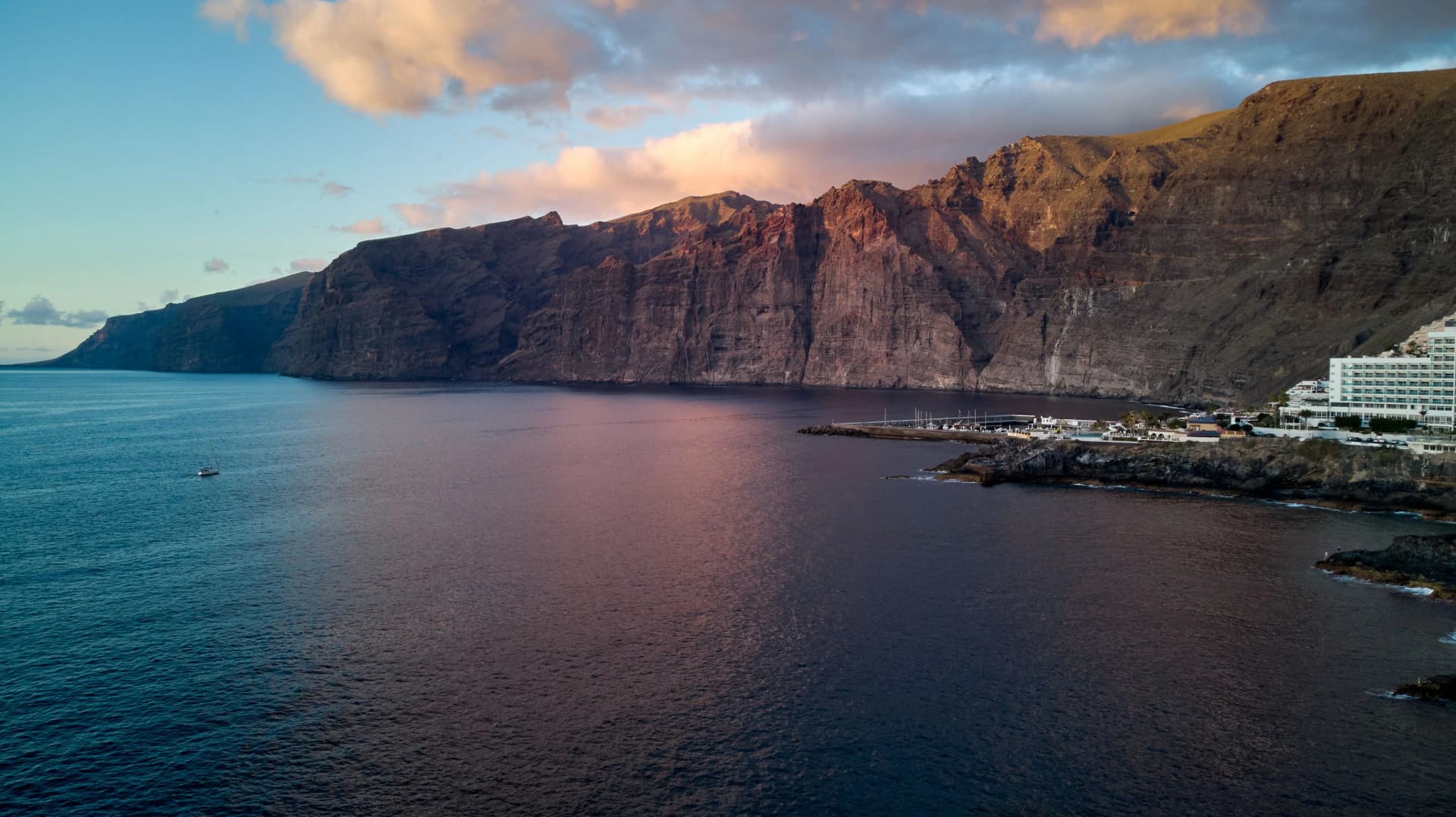
- Los Gigantes and Garachico: more demanding, spectacular sites, suitable for experienced divers too, among walls and lava landscapes.
No licence? The try-dive
You don't need to be a diver to give it a go. The try-dive (bautismo) is designed for people with no experience: you start with a briefing and exercises in shallow water, then descend under the direct supervision of an instructor. The depth depends on the programme and the centre: on PADI Discover Scuba Diving programmes the open-water dive can go to around 12 metres, always supervised, with the chance to meet turtles and other marine animals. The exact requirements (age, fitness, health) depend on the centre. If it grabs you — and it often does — the next step is an Open Water licence, for example PADI or SSI, which centres offer year-round. It's one to add to the list of things to do in Tenerife.
When to go and what to know
You can dive year-round: the water is warmer from April to October, but even in winter it stays above the continental Mediterranean. Courses and try-dives run in any season. Bring or hire a suitable wetsuit (even in summer it feels cool below the surface) and always rely on centres with certified instructors and proper equipment. And remember: never dive if the centre or the instructor judges the conditions unsuitable — wind, swell and visibility can change quickly, because this is the Atlantic, not a tropical pool. To get your bearings on the weather and sea month by month, see the guide on when to visit Tenerife.
How to book (and spend less)
Try-dives, guided dives and courses are booked at the dive centres along the coast, above all in the south. Compare a couple of centres, check what the price includes (equipment, guide, photos/video, transfer) and the certifications. A useful note: several centres and activities are partners of the Tenerife Premium Card, which at partner venues can give access to discounts — conditions and percentages vary from partner to partner, so it's worth checking before you book. For the other things to do in the water, there's the guide on water sports in Tenerife.
In short
Tenerife is an accessible, complete dive destination: mild water all year, often good visibility, volcanic seabeds and marine life from turtles to the rare angelshark. The south (El Puertito, Las Galletas, Radazul, Abades) is the handiest base for beginners; Los Gigantes and Garachico reward the more experienced. And if you don't have a licence, the try-dive lets you experience it safely, with a briefing, exercises and an instructor always beside you — often with turtles as your diving companions.