Tenerife Premium Card
Experiences
Hotels & Accommodation
Find accommodationAre you a property owner?Real Estate · Real estate
Services
Health & ParapharmaciesBeauty & CareHome & RepairsCar & AssistancePaperwork & ConsultingTourist ServicesPets
See all services
The Heart
Prices
View all plans
Preview
Discover
Trip Planner
Videos
Blog
Business
Dashboard
Distribution
Commercial Partners
Platinum
Dashboard
Get your card
Experiences
Find accommodationAre you a property owner?Real Estate · Real estate
Health & ParapharmaciesBeauty & CareHome & RepairsCar & AssistancePaperwork & ConsultingTourist ServicesPetsSee all services
The Heart
View all plansPreview
Trip PlannerVideosBlog
DashboardHub BusinessDistributionCommercial Partners
Platinum
⚙ Admin
Get your card→

Whale watching · What to do

Whale watching in Tenerife: the guide

TPCard Editorial · August 26, 2026 · 5 min read · Updated September 12, 2026

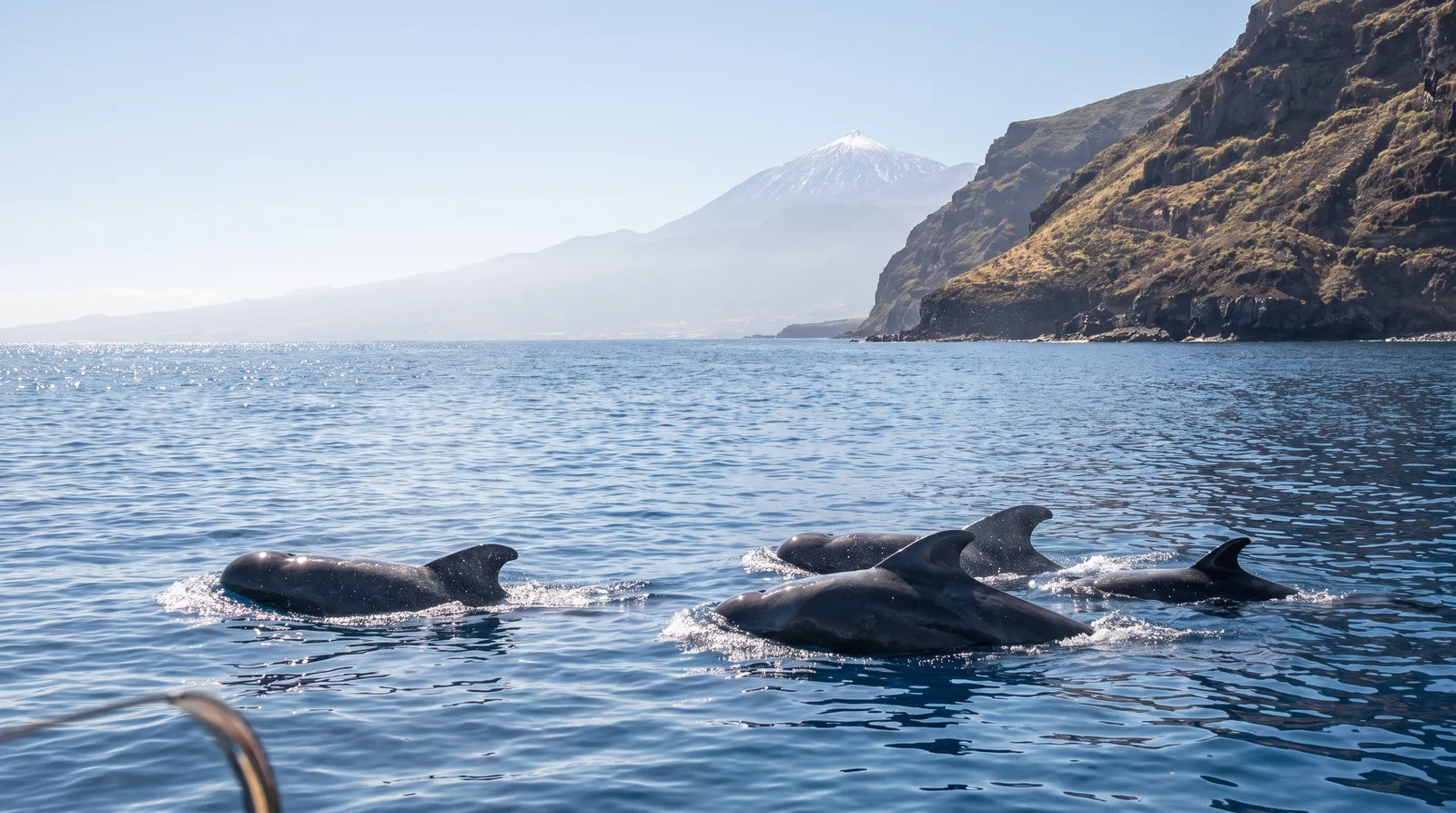
A pod of pilot whales surfaces near a boat's bow off Tenerife's south-west coast, with Mount Teide in the background

Tenerife is one of the best places in the world to see whales and dolphins — and what surprises almost everyone is that you don't need a "season": in the waters off the south-west of the island there are resident populations of pilot whales and dolphins all year round, so the chances of a sighting are very high at any time. The key to a good, animal-friendly experience is choosing the right operator. Here's what you'll see, when to go, where the boats leave from, how to spot a responsible tour and the practical tips.

What you'll see

The two resident species, present all year along the south-west coast, are:

  • The pilot whale (calderón): a small dark whale that lives in family groups, Tenerife's real star.
  • The bottlenose dolphin: curious and often close to the boats.

In all, up to 21 cetacean species have been recorded in Tenerife's waters. Migratory or occasional species — such as humpback and various fin whales — can also appear during the year, but these sightings are far less predictable than those of the resident species, which remain the main draw. No serious tour, however, can guarantee a sighting: these are wild animals.

Why here

The Teno-Rasca stretch of sea, off the south-west coast, is deep, warm and rich in food: ideal conditions for cetaceans. It's no coincidence that it has been recognised as a Whale Heritage Site (the first in Europe) by the World Cetacean Alliance and as a "Hope Spot" by Mission Blue. It's a natural heritage to be enjoyed with respect.

When to go

Good news: any time of year works, because pilot whales and dolphins are resident. Morning trips are often preferred for sea conditions, especially if you get seasick. Large whales passing through can also appear during the year, but these are occasional, hard-to-predict sightings. For the month-by-month picture of climate and sea there's the guide on when to visit Tenerife.

Where the boats leave from

The main harbours are all in the south-west:

  • Puerto Colón (Costa Adeje): the biggest excursion hub.
  • Los Cristianos: convenient, with the beach right by the port.
  • Los Gigantes: pairs with the towering cliffs and the Masca area.

These are the same southern areas where the beach tourism is concentrated; if you're deciding on a base, see the guide on north or south Tenerife.

How to choose a responsible tour

This is the most important part. The area is protected and the rules are specific. Canary decree 178/2000 bans approach manoeuvres closer than 60 metres, caps speed at 4 knots within 500 metres, allows no more than two boats within 100 metres and no more than three within 500, and no more than 30 minutes within 100 metres. The national rule (Real Decreto 1727/2007) is stricter still: no lingering at all within 60 metres, and at most two boats between 60 and 300 metres. To be sure you choose well:

  • Look for the yellow flag with the "Barco Azul/Blue Boat" mark: it identifies vessels authorised by the Canary Islands government to run whale watching trips under the current regulations.
  • Prefer boats that aren't overcrowded and operators who explain the rules on board.
  • Be wary of anyone promising to "get as close as possible" or guaranteeing a sighting: a good operator keeps its distance.
  • Choose the type of trip you prefer: large catamaran (stable, family-friendly), sailing yacht (quiet) or small boat (more intimate).

Practical tips

  • Go in the morning: calmer sea and better light.
  • If you get seasick, take the tablets before boarding.
  • Bring sunscreen, a hat, sunglasses and water: at sea the sun is strong.
  • Allow at least a few hours in total for transfer, boarding and the trip; the excursion itself typically runs about 2-3 hours depending on the operator.
  • It's family-friendly too; large catamarans are the most comfortable with children.

One for the bucket list

Seeing a group of pilot whales surface next to the boat, with the Teide in the background, is one of those things that stay with you. It's among the island's most popular experiences and many trips are part of the partner activities catalogue: you'll also find them in the guide on the best excursions in Tenerife and in the one on boat trips. Some partners apply TPCard discounts, with conditions that vary from partner to partner: it's worth checking before you book.

In short

Whale watching in Tenerife offers very high sighting odds year-round thanks to the resident pilot whale and dolphin populations, but these are always wild animals and no sighting can ever be guaranteed. The golden rule is to choose a responsible tour — look for the "Barco Azul" mark — go in the morning and remember it's not a show. Done right, it's an hour and a half you won't forget.
Frequently asked questions

What is the best season for whale watching in Tenerife?

There's no real season: pilot whales and dolphins are resident all year in the waters off the south-west of the island, so the chances of a sighting are very high at any time, though no operator can guarantee them. Morning trips are often preferred for sea conditions, and large migratory whales can also appear during the year, though these are occasional sightings.

What animals do you see whale watching in Tenerife?

Mainly the two resident species: the pilot whale (calderón) and the bottlenose dolphin. In all, up to 21 cetacean species have been recorded in Tenerife's waters; migratory or occasional species such as humpback and fin whales can also appear during the year, though these sightings are far less predictable than the residents'. No serious tour, however, guarantees a sighting: these are wild animals.

Where do whale watching trips in Tenerife leave from?

From the south-west harbours: Puerto Colón (Costa Adeje), Los Cristianos and Los Gigantes. These are the same southern resort areas, so the trips are easy to reach if you're staying there.

How do you choose a responsible whale watching tour?

Look for the yellow flag with the "Barco Azul/Blue Boat" mark, which identifies boats authorised by the Canary Islands government to run whale watching trips under current regulations (a minimum distance from the cetaceans, slow approach, no more than two boats within 100 metres and three within 500 metres, observation capped at 30 minutes). Prefer boats that aren't overcrowded and be wary of anyone guaranteeing a sighting or promising to get as close as possible.

Is whale watching in Tenerife suitable for children?

Yes, it's a family-friendly experience. Large catamarans tend to be the most stable and comfortable with children. Allow a few hours in total for transfer and boarding: the trip itself typically runs about 2-3 hours depending on the operator. If anyone gets seasick, take the tablets before boarding and go on a morning trip, often preferable for sea conditions.

Before you go, get the card

Discounts from verified partners on restaurants, excursions and activities across Tenerife.

Discover TPCard

CONTINUE READING

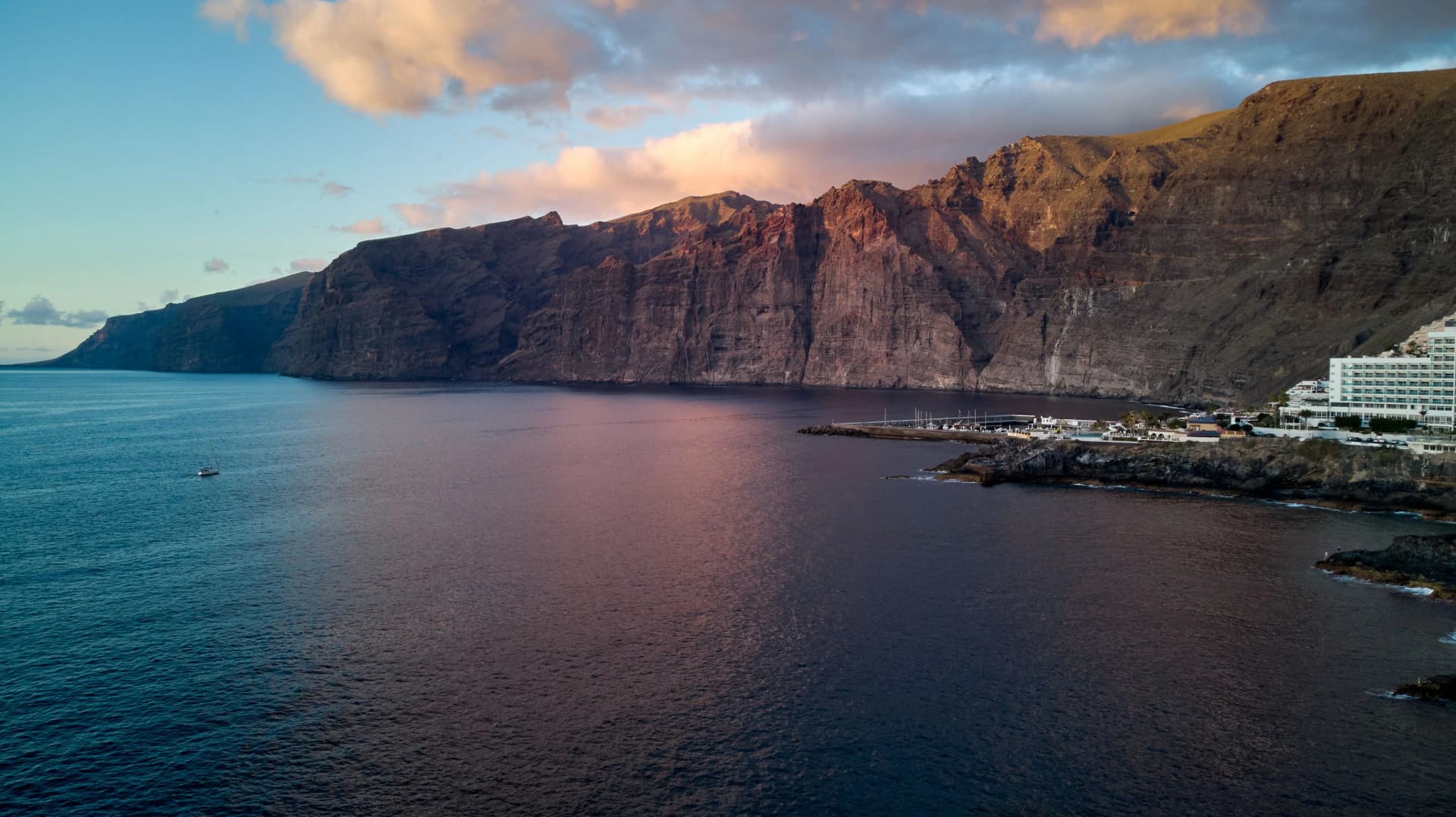
Los Gigantes cliffs at sunset with Puerto de Santiago harbour and the Atlantic Ocean, south-west Tenerife

Things to do

Los Gigantes: cliffs, sea and how to plan your day

The most spectacular cliffs in the south-west: viewpoint, harbour, boat to Masca, whale watching and ocean sunsets — how to plan your visit.

8 MIN · August 29, 2026

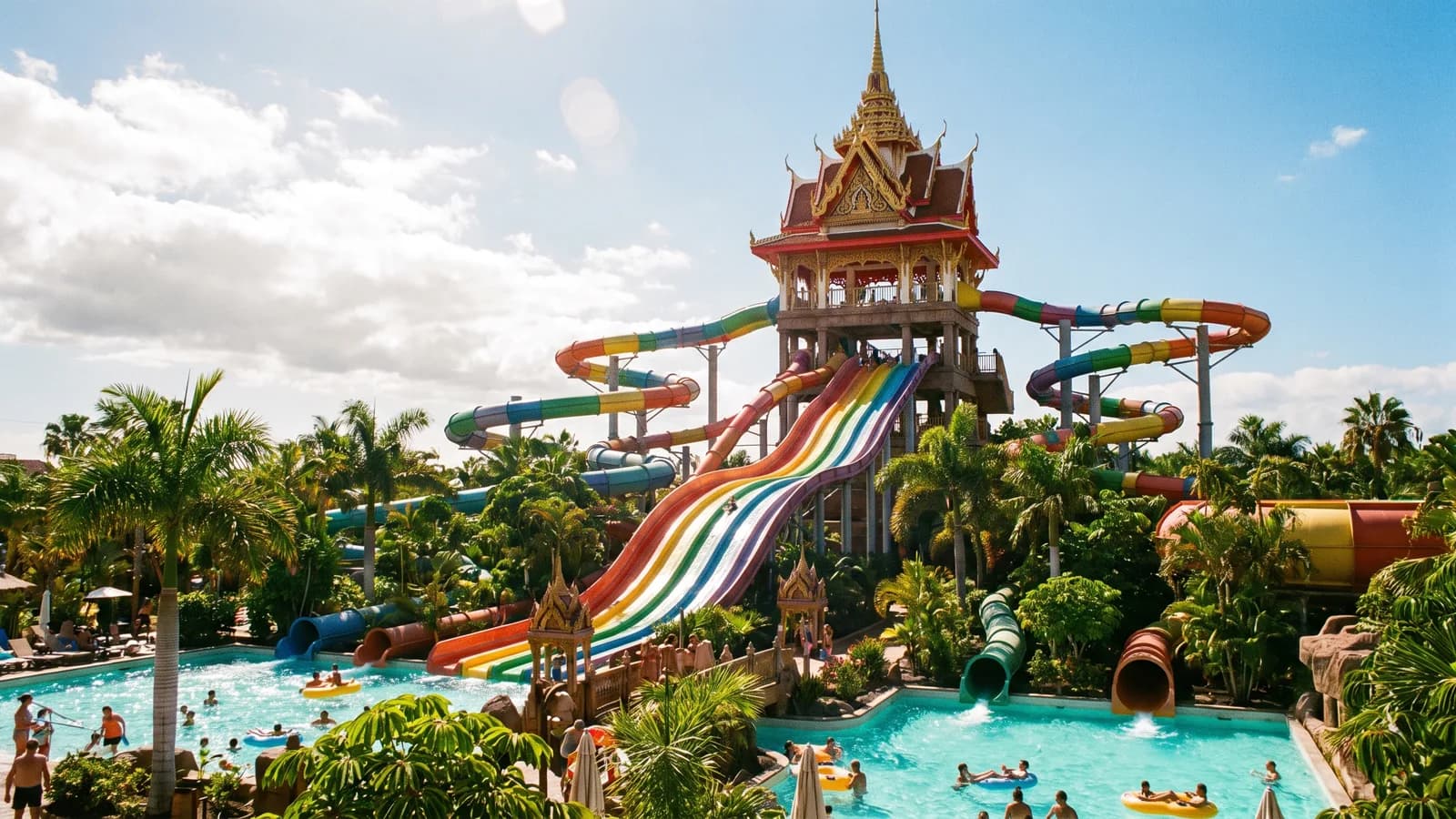
Colourful water slide at a Tenerife water park with Mount Teide in the background

Things to do

Parks in Tenerife: Siam Park, Loro Parque and Aqualand compared

Siam Park, Loro Parque and Aqualand: what to expect from each, indicative prices and how to choose based on kids, time available and budget.

7 MIN · August 26, 2026

Reed aroma diffuser with dried flowers and linen towels in a warm-toned spa setting

Things to do

Spa and wellness in Tenerife: circuits, massages and thalassotherapy

Wellness circuits and thalassotherapy, massages and treatments, hotel spas open to non-guests too: how to enjoy wellness in Tenerife and when to book.

5 MIN · August 27, 2026

— THE CARD

You've read the guides. Now live them.

Discounts from verified partners across the island, from the card on your phone.

Discover the TPCard →
Tenerife Premium Card™

TPCARD, S.L.

NIF B93881506

info@tpcard.es+34 922 150 311+34 624 615 845

Support: Mon-Sun 9:00-20:00 · Chatbot 24/7

VISAMASTERCARDAMEXAPPLE PAYGOOGLE PAY🔒 STRIPE

Explore

ExperiencesPricesFAQContactAbout us
Explore
ExperiencesPricesFAQContactAbout us

Partner

Work with us
Partner
Work with us

Legal

Card rulesCommercial Partner ProtocolPrivacyCookieTermsLegal notice
Legal
Card rulesCommercial Partner ProtocolPrivacyCookieTermsLegal notice
© 2026 Tenerife Premium Card™ · Tenerife, Canary IslandsEU dispute resolution