It's the first big question when planning a trip to Tenerife: north or south? The short answer is that it depends on what you want — the island's driest, sunniest climate with serviced beaches, or greenery, historic towns and a more rural feel. But there's a specific reason behind that difference, and it's the key to choosing well. Here's what the island's two faces are really like, who each one suits, the main areas to stay in, and how to get it right depending on the season.
Why north and south are so different: the trade winds
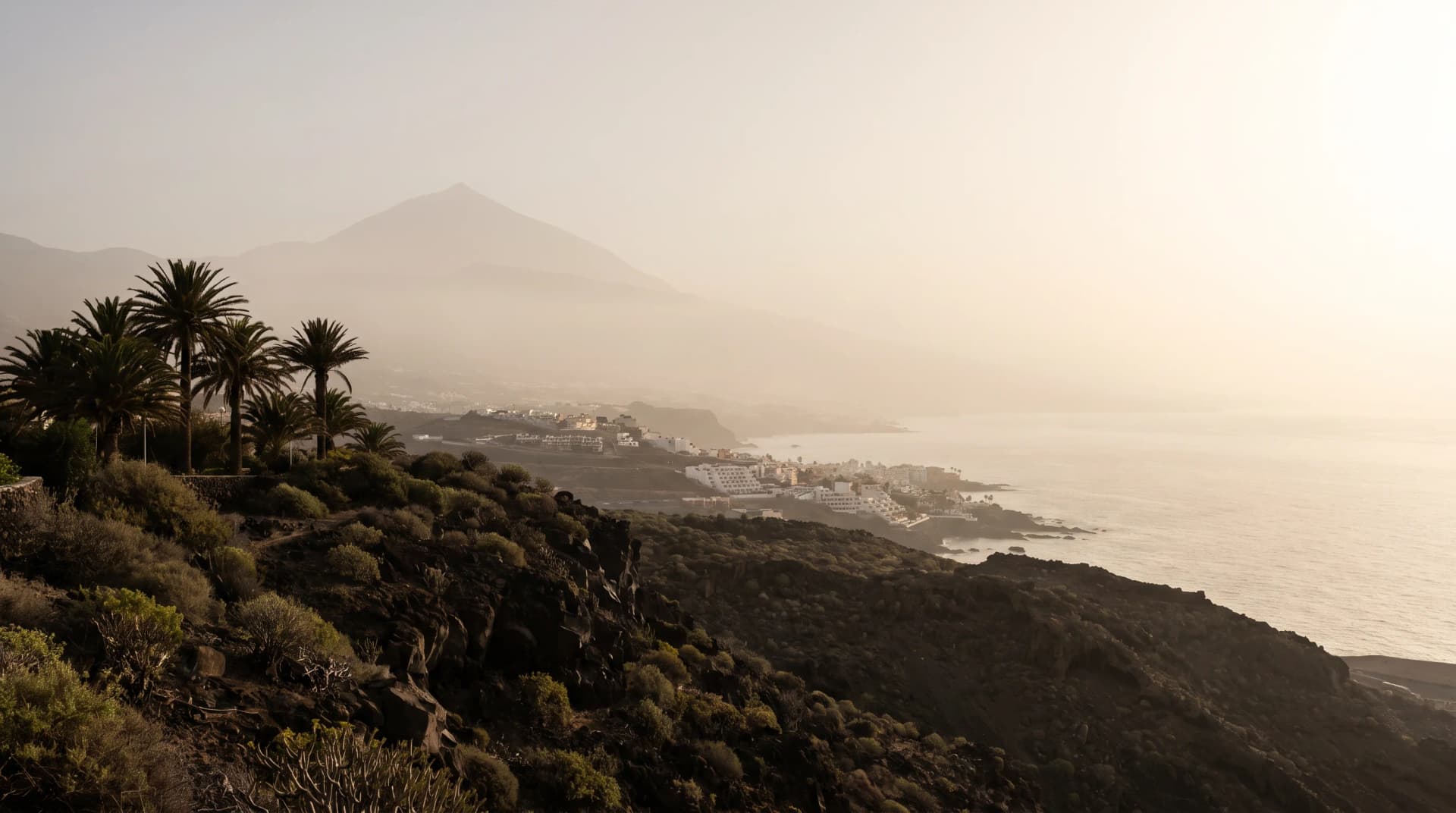
Tenerife has two faces for a climatic reason. The trade winds arrive from the north-east loaded with moisture, meet the northern mountains, rise up the slopes and encourage clouds to form (the famous "sea of clouds"), along with more rain and a green, lush landscape. The south, sheltered behind the Teide massif, stays drier, sunnier and warmer for much of the year. The figures back it up: the Tenerife South area records about 130 mm of rain a year, against roughly 520 mm on the northern side. It's the reason the south holds the beach tourism and the north keeps more rural landscapes, historic towns and places less geared to the beach.
The South: the driest, sunniest climate
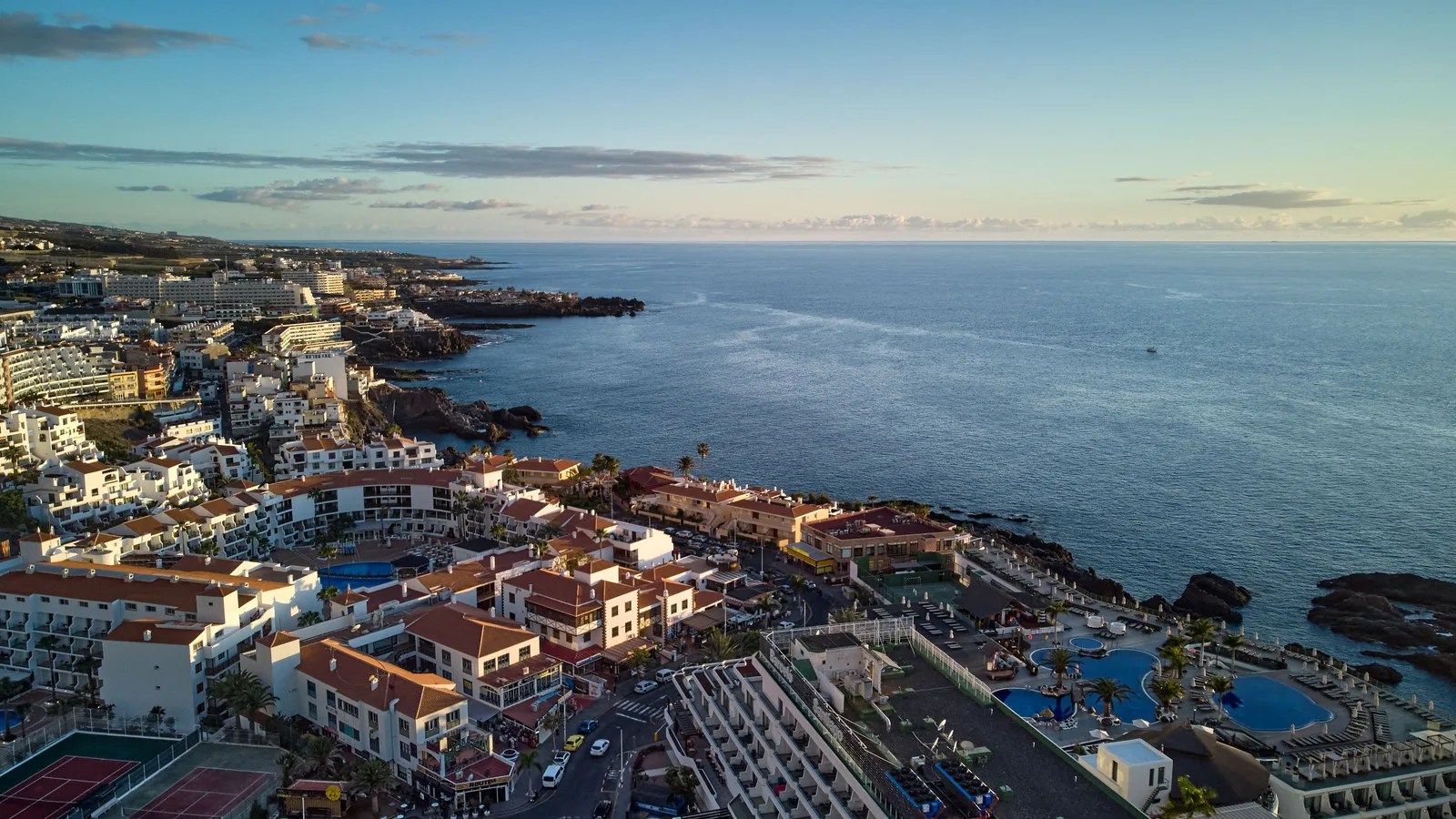
The south (Costa Adeje, Los Cristianos, Playa de las Américas, Los Gigantes, El Médano) is the island's driest, sunniest strip: a better chance of clear skies even in winter, a dry feel, serviced sandy beaches and every tourist comfort. It's the easiest choice for a beach-and-relax holiday, for families and for first-timers. In winter it's the sunniest part of the island. The main areas:
- Costa Adeje: the area most geared to mid-to-upper-range hotels and resorts, well-kept beaches (Playa del Duque, Fañabé), spa and golf. Handy with a car or taxi.
- Los Cristianos: compact and walkable centre, harbour, sheltered beaches and the jetties for boat trips. Great without a car.
- Playa de las Américas: the liveliest, with nightlife, shops and evening buzz.
- Los Gigantes: dramatic under the cliffs, quieter, a base for boat trips towards Masca.
- El Médano: one of the island's best-known spots for windsurfing and kitesurfing thanks to the wind, with a very long natural beach and a more informal vibe.
- Costa del Silencio / Golf del Sur: cheaper and more residential, convenient but less central.
The North: green, culture and historic towns
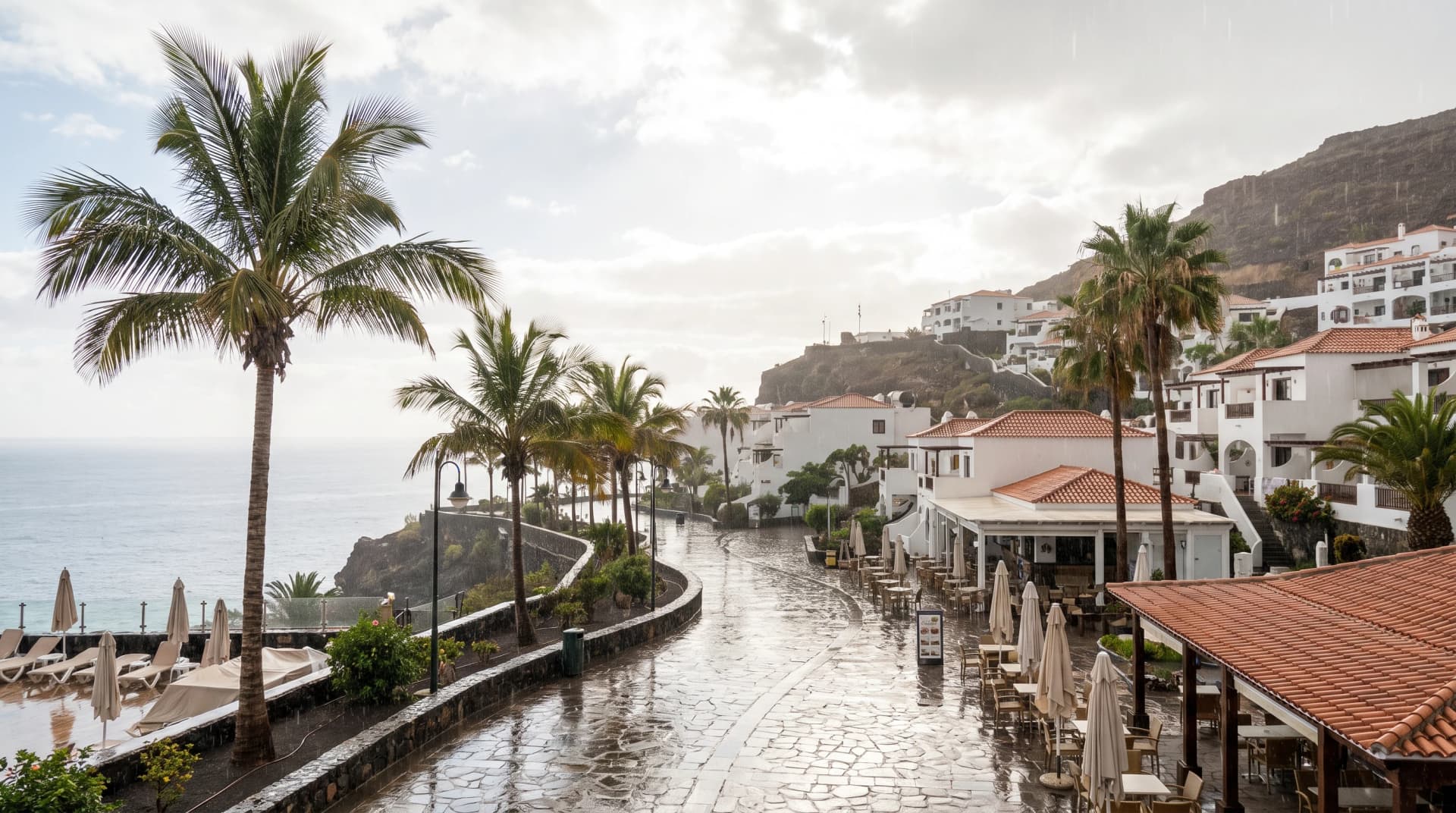
The north and north-east (Puerto de la Cruz, La Orotava, Garachico, La Laguna) are greener and keep more rural landscapes, historic towns and places less geared to beach tourism: lush landscapes, lava rock pools and a strong local cuisine. In return they're more humid and cloudy, with more changeable days. It's the choice for those after nature, culture and fewer crowds, rather than the most hours of sun. The main areas:
- Puerto de la Cruz: the classic northern base, seafront promenade, the Lago Martiánez pool complex, good transport links and city life all year.
- La Orotava: a beautiful historic town with traditional houses and balconies, in the green hinterland above Puerto.
- Garachico: a seaside town with natural pools born from an eruption, one of the most photogenic on the island.
- La Laguna: the UNESCO university city, in the cooler hinterland, for those who want culture and urban life more than the beach.
- Santa Cruz: the capital, on the north-east coast, with a milder, drier climate than the northern interior; a city of museums, shopping and urban life, handy for those not after the beach.
North or south: the quick comparison
| What you want | South | North |
| More sun and dry climate | Yes | More changeable |
| Serviced sandy beaches | Many | Fewer |
| Green, lush landscapes | Less | Yes |
| Historic towns and rural scenery | Some | Yes |
| Nightlife | Livelier | Quieter |
| Prices | Higher in top areas | Often lower |
| First time / family | Very convenient | Good, but depends on the base |
And the airports? Where you land matters
Tenerife has two airports. Tenerife South (TFS, "Reina Sofía") receives most of the international, charter and low-cost flights, and is close to the southern resort areas. Tenerife North (TFN, "Los Rodeos"), near Santa Cruz and La Laguna, handles mainly domestic and inter-island flights, plus some international connections. Check which airport you land at: if you arrive on one side and stay on the other the transfer is longer, so it's worth bearing in mind when you book. Good to know: the two airports are linked directly by the TITSA 343 bus in about 50 minutes, handy if you find a cheap flight into the "wrong" airport.
Can you have both?
Yes, it's possible, but not necessarily better value: for a week, a single base in the south with a few days up north is often the simplest. The island is compact and the TF-1 makes crossing it relatively easy, though times vary a lot depending on your start point, destination and traffic. Many choose the south for the climate and give one or two days to the north (Puerto de la Cruz, La Orotava, Garachico, Anaga). If you want to experience both souls without repacking every day, a good itinerary sorts it out: you'll find one ready in our 7-day itinerary. Splitting the holiday between two bases is possible, but for a week it rarely justifies the extra luggage.
When the choice matters most
The season changes everything. In winter the difference between the two sides is more noticeable: if you want to maximise the chances of sunny days and good swimming conditions from December to March, the south is the safer bet, because the north is cloudier and cooler. In summer both coasts work well. For the full month-by-month picture — climate, sea, what to expect — there's the guide on when to visit Tenerife.
And if you don't have a car?
It makes a big difference. The south is easy even without a car (especially Los Cristianos and Costa Adeje, with buses, taxis and organised trips), while the north is at its best with a car to reach towns, natural pools and trails. If you want to manage without a rental, the guide on where to stay in Tenerife without a car explains the best bases and how to get around. And to see where the best beaches on each coast are, there's the guide on the best beaches in Tenerife.
Tenerife is worth it wherever you stay
Whichever base you choose, the island's best experiences are reachable from both coasts — Teide, excursions, boat trips, markets and restaurants. The Tenerife Premium Card works with partners across the whole island, north and south, with discounts and conditions that vary from partner to partner: handy if you want to move freely between the island's two souls without tying yourself to one area. It's worth a look before you book activities.
In short
North or south isn't a contest: they're two different Tenerifes. Choose the south for the driest, sunniest climate, serviced beaches and convenience — perfect for a first visit, families and winter. Choose the north for greenery, culture and historic towns, allowing for more changeable weather and (ideally) a car. And remember the island is small: from any base, the other half is still reachable in a day.