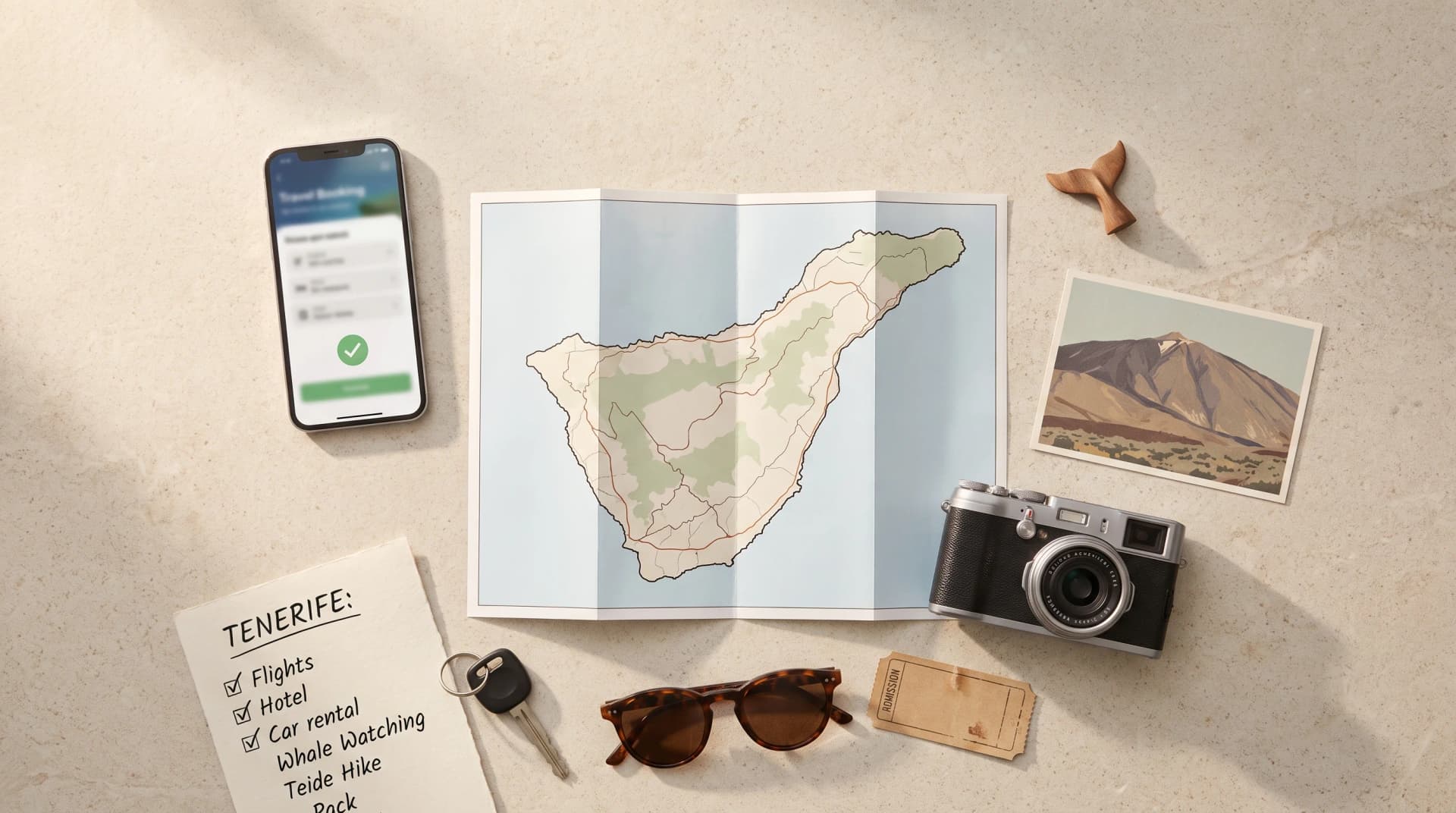
Seven days is a very balanced length for Tenerife: it lets you alternate big excursions, cities and sea without having to cram every day. The thing is that the island is more varied than it looks — volcano, forests, black and golden beaches, cities — and those who plan it badly end up spending half the holiday in the car or never leaving the resort. This day-by-day itinerary combines the must-sees with some breathing room, and it's built to adapt to you: follow it in order or pick the days that appeal most. Each stop links to the dedicated guide, if you want to go deeper.
How this itinerary is built
- A single base in the south (Costa Adeje, Los Cristianos, Las Américas), or a south + north split if you want to cut down on driving: more on this below.
- Alternate "big" days (Teide, Anaga) with sea-and-rest days, so you don't reach the end of the week exhausted.
- It works with a rental car, but several days can be done on public transport too: we flag this stop by stop.
- Paid experiences (boat trips, cable car, parks) are few and chosen: you don't need to do everything to fill the week.
| Day | Area | Heart of the day |
| 1 | South | Arrival, beaches and a slow pace |
| 2 | Centre | Mount Teide and the National Park |
| 3 | North | Puerto de la Cruz and La Orotava |
| 4 | Anaga | Laurel forest and black beaches |
| 5 | Capital | Santa Cruz and La Laguna |
| 6 | Sea | Boat trip, whales and dolphins |
| 7 | South | Last beaches, rest, departure |
Day 1 — Arrival and south: settle into the island's pace
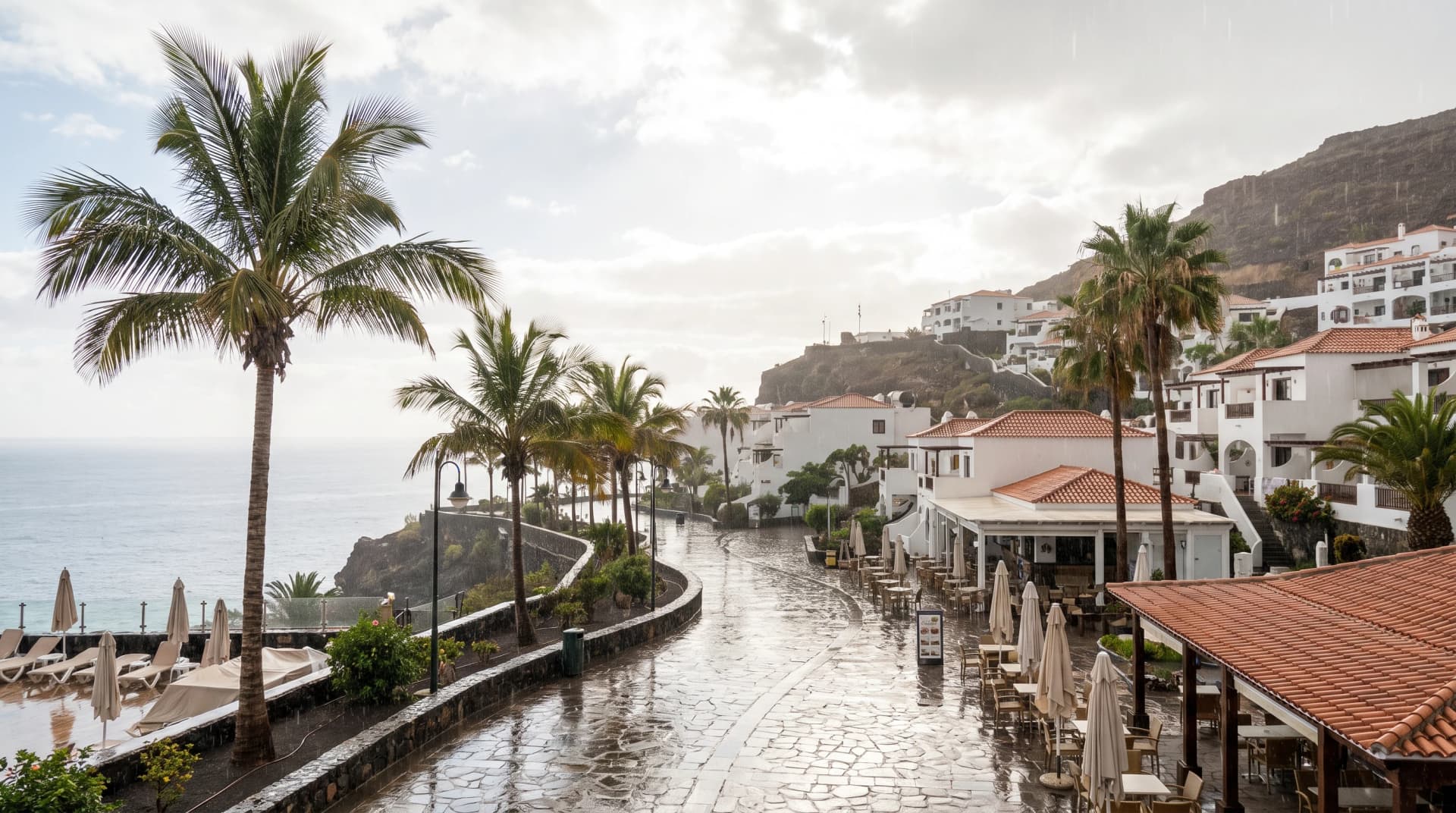
Don't force the first day. If you arrive at Tenerife South airport, the main southern resort area is easily reached: settle in, take your first stroll along the seafront and enjoy an easy beach to acclimatise. In the south you'll find many equipped, sheltered beaches, some with imported sand and generally calmer water, ideal to start. If you want more sheltered, quieter spots, the guide on the quiet beaches of southern Tenerife tells you where to go. In the evening, get a feel for local prices: what a week really costs is broken down in the guide on the budget for a week in Tenerife.
Day 2 — Mount Teide: the highest point in Spain
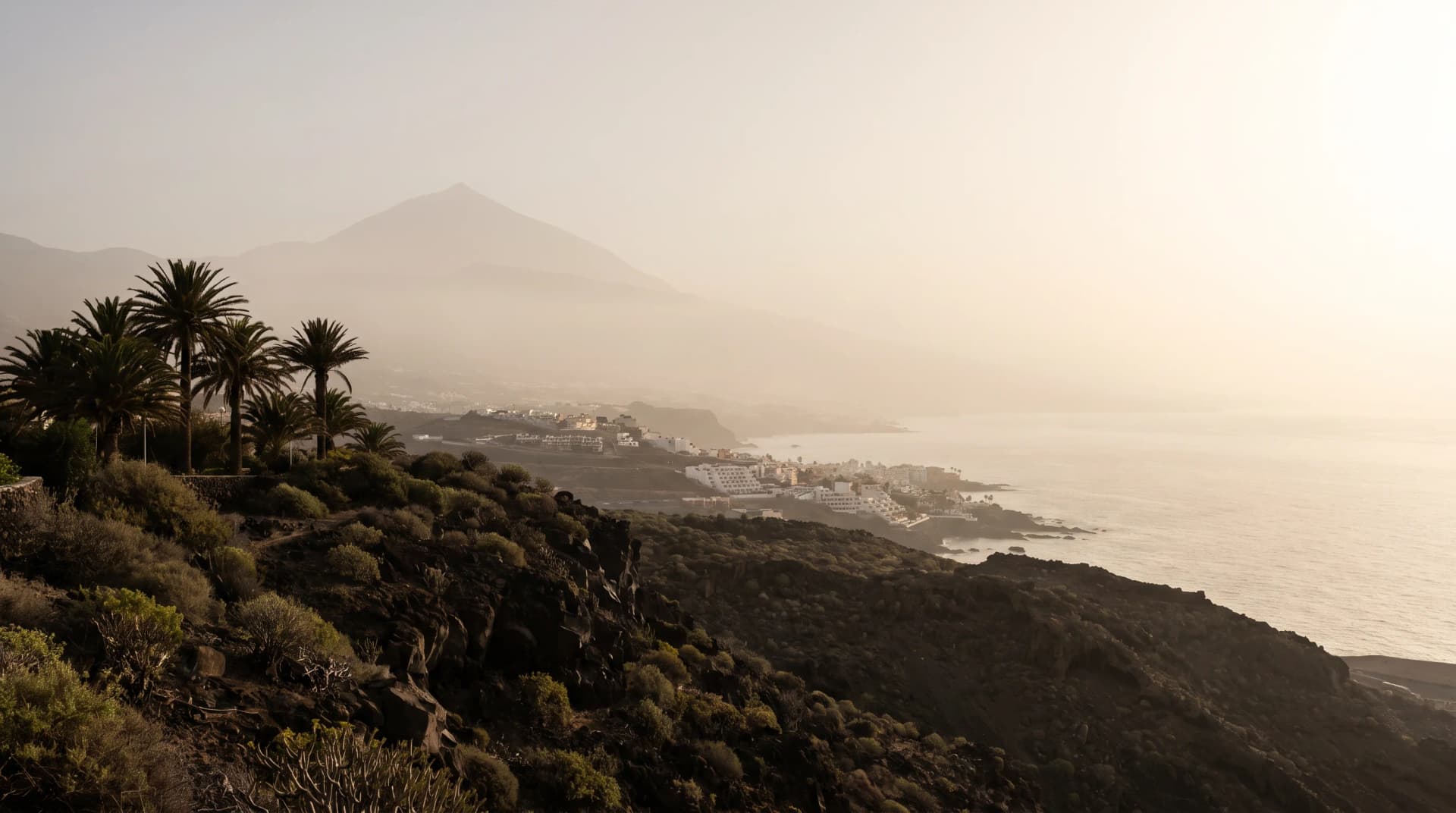
Mount Teide, at 3,715 metres, is the highest point in Spain, and its National Park is the one experience not to miss: you drive up through lunar landscapes, and the cable car takes you to 3,555 m. For the final stretch to the summit (the Telesforo Bravo trail) you need a permit, requested in advance through Tenerife ON. Set off early: in the central hours the Park can be far busier and some parking areas can fill up. Teide is one of the stops we also cover in the guide on the 5 experiences to have in Tenerife. Bring a fleece: at altitude, even in summer, it's chilly — and in winter there can be snow.
Day 3 — The north: Puerto de la Cruz and La Orotava
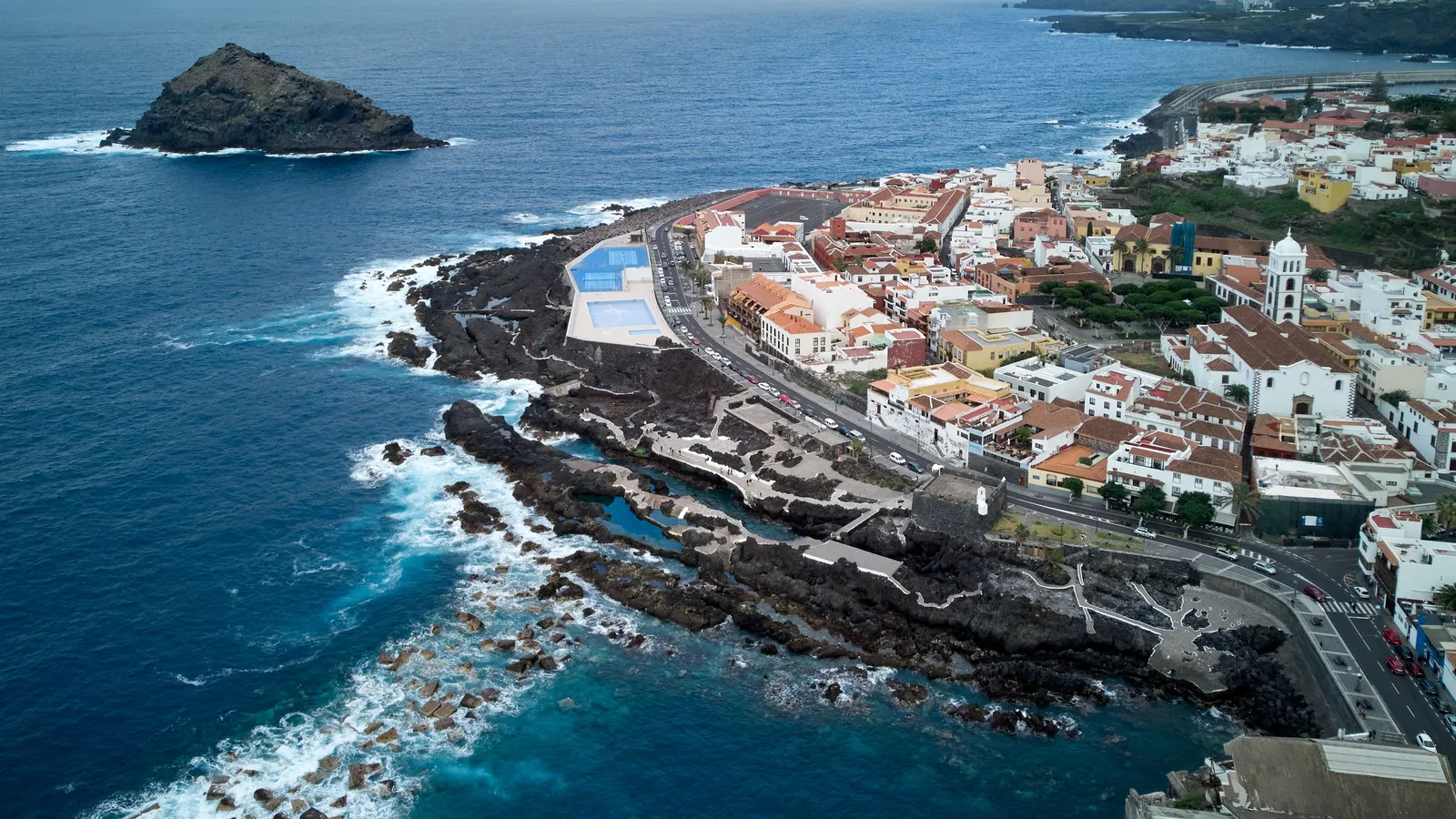
The north is the island's other face: greener, cooler, more authentic. Puerto de la Cruz is the historic Canary resort town, with the saltwater pools of Lago Martiánez designed by César Manrique; La Orotava, just above, is one of the loveliest old towns in the archipelago, with its Canary wooden balconies. It's a perfect day mixing culture and walks. If you're weighing where to base yourself — all south, or a night in the north too — we cover it in the guide on where to stay in Tenerife.
Day 4 — Anaga: the laurel forest and black beaches
The Anaga massif, in the north-east, is a Biosphere Reserve and one of the island's oldest natural areas: mountains cloaked in laurel forest — a relict woodland formation typical of Macaronesia — wrapped in mist, panoramic ridges and wild black-sand beaches like Benijo and Almáciga. It's the most "wow" day for lovers of nature and trails. It can be done as a day trip from the south, and the logistics — trails, buses, parking — are in the dedicated guide to Anaga as a day trip from the south.
Day 5 — Santa Cruz and La Laguna
Two cities a few tram minutes apart tell the Tenerife tourists often skip. Give the morning to Santa Cruz — the Nuestra Señora de África market, the centre and the Auditorio that symbolises the island — and the afternoon to La Laguna, a UNESCO site, with its colonial old town and university buzz. The T1 tram makes the hop very easy: the line is 12.5 km, has 21 stops and reaches La Trinidad. The golden beach of Las Teresitas, just outside Santa Cruz, is best treated as an alternative to a deeper visit of the city, not an extra compulsory stop. How to organise the day, without a car, is the subject of the guide on Santa Cruz in a day.
Day 6 — Open sea: boat trip, whales and dolphins
The waters between Tenerife and La Gomera are home to pilot whales and dolphins year-round: a boat trip from the south (Los Cristianos, Puerto Colón) is one of the best-loved experiences, and smaller boats can offer a more intimate experience. It's also the day to enjoy the sea unhurried or try a water sport — and, after Teide, the north and Anaga, a less demanding day comes at the right time. Many of these activities are part of the discounted partner catalogue: more on that at the end.
Day 7 — Last day: sea, rest and departure
The last day depends on your flight time. If you leave in the afternoon, you have time for one last easy beach near your base, a final stroll or some last-minute shopping; if a market day falls here, you can slot it in. If you like eating where locals eat — and spending less — end on a high note by following the guide on where to eat in Tenerife like a local.
With or without a car?
With a car this itinerary is more comfortable and flexible, especially for Teide and Anaga. It can be done without a car too — the south, the capital (Santa Cruz and La Laguna by tram) and several beaches are easily reached on the TITSA network — but Teide and Anaga need more attention to bus timetables (the dedicated lines have few departures a day) or an organised tour. If you want to plan a car-free holiday, the guide on where to stay in Tenerife without a car explains which bases are best connected.
When to do it and what it costs
The itinerary works all year — Tenerife is a twelve-month destination — but the month you pick changes the sea, the crowds and the prices: which period suits you (and when it costs less) is set out in the guide on when to visit Tenerife. For the full cost of the week — accommodation, food, transport, activities — there's the guide on the budget for a week in Tenerife, while the mistakes that make you spend twice are gathered here.
Variants: as a couple, in winter, with kids
This is the "complete" itinerary, but it flexes. As a couple you can slow down and favour sunsets and secluded coves — ideas in the guide on Tenerife for couples in the south. In winter the rhythm barely changes: the days are mild and swimming is still possible, as we explain in the guide on Tenerife in winter. With kids, shorten the "big" days (Teide and Anaga) and add sea and theme parks.
The tip that makes the difference on price
The week comes alive in the experiences: the boat trip, the Teide cable car, a good restaurant, the car rental. They're also the items where it's easiest to save. Many of the partners that appear in this itinerary — restaurants, excursions, rentals — give a discount (10 to 40 % depending on the partner) to anyone with a TPCard, all year and on each partner's terms. Over a week, between a couple of activities and meals, it's the difference between "I thought about it" and "I did it". It's worth a look before you go, so you plan the week already knowing where you can save.
In short
Seven days lets you see many of Tenerife's most important places at a balanced pace: south and sea to settle in, Teide and Anaga for nature, the north and the capital for the island's soul, a boat trip for the memory. Follow the order or reshuffle the days by weather and mood — the island forgives, as long as you don't try to see it all at a sprint.