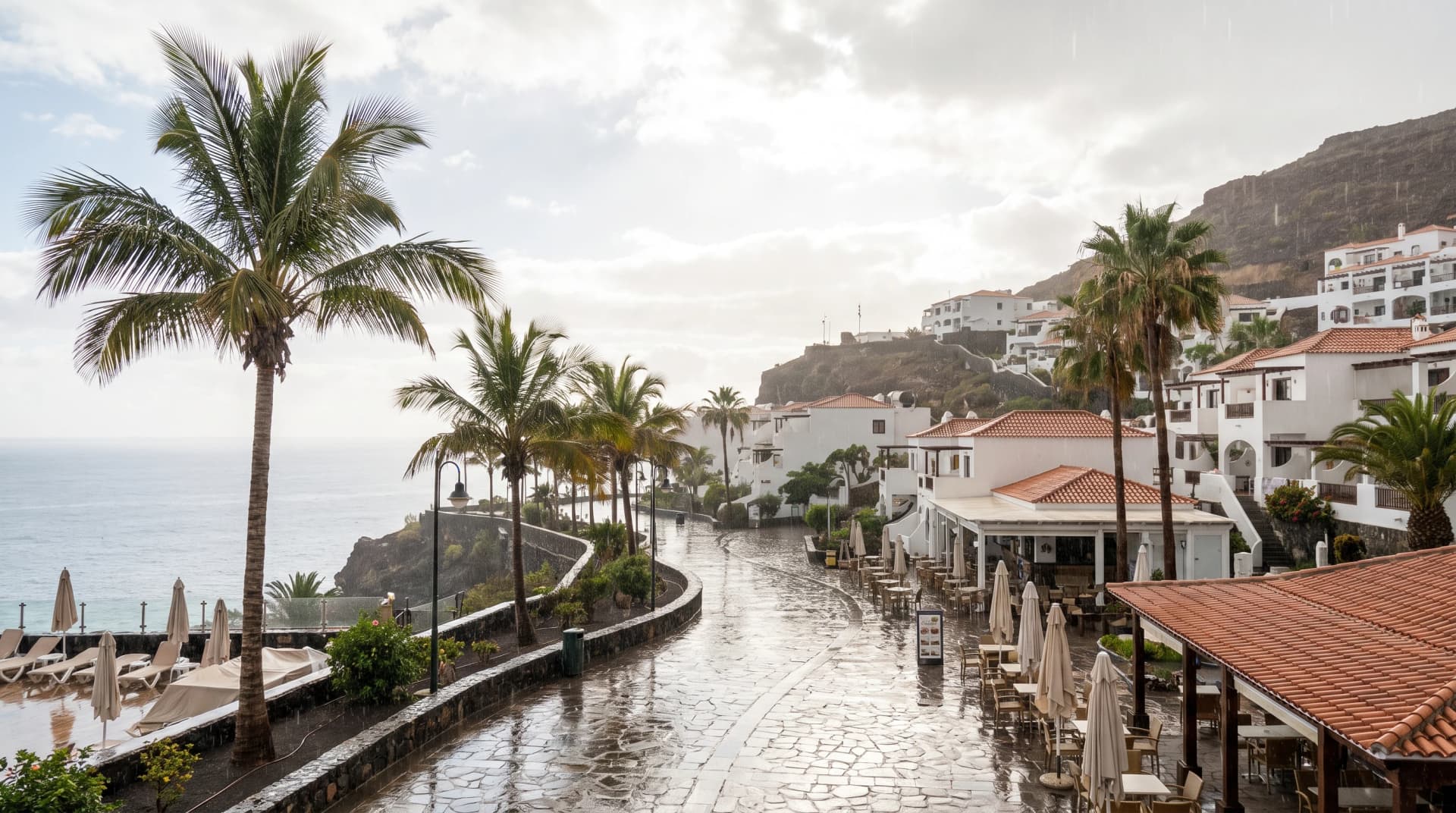
While the rest of Europe turns on the heating, in Tenerife people are still having lunch outdoors. It's the reason why, from December to March, the island fills up with those chasing the winter sun. This guide tells you what Tenerife is really like in winter: how warm it gets, whether you can swim, and what to do beyond the beach.
What's the weather like in Tenerife in winter?
In Tenerife, winter stays mild: on the south coast average highs hover around 21-22°C, according to climate data from AEMET, the Spanish weather agency. It's the reason for the island's nickname, "the land of eternal spring." Days are often sunny in the south and more changeable in the north.
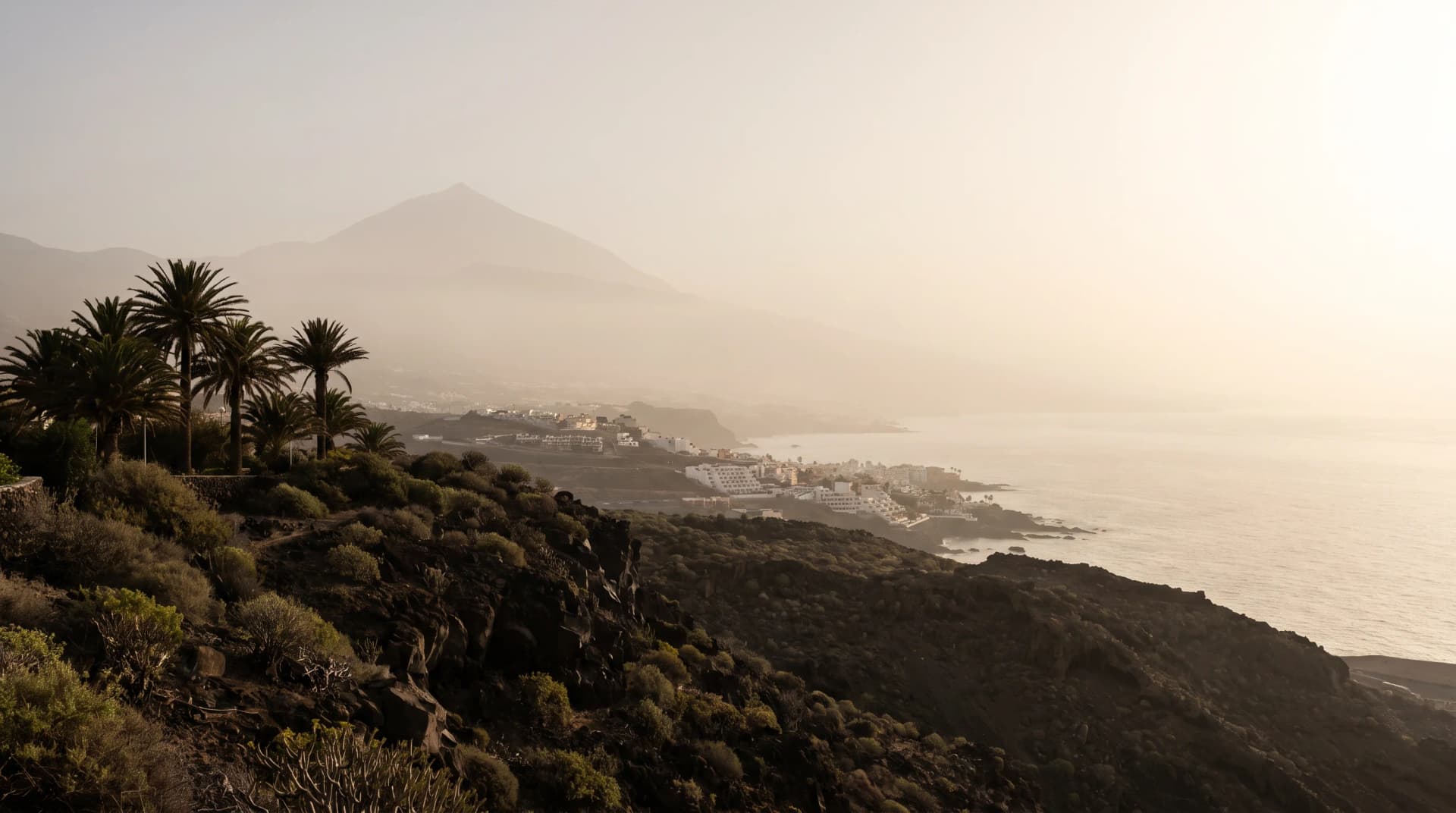
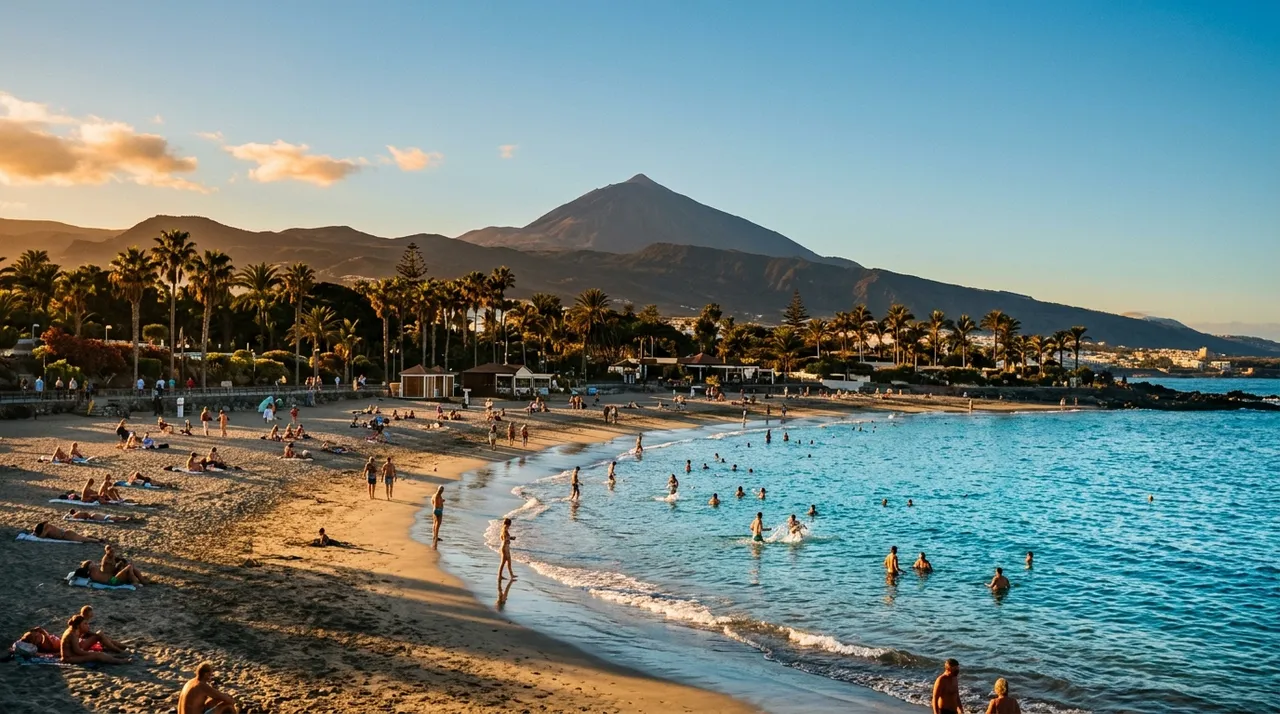
The quirk is the microclimates. On the same day the Teide can have snow at the summit while down on the coast you're in short sleeves. Seeing the snow-capped peak from a warm beach is one of the images that stay with you from the trip.
Can you really swim in December?
Yes, but with an honest caveat. The air is mild and the sun is high, so sunbathing and taking a quick dip is normal even in December. The sea, though, is cooler than the air: in December it stays around 21°C, dropping toward 19°C by late winter (February-March): a fresh but perfectly enjoyable swim, far from the 25-26°C of the Mediterranean summer.
Regular swimmers won't have any trouble. Anyone after warmer water can head for the resorts' heated pools or the natural seawater pools, the charcos. Sheltered bays remain the most comfortable choice: for the calmest beaches with easy access, see the guide on the quiet beaches of southern Tenerife.
Where to go: south for the sun, north for the green
The south — Costa Adeje, Los Cristianos, El Médano — is the driest, sunniest part, and it's where winter works best for those chasing the warmth. It's also the busiest area in the winter months, so the best-known beaches fill up around midday.
The north — Puerto de la Cruz, La Orotava — is greener and more lush, but also more prone to clouds and rain. In return it has a more local feel and less of a resort vibe. In Puerto de la Cruz, the Lago Martiánez pool complex lets you stay in the water even on cooler days.
For a broader picture of bases and days in the south, there's the guide on what to do in southern Tenerife for couples.
What to do beyond the beach in winter
Winter is a good season to get off the beach.
- The Teide. The national park is open all year and in winter it can turn white. The climb up to the viewpoints and the cable car (weather permitting) rewards you with landscapes quite unlike the coast. Dress in layers: at altitude the temperature drops below zero even with the sea mild down below. Official information on the Teide National Park.
- Whale watching. Boat trips from Los Cristianos and Puerto Colón run all year; pilot whales and dolphins are spotted on most trips.
- The Santa Cruz Carnival. In February the capital hosts one of the largest carnivals in the world, declared a Festival of International Tourist Interest. Parades, costumes and music for days.
- The almond trees in bloom. Between late January and February the slopes around Santiago del Teide are covered in white and pink blossom: a short, uncrowded outing.
- Christmas and the Three Kings. In December the towns light up and the markets bring the squares to life; on 5 January the Three Kings parades (Cabalgata de Reyes) make their way through Santa Cruz and the villages. In Spain the Epiphany is felt more than Christmas, and for those travelling with family it's a special evening.
South or north in winter?
| South | North | |
| Sun | More stable, more clear days | More clouds and some rain |
| Sea | More sheltered spots for swimming | Sea often choppier |
| Atmosphere | Resorts, services, comfort | More local, more green |
| Best for | Those chasing warmth and the beach | Those after nature and villages |
In practice: for winter sun and swimming, the south is the safer bet; for nature and a slower trip, the north pays off. Many split the week, but a single base with a few outings makes the holiday more relaxing.
What to pack for December
The most common mistake is packing as if for full summer or, the other way round, as if for a European winter. In Tenerife, winter calls for something in between.
By day in the sun, light clothes, a swimsuit and sunscreen are enough: the sun is high and burns even in December. For evenings and for days in the north it's worth having a sweatshirt or a light jacket, because the temperature drops after sunset. If the Teide is on the plan, you'll need a proper warm layer, a windbreaker and closed shoes: at altitude it's cold even when down below you're in short sleeves. A folding umbrella is more useful in the north than in the south.
In short: dress in layers. It's the only way to go, on the same day, from the beach to the snow-capped viewpoint without suffering.
Tenerife Premium Card
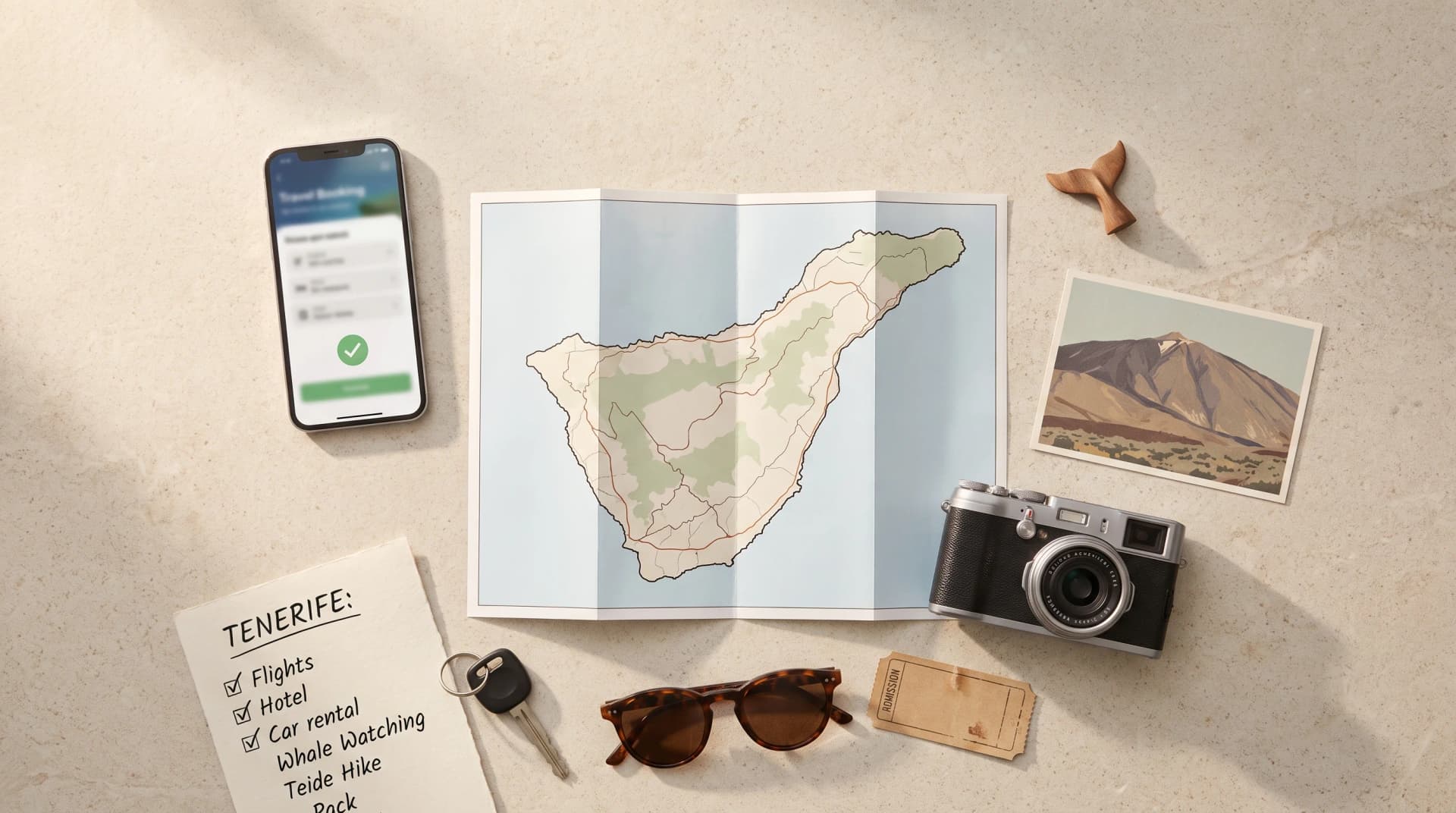
Planning a winter week in Tenerife — choosing the right coast, working out where the sun holds, knowing what to do beyond the beach — is exactly the kind of guidance anyone arriving on the island needs.
Tenerife Premium Card is built for that: a digital card for people visiting the island, a single card on your phone (Apple or Google Wallet), with no app to download, offering handpicked activities across the island. It's designed for those who prefer an understated travel companion to long lists of coupons.
If you want practical Tenerife guides like this one and one more tool to help plan your trip, you'll find Tenerife Premium Card at tpcard.es.