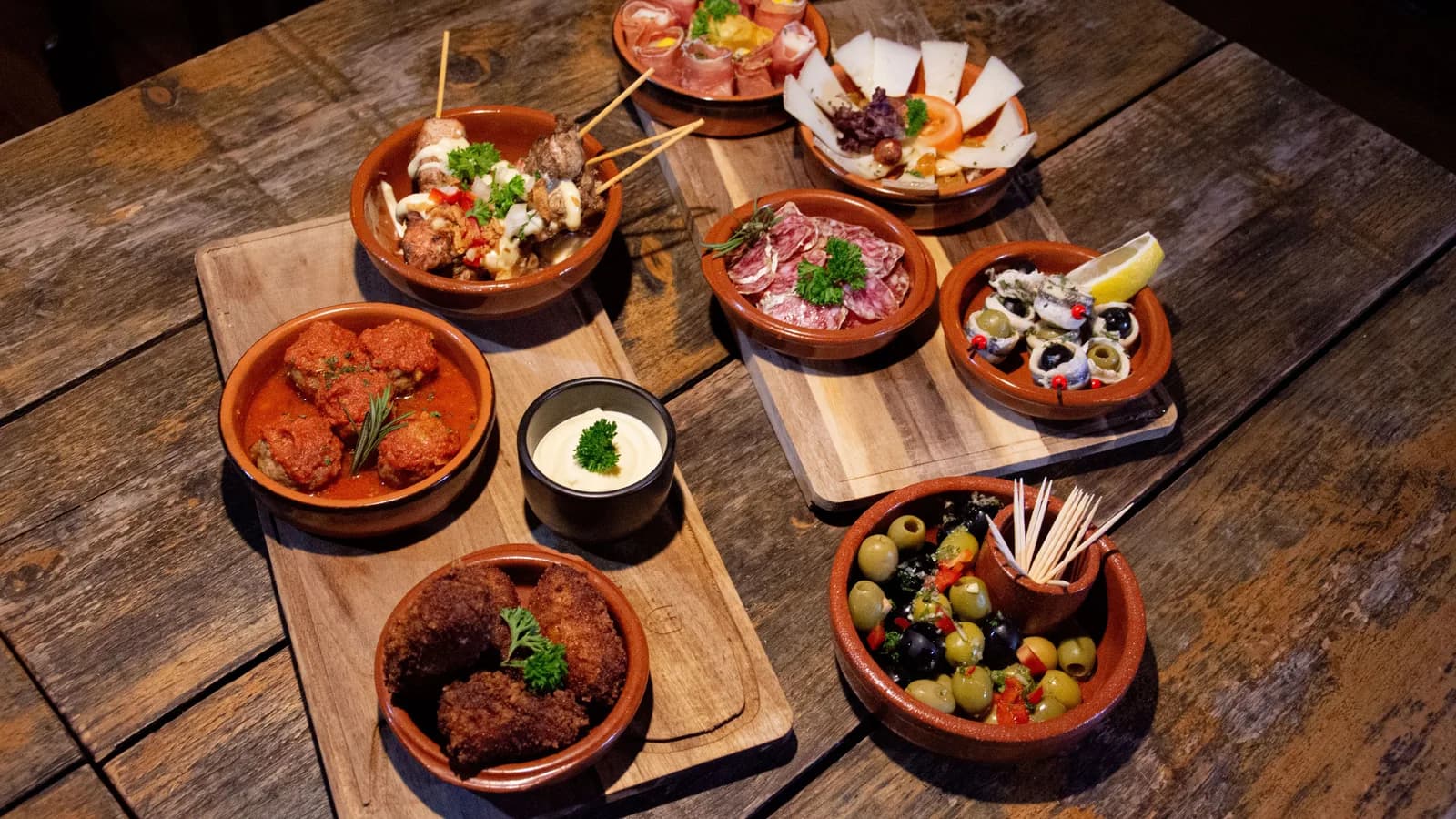
In Tenerife, the difference between a great holiday and a forgettable one often comes down to what's on your plate. The restaurants with photo menus along the seafront live off passing trade; the places where island residents actually eat are somewhere else, and they usually cost less and are worth more. This guide explains where they are and how to spot them.
What it means to eat "like a local" in Tenerife
Eating like a local in Tenerife means leaving the front row by the sea and seeking out the guachinches of the north, the fishing villages and the village kitchens. These are places where you order the fish of the day, papas arrugadas with mojo and island wine, on Spanish schedules and often in cash. Less spectacle, more substance.
Guachinches, the island's worst-kept secret
The guachinche is Tenerife's most authentic culinary institution. It was born in the north, in the wine-growing area — the Orotava valley, El Sauzal, Tacoronte, Santa Úrsula — as a place where a family sold its own wine alongside a few home-cooked dishes.
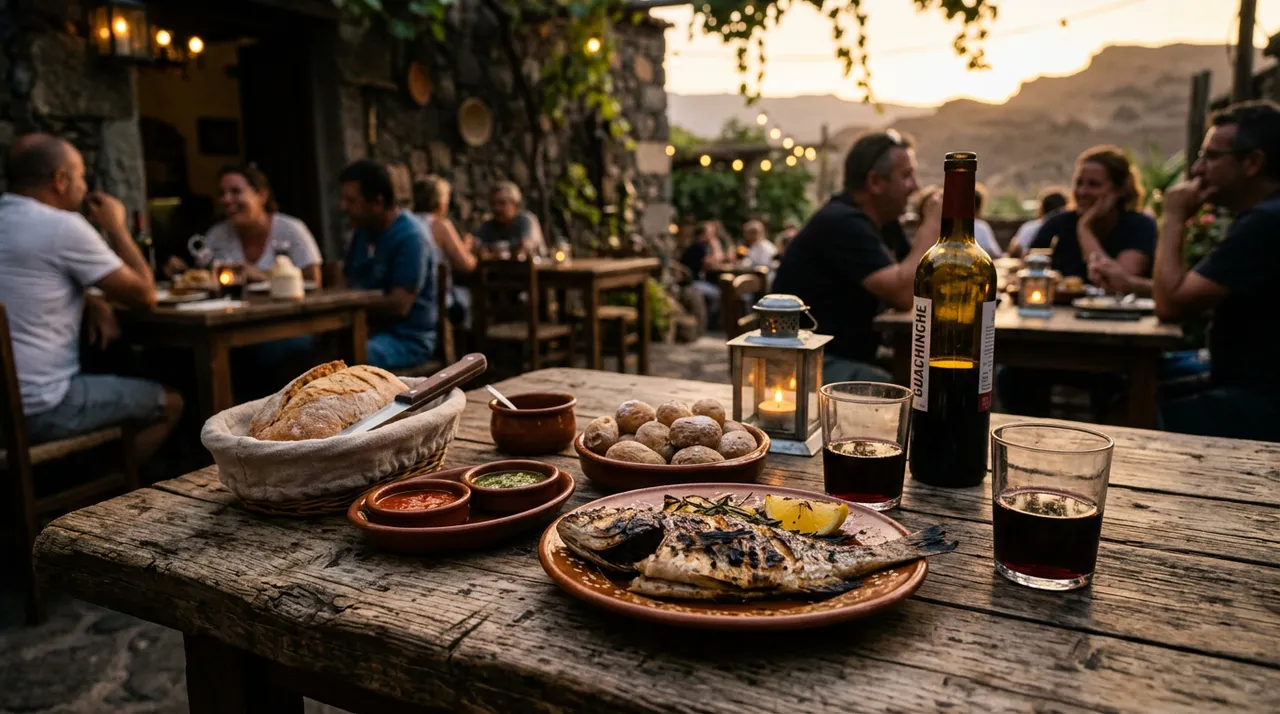
Even today a real guachinche has a short menu, handwritten or recited out loud, house wine and honest prices. It often opens seasonally, takes cash only and is found by following a handwritten sign rather than a proper storefront. It isn't a restaurant dressed up as rustic: it's the opposite. Anyone who brings a tourist there does it as a small gift.
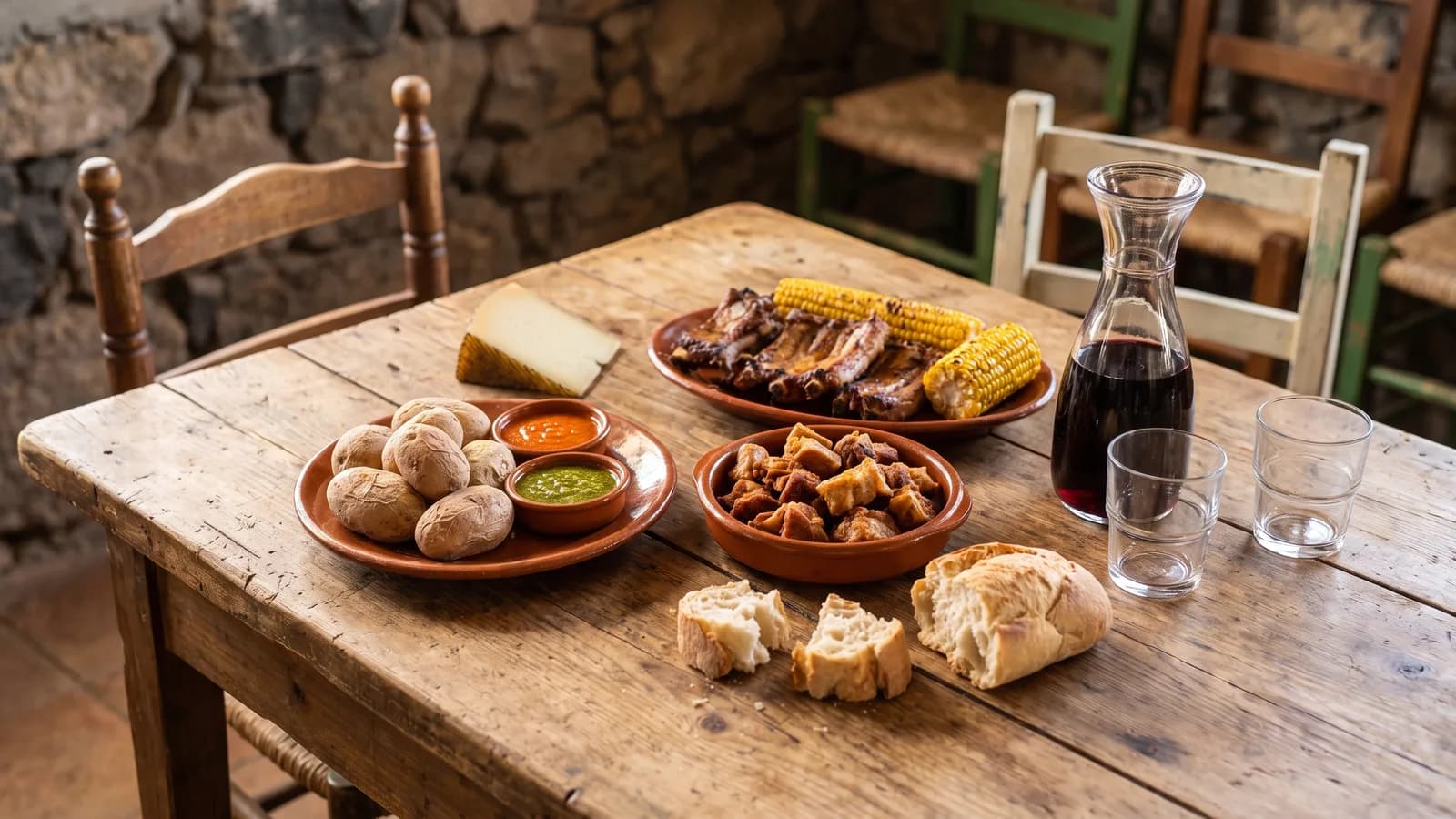
You eat whatever there is: grilled meat, ribs, chicken, a soup, cheese from the area. The list is short because the cooking is real.
Finding them takes a bit of effort: they sit off the tourist routes, sometimes you can only reach them by car, and they open seasonally, depending on the wine and the harvest. That's part of their charm, and it's why they stay authentic while the seafront changes hands every couple of summers.
The dishes the locals order
A few names to look for, wherever you are:
- Papas arrugadas con mojo. Small potatoes boiled in salt, with the red sauce (spicy) or the green one (coriander). The island's signature side dish.
- Fresh fish. *Vieja* and *cherne* are the most requested; you order them by weight, grilled. In the fishing villages they come straight off the boats.
- Carne fiesta and conejo en salmorejo. Marinated fried pork and rabbit in sauce: hearty inland cooking, guachinche style.
- Queso asado con mojo. Warmed Canarian cheese, to share at the start of the meal.
- Canarian desserts. *Bienmesabe*, *frangollo*, *quesadilla* from El Hierro: old-fashioned sweets, barely touristy.
Always ask for the fish of the day and share the starters: that's how people eat here.
Where the locals go: markets, fishing villages, La Laguna
Three types of address, more reliable than any front row by the sea.
The city markets. The Mercado Nuestra Señora de África in Santa Cruz and the La Laguna market are places where you shop and eat well: fish stalls, cheeses, tropical fruit, small food kiosks. A morning at the market is worth more than three lunches on the seafront.
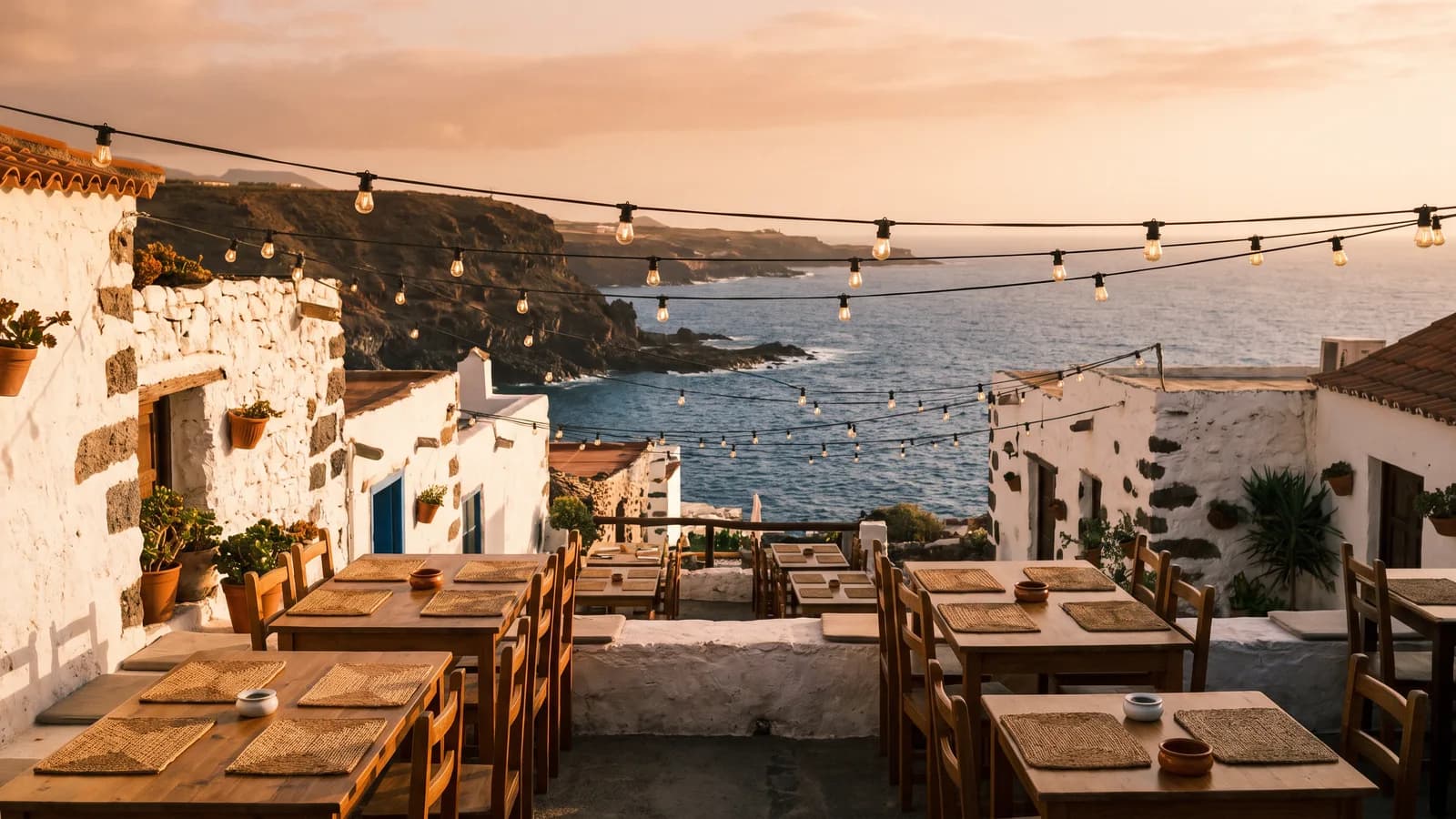
The fishing villages. Los Abrigos, El Médano, Playa San Juan, Alcalá and La Caleta live off fish. Here the produce is incredibly fresh and the difference from the tourist terraces shows up in the bill and on the plate.
La Laguna. The old capital, a university city and UNESCO heritage site, has a lively tapas scene frequented by residents in its narrow streets: cheap and barely touristy. The official site Turismo de Tenerife gathers information on food and markets by area. To plan your days around these places, the guide on what to do in the south of Tenerife for couples can help.
The island's wine, to order without hesitation
Canarian wine is the great underrated one. Tenerife has five Denominations of Origin of its own — Tacoronte-Acentejo, Valle de la Orotava, Ycoden-Daute-Isora, Abona and Valle de Güímar — plus the regional DOP Islas Canarias, as listed by the regulatory board Vinos de Tenerife. It's the island with the most denominations of origin in Spain.
The local grape varieties (Listán Blanco and Negro, Malvasía, Negramoll) grow on volcanic soil and produce wines unlike anything else. Ordering the house wine at a guachinche, or a bottle with a DO at a restaurant, costs little and tells the story of the island better than any international list.
How to recognise a real place (and a trap)
The signals are nearly always the same.
| Signal | Tourist trap | Local spot |
| Location | Seafront, front row | Inner street, village |
| Menu | Photos, five languages, laminated | Handwritten, chalkboard, of the day |
| Kitchen hours | Open all day | Spanish hours (lunch ~14, dinner ~21) |
| Clientele | Tourists only | Residents too |
| Payment | Card everywhere | Often cash, at the guachinches |
The rule of thumb: if they call you in from the street and the menu has photos, walk on for another five minutes. For the other mistakes that inflate the bill on holiday, there's the guide on the 7 mistakes that make you overspend in Tenerife.
Tenerife Premium Card
Eating like a local isn't only a question of price. It's knowing which guachinche is worth the climb, in which fishing village the fish came off the boat that very morning, where the residents go and the tourists don't. It's the sense of direction that people arriving from outside lack when they have only a few days and can't afford to waste a single meal.
Tenerife Premium Card was built around this idea: a single digital card on your phone, with no app to download, designed to experience the island like a local instead of a passing tourist. Not an endless list of coupons to sift through, but a few good choices, verified on the ground.
If the idea of exploring Tenerife with the good spots already in your pocket sounds like you, you'll find Tenerife Premium Card at tpcard.es.