If you're after the most authentic way to eat in Tenerife, there's one answer: the guachinche. It's not a restaurant, but premises linked to the home, winery or farm of a wine grower, selling their own wine with a few home-cooked Canarian dishes. It's a regulated institution with specific rules — which is exactly why "fake" guachinches also exist, really restaurants in disguise. Here's what they really are, what you eat, when and where to find them, and how to spot a genuine one.
What a guachinche really is
Born in the 1960s among the northern vineyards, the guachinche is now regulated by the Canary decree 83/2013. A key point: the wine is not just an accompaniment to the food, it's the historical and legal reason the guachinche exists — it began as a temporary activity to sell one's own wine. A genuine guachinche:
- Sells its own wine: only wine of its own production, from the owner's vines, properly registered.
- Has a tiny menu: at most three dishes, plus pickles, nuts and local fruit.
- Is seasonal: by law it can open at most four months a year and closes when its own-production wine runs out, even sooner. Many open between late autumn and winter, in the young-wine season, but there's no single opening date: each one follows its own wine availability and authorised period.
- Serves only wine and water to drink: no wine list or cocktails.
- Is mostly in the north of the island, the wine-growing area.
What you eat
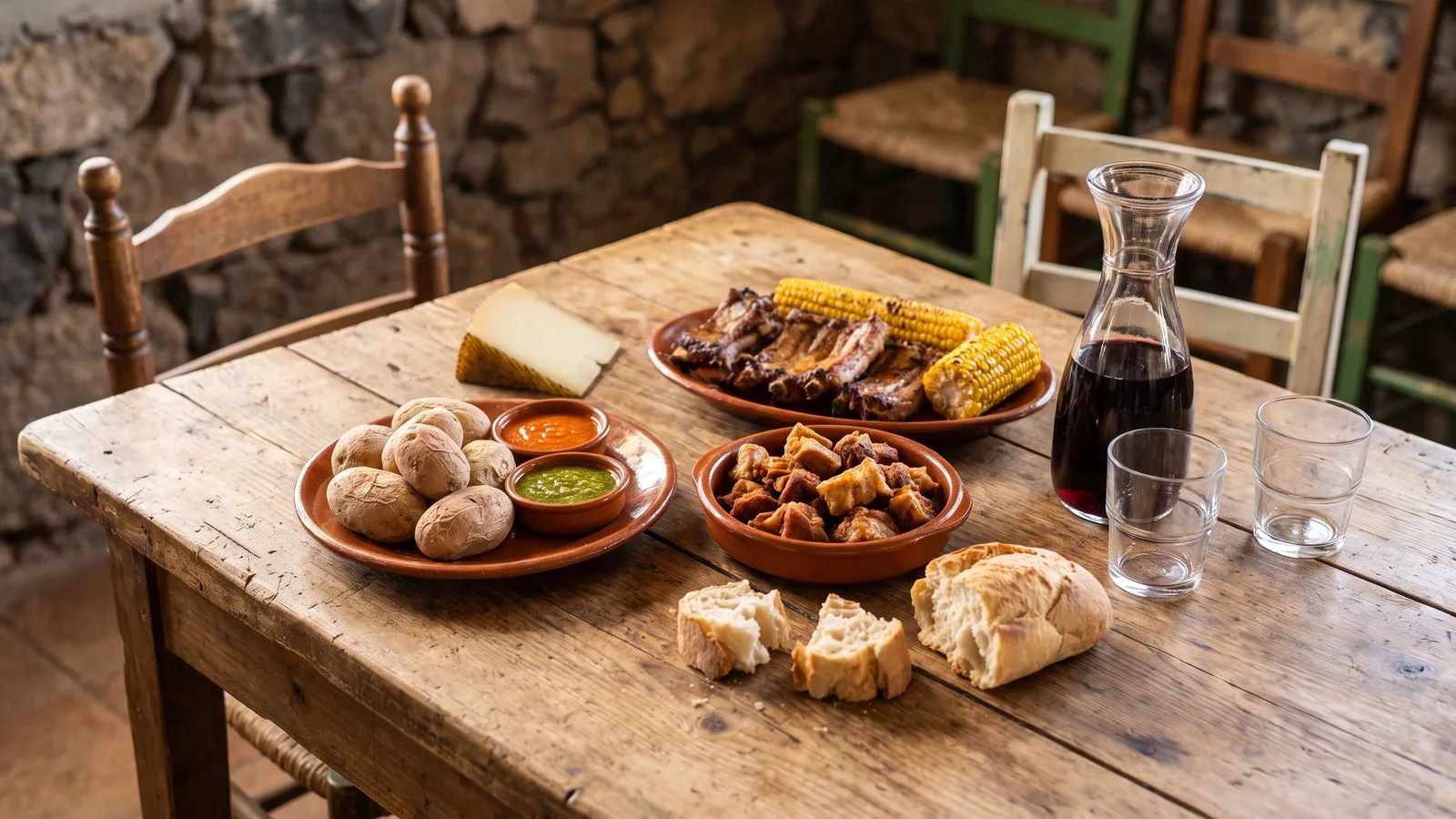
The cooking is home-style, Canarian and hearty. The law sets the limit of three dishes, not which ones: the classic dishes you often find are:
- Carne fiesta (marinated fried pork), a must.
- Costillas con papas y piña: ribs with potatoes and corn.
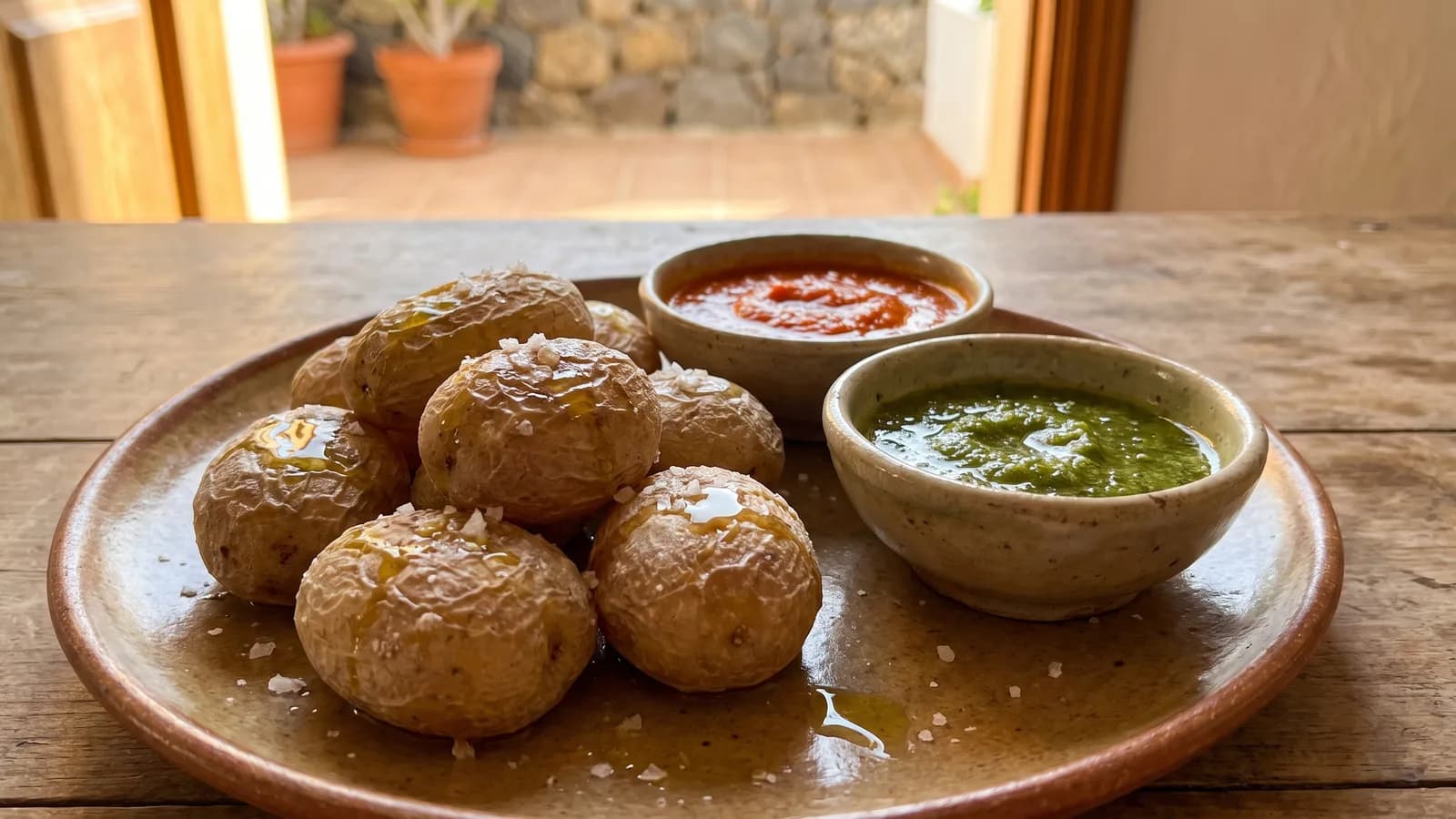
- Papas arrugadas with red and green mojo.
- Garbanzada and other stews, escaldón de gofio, tortilla.
- Canarian cheeses and, to go with it all, the local wine served in a jug.
Prices are usually modest compared with many tourist restaurants, though they vary from place to place: the real advantage is value for money and simplicity. Bring cash to be safe, as payment methods change from one place to another. For a wider look at the typical dishes there's the guide on what to eat in Tenerife.
When they are open
Here's the quirk: real guachinches are seasonal and "until it runs out". By law they open at most four months a year and close when they have sold all their wine, even sooner. In practice many open between late autumn and winter, in the young-wine season, but there's no fixed date the same for everyone: each one follows its own availability. That's why people search so much for "guachinches abiertos hoy" (open today): they open and close in rotation. Always check before you go, because opening hours are irregular and many open only some days or only for lunch.
Where to find them
The heartland of the guachinches is the north: the La Orotava valley, the Tacoronte-Acentejo belt, El Sauzal, La Matanza and Santa Úrsula. They're often out in the countryside, along back roads, signposted with handmade signs. Many are in rural areas and a car makes them much easier to reach; with public transport you need to check case by case. They pair beautifully with a day in the green north, among villages and natural pools. And if you're deciding on a base, remember the north is the right area for this experience, as we explain in the guide on north or south Tenerife.
How to spot a real one (from a fake)
With tourist success, places have sprung up calling themselves "guachinche" while being full restaurants — and it's not just an impression: the rules exist partly to tell genuine guachinches from places that used the name without meeting its requirements. To tell whether you're in a genuine one:
- It sells its own wine, not a list of different labels.
- A very short menu (a few dishes), often handwritten or recited aloud.
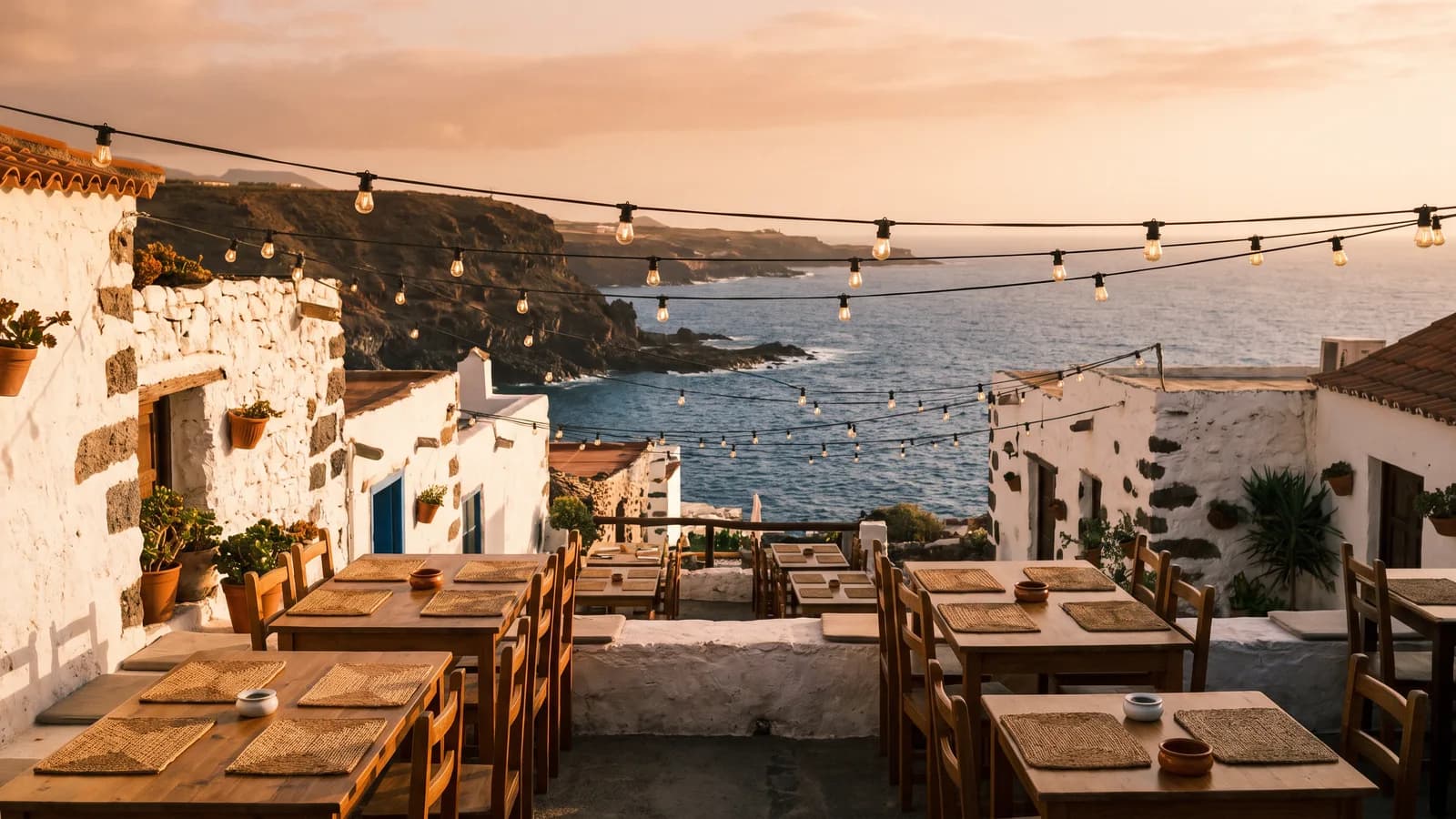
- A simple, rural setting: the house, the winery or a farm space, with basic tables.
- It's seasonal (open only some months of the year).
- It displays outside the official "VINO DE COSECHA PROPIA" plaque: the sign that it's a regulated activity.
- If it has a broad menu, many different drinks or opens steadily all year, it's probably an ordinary restaurant using the word "guachinche" — still good, but not the same thing.
Practical tips
- Bring cash to be safe: payment methods vary from place to place.
- Check it's open: use up-to-date listings or the Cabildo's official register; hours change.
- Look for the "VINO DE COSECHA PROPIA" plaque outside: it marks the regulated ones.
- Go hungry: the portions are generous.
- For groups it's best to call ahead.
Guachinche or restaurant?
A guachinche is a cultural experience more than a dinner: family wine, a few dishes, a rural setting — don't expect the tourist-restaurant model with promotions and extra services. For the rest of the trip — restaurants, experiences and paid activities — the Tenerife Premium Card gives access to discounts at partners across the island, with conditions that vary from partner to partner. To eat well while avoiding the tourist traps in the meantime, there's the guide on where to eat in Tenerife like a local.
In short
The guachinche is Tenerife at its most authentic: the premises of a wine grower serving their own wine and a few home-cooked dishes, mostly in the north and mostly in season. Look for the real ones — own wine, tiny menu, rural setting and the "VINO DE COSECHA PROPIA" plaque — check they're open and bring cash to be safe. It's a great-value experience, very different from a tourist restaurant.