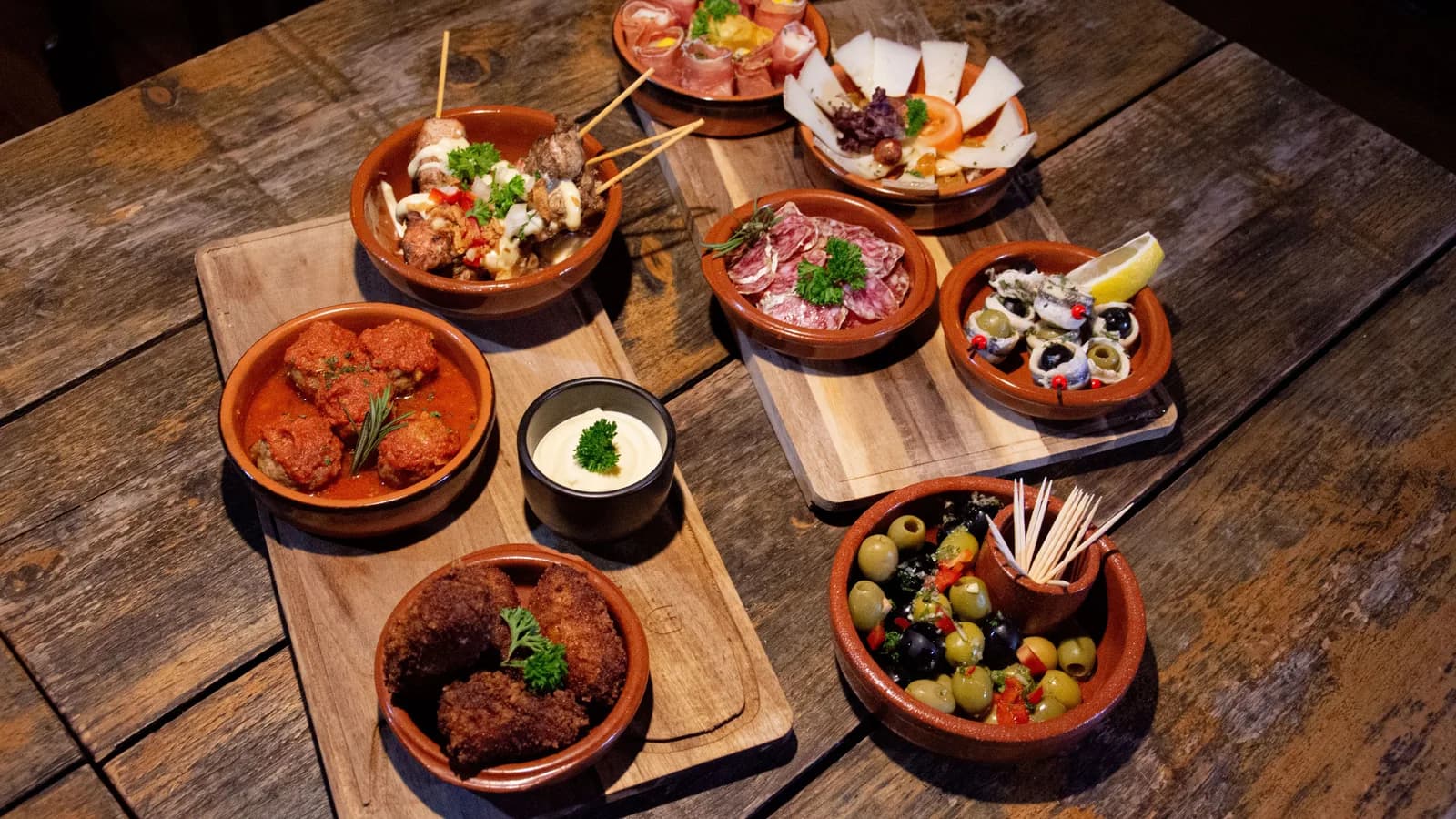
Tenerife's cuisine is far more than "papas y mojo". It's an Atlantic, country cooking that blends the roots of the Guanches (the island's first inhabitants), Spanish and Latin American influences and the fish of the ocean. Simple, honest flavours, often at fair prices if you know where to look. Here are the typical dishes to try at least once, what they really are and what goes with them — so you order with a clue, not at random.
Papas arrugadas with mojo: the icon
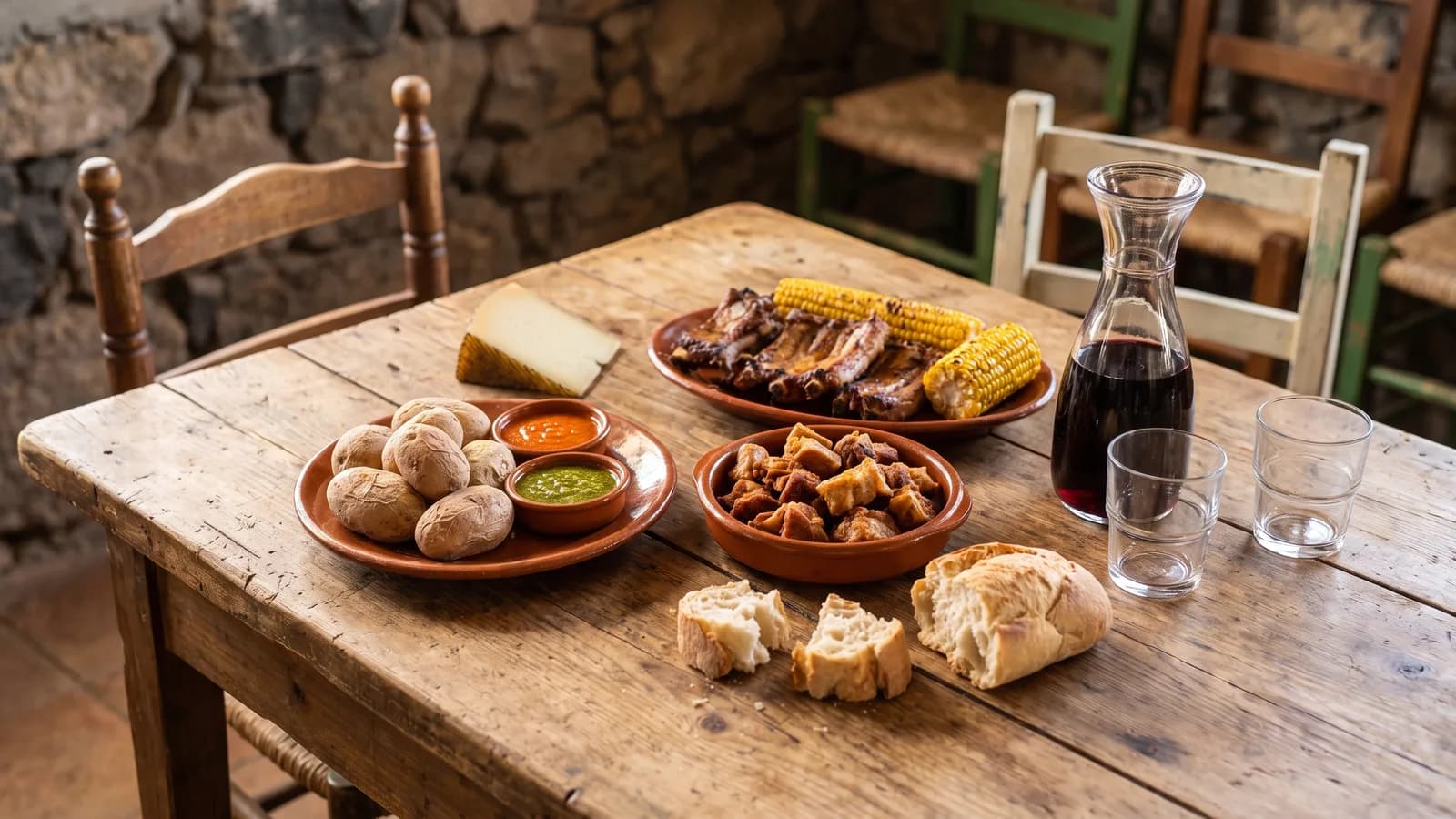
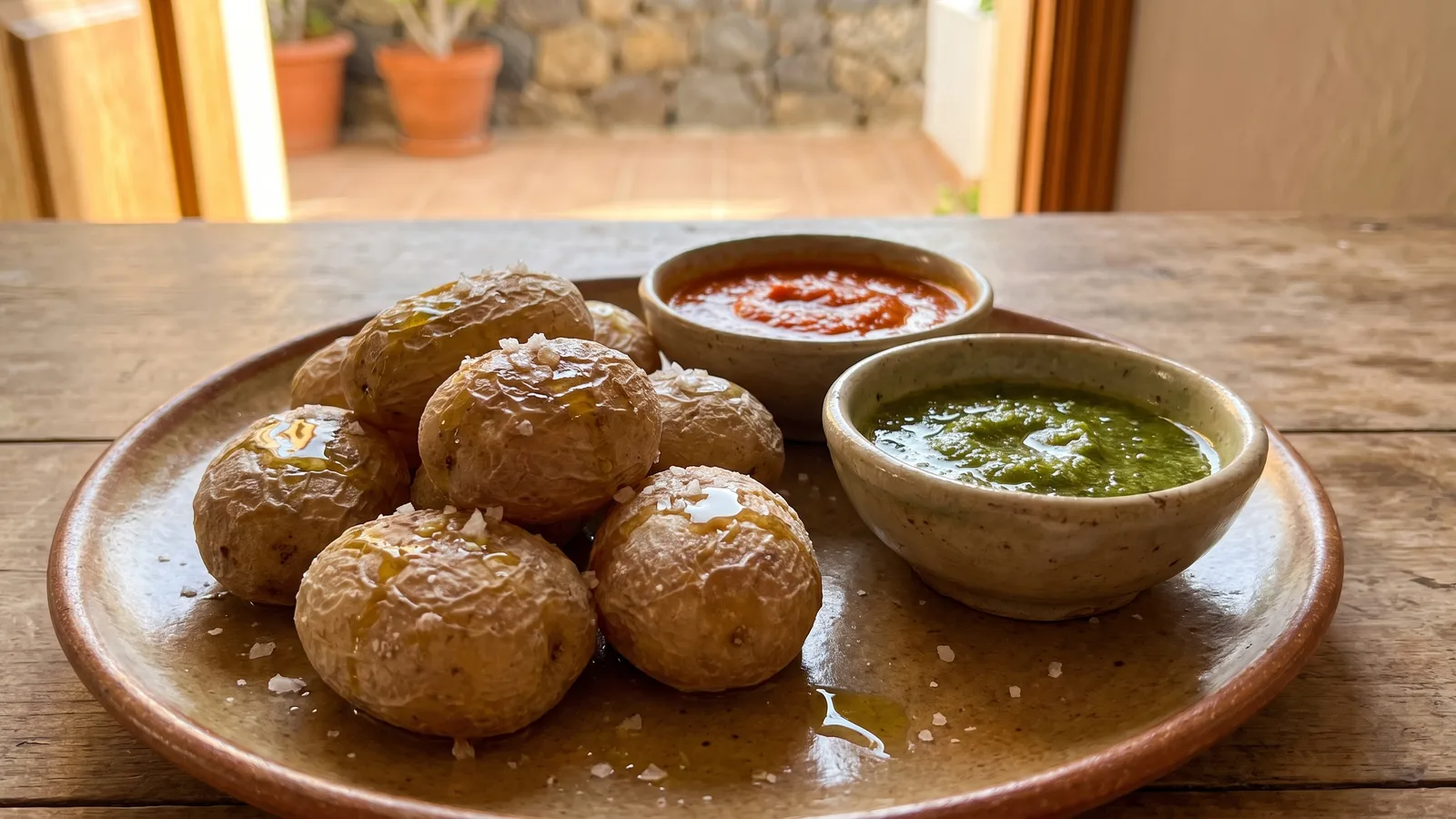
They're the signature dish: small potatoes boiled in very salty water until the skin "wrinkles", served with mojo, the Canarian sauce. There are two versions: mojo verde, based on coriander, garlic and cumin, fresher; and mojo rojo (or picón), with red peppers and a spicy kick. They're eaten as a side or a tapa, and they're the best way to start understanding this cooking.
Gofio: the staple that comes from the Guanches
Gofio is flour of toasted cereals (barley, wheat, corn) and goes back to the island's Indigenous culture: the Guanches already used it before the conquest. Today you find it in a thousand forms — in breakfast milk, in desserts, or as escaldón: a thick paste of gofio loosened in hot broth, with onion and mojo. It's the most "ancient" flavour you'll taste in Tenerife.
The fish: vieja, cherne and sancocho
As an Atlantic island, fish takes centre stage. The vieja (parrotfish) is among the most loved, usually grilled or fried; the cherne (wreckfish) is another regular. The traditional dish is sancocho canario: salted fish (often cherne) boiled with potatoes and sweet potato, served with gofio and mojo. Simple and hearty. To find where they still cook it properly, the guide on where to eat in Tenerife like a local takes you away from the tourist menus.
The meat: rabbit, goat and "carne fiesta"
Inland, meat takes the place of fish. Conejo en salmorejo is the classic: rabbit marinated in a Canarian sauce of garlic, wine, vinegar and spices (nothing to do with the cold Andalusian salmorejo). Also widespread is carne fiesta — cubes of pork marinated in garlic, oregano, paprika and white wine, then fried — plus more rustic dishes like goat meat and ribs with potatoes.
The cheeses: goat and queso asado
Cheese in Tenerife is almost always goat's, fresh or lightly matured. Worth trying is queso asado: cheese warmed on the grill and served with mojo or with miel de palma (a dark syrup from the palm, not a bee honey). There's also a smoked version. It's a starter you'll find everywhere, from the guachinches to the restaurants.
The desserts: bienmesabe, quesillo, frangollo
On the sweet side the tradition is generous. Bienmesabe is a cream of almonds, sugar, egg and lemon — very rich, often served over ice cream. Quesillo is a dense flan of condensed milk and lemon zest. Frangollo mixes milk, corn flour, lemon and cinnamon. And príncipe Alberto, based on chocolate and hazelnut cream, is the restaurant dessert par excellence.
To drink: the barraquito and the volcanic wines
Finish the meal with a barraquito: Tenerife's signature coffee, layered, with condensed milk, Licor 43, coffee, frothed milk, cinnamon and lemon zest. On wine, the island has a long history: Malvasía, sweet and aromatic, was famous centuries ago. Tenerife's wines grow on volcanic soil and have five protected designations of origin of their own — Abona, Tacoronte-Acentejo, Valle de Güímar, Valle de la Orotava and Ycoden-Daute-Isora — plus the archipelago-wide DOP Islas Canarias. It's worth trying a local one instead of the usual bottle.
North or south: where you eat more authentically
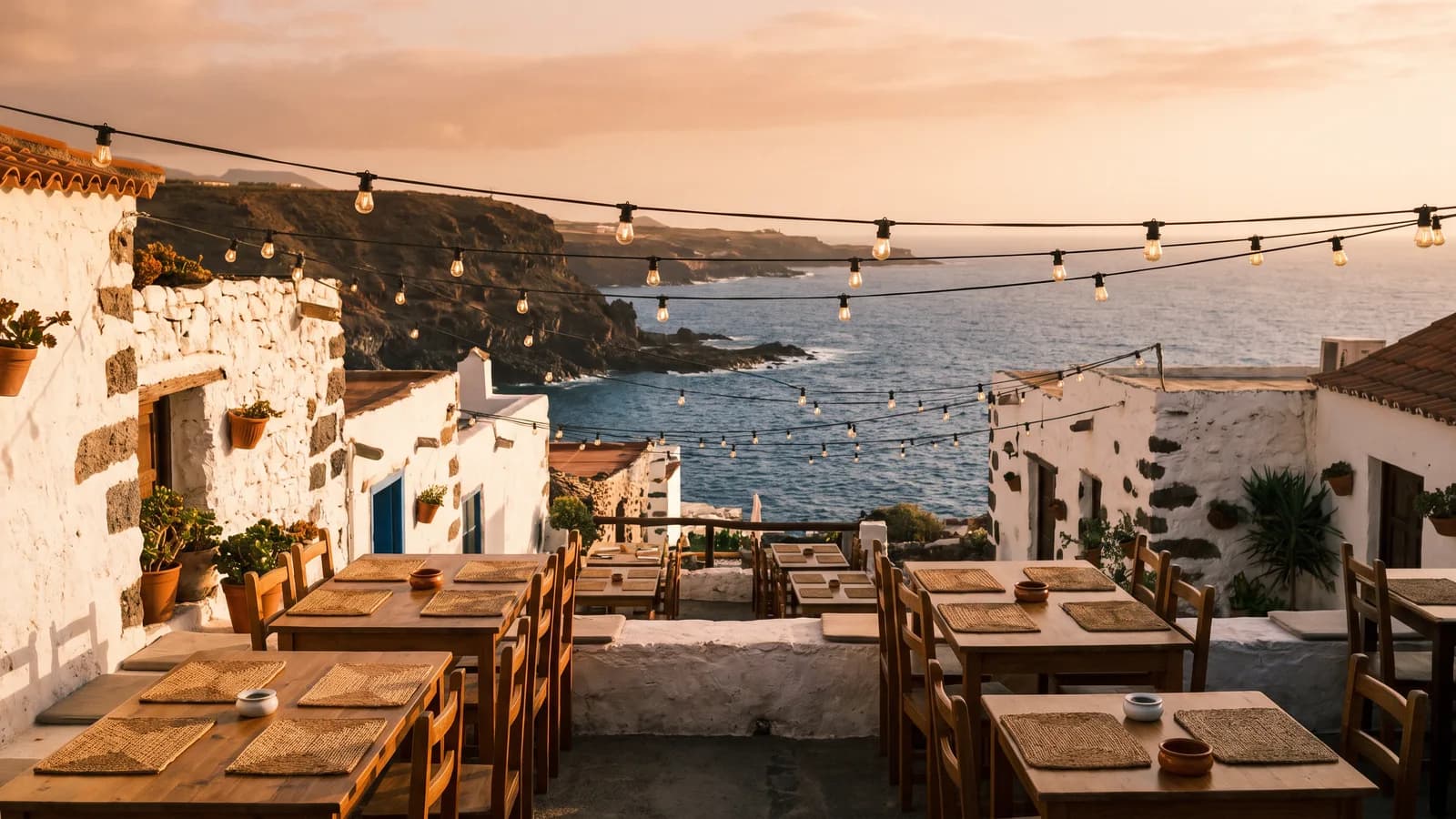
In general, the further you get from the southern tourist areas, the lower the prices and the more authentic the cooking. The north, with its guachinches (small family taverns) and markets like the one in Santa Cruz, is the home of real food. But even in the south, a few streets back from the seafront is enough to find an honest set menu. How to move between the tasty stops through the week is in the 7-day itinerary.
Eating well without overspending
Canarian cooking is already cheap if you choose well: a set menu costs little, and the typical dishes are often the simplest. The mistakes that push the bill up — eating only on the seafront, ordering fish without asking the price per kilo — are gathered in the guide on the mistakes that make you spend twice in Tenerife. And for the full picture of a holiday's costs there's the guide on the budget for a week.
Try them at the table, spending less
Many of the restaurants where you can try these dishes — fish, meat, guachinches, Canarian cooking — are part of the partner catalogue and give a discount (10 to 40 % depending on the venue) to anyone with a TPCard, on each one's terms. Over a week of lunches and dinners, it's a concrete way to try more while spending less: papas and mojo, a good sancocho, a dessert and a local wine without pushing the bill too high.
In short
If you only try five things in Tenerife, make them: papas arrugadas with mojo, grilled fish with gofio, a queso asado with miel de palma, a dessert like bienmesabe and a barraquito to finish. From there, let the places where the locals eat guide you — that's where the island's cooking is at its best.