Playa de las Teresitas is the most famous beach near Santa Cruz and also the most unusual on the island: while much of Tenerife has black volcanic sand, here the sand is golden, the water is generally calm and palm trees frame the scene. And there's a detail that surprises almost everyone: that sand isn't from Tenerife, it comes from the Sahara. Here's what makes it special, what the water is really like, the facilities, how to get there and the tips to enjoy it best.
The golden sand (that comes from the Sahara)
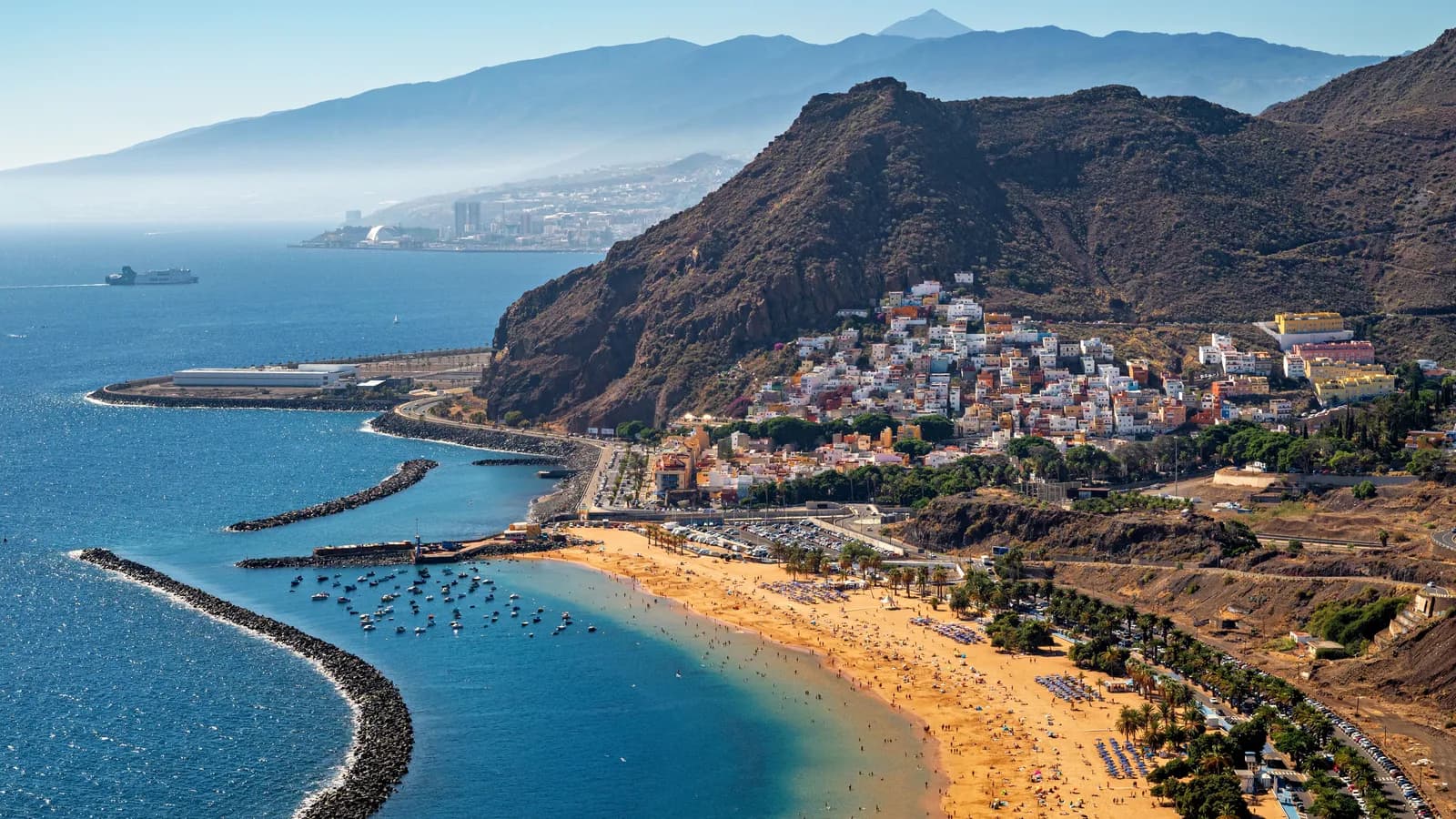
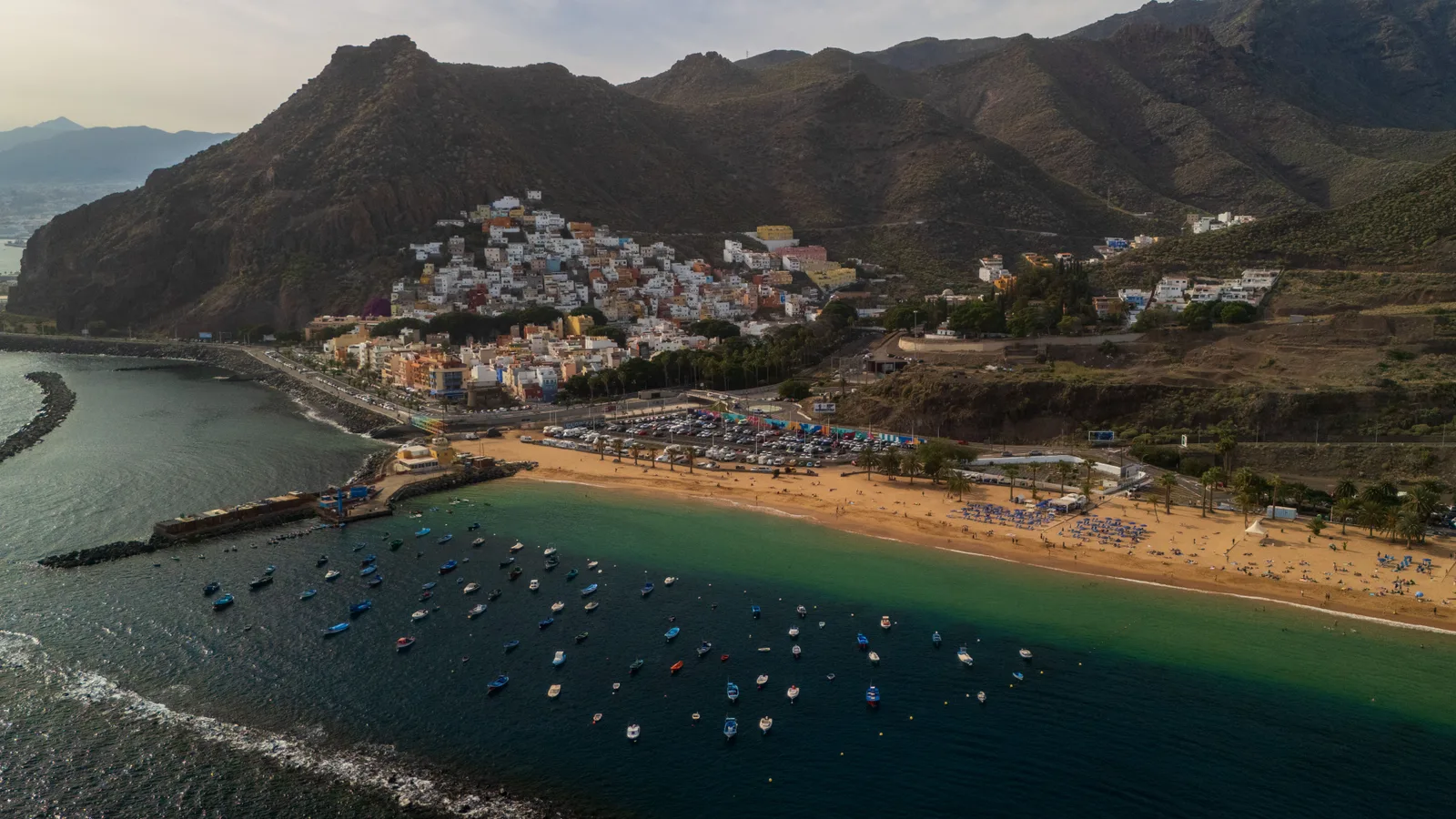
Playa de las Teresitas was heavily transformed in the 1970s: the original rocky shore was reshaped and filled with around 270,000 tonnes of light sand from Western Sahara (in later years there were also sand-replenishment works). That's why its golden colour stands out so much against the black, volcanic beaches typical of the island. The result is a long golden arc about 1.3 km long, with the Anaga mountains behind.
Calm water: convenient for families
The bay is protected by a breakwater that reduces the Atlantic swell: that's why the water here is generally calm and shallow, convenient for swimming with children. The beach is supervised and accessible — with lifeguards, the Red Cross, toilets, showers, walkways and areas designed for reduced mobility too — and its water is rated excellent in the official health checks. It's one of the most sheltered beaches on the island, among the best for anyone after a generally calm swim.
Facilities and atmosphere
It's not a wild beach: it's well equipped and lively, much loved by locals too (at weekends, especially in summer, it can get very busy). What you'll find:
- Palm trees, golden sand and a long arc to stroll along.
- Kiosks and bars, showers, toilets, sunbeds and umbrellas for hire.
- Lifeguard service, the Red Cross and accessible areas.
- Behind it, the fishing village of San Andrés, with good fish restaurants for after the beach.
How to get there
It's near Santa Cruz (about 7 km north). Without a car it's very handy: the TITSA 910 bus links central Santa Cruz (Intercambiador) with the beach in 20 minutes, with frequent, cheap departures. By car there's a large free car park (over a thousand spaces); on the busiest days it can fill up, but the town hall lets you check online, in real time, how many spaces are free before you set off, so you avoid a wasted trip. As the capital's beach, it pairs well with a day in Santa Cruz or exploring Anaga, which starts right here.
Practical tips
- Go early, or on a weekday, to park and get space: on summer weekends it's very busy (car-park occupancy can be checked online in real time).
- Limited shade: bring an umbrella or hire one on site.
- The seabed slopes gently: great for those who don't like waves and for little ones.
- Combine the swim with a fish lunch in San Andrés or a wander around the city.
- The lifeguard service is seasonal (roughly 9am-8pm in summer and 10am-5pm in winter): check the hours and follow the flags and lifeguards' instructions, because beyond the breakwater it's open sea.
Where it fits
Las Teresitas is effectively Santa Cruz's beach and the gateway to the Anaga massif: a perfect combination of sea, city and nature in a single day, in the north-east of the island. If you're still choosing where to stay, remember this is a north-east experience: we cover it in the guide on north or south Tenerife. And to discover the other most beautiful coasts there's the guide on the best beaches in Tenerife.
The beach itself is free and public: it's not where a card is needed. But for the rest of the day — a fish lunch in San Andrés, a wander around the city or other experiences on the island — the Tenerife Premium Card gives access to discounts at partners across the island, with conditions that vary from partner to partner. It's worth a look before you book activities.
In short
Playa de las Teresitas is Tenerife's golden beach: light sand brought from the Sahara, generally calm water protected by the breakwater, palm trees, full facilities and water rated excellent, a step away from Santa Cruz and the start of Anaga. It's among the most family-friendly and very easy to reach by bus. Go early, bring some shade and enjoy one of the island's most distinctive beaches.