Black-sand beaches are Tenerife's identity: dark sand of volcanic origin, cliffs and Atlantic waves, a landscape the golden south doesn't have. They're found mainly in the north and the south-west of the island, ranging from the wilder, more natural coves to equipped, lifeguarded beaches. This guide sorts them by area — north and south-west — with practical tips and, above all, safety notes: the Atlantic here is never to be underestimated.
Why the sand is black
The colour comes from the island's volcanic origin: basaltic lava, eroded by waves and wind over millennia, has been ground into dark grains. It's the same rock that forms the cliffs and the natural pools. A practical note: in the sun black sand heats up far more than pale sand, so at midday it really burns — better to have flip-flops.
The black-sand beaches of the north
The north is the realm of black sand, between Puerto de la Cruz and the Anaga peninsula. The best known:
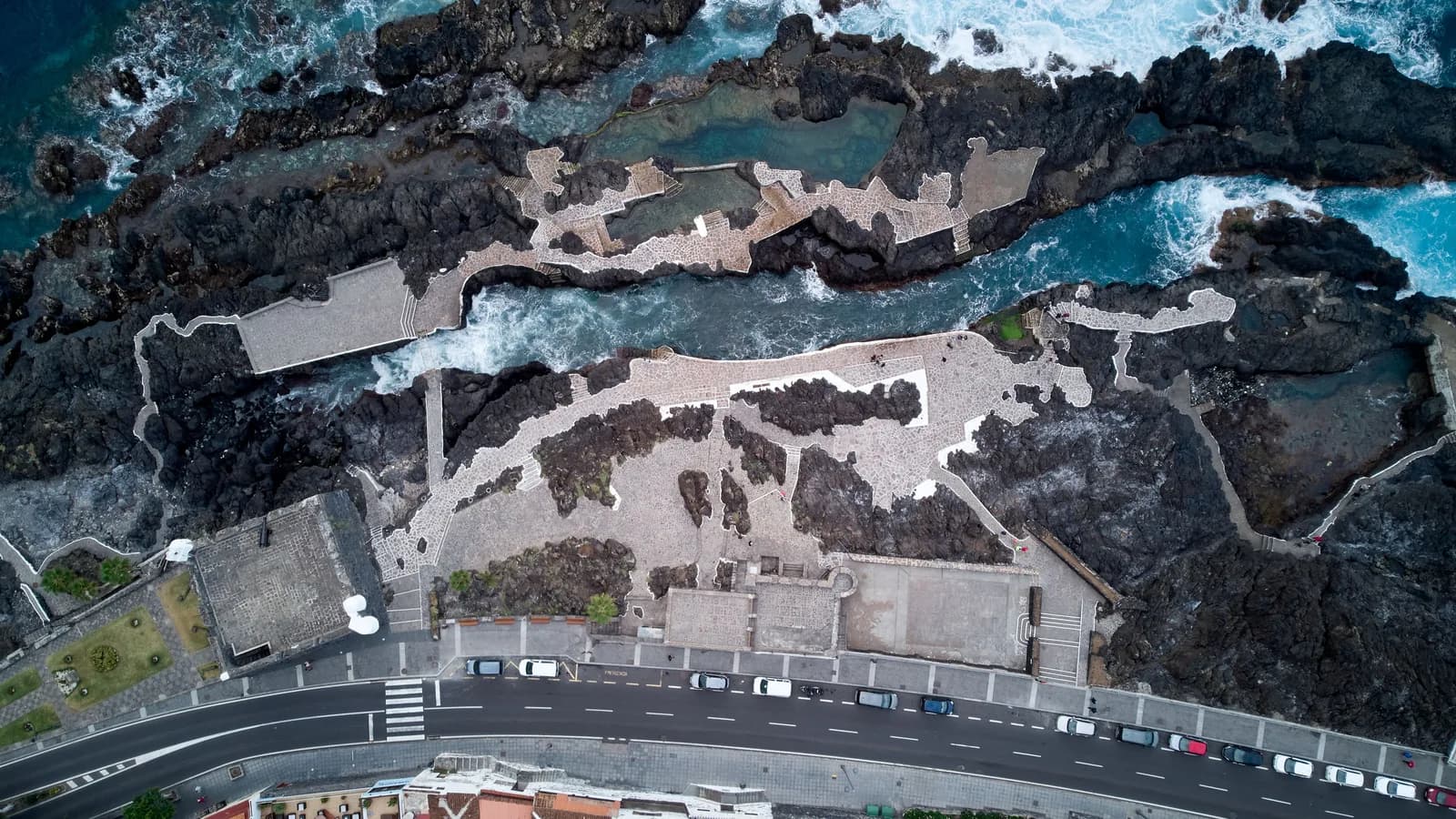
- Playa Jardín (Puerto de la Cruz): three connected beaches, designed by the artist César Manrique, with several breakwaters that calm the water and full services — the most convenient in the north; outside the shelter of the breakwaters, though, the swell can pick up.
- Playa El Bollullo (near Puerto de la Cruz): wild and beautiful, with black sand and often strong waves; access is more demanding than at the urban beaches, but on the beach there are bars, restaurants and some services.
- Playa del Socorro (Los Realejos): loved by surfers, scenic and popular, with a lifeguard service.
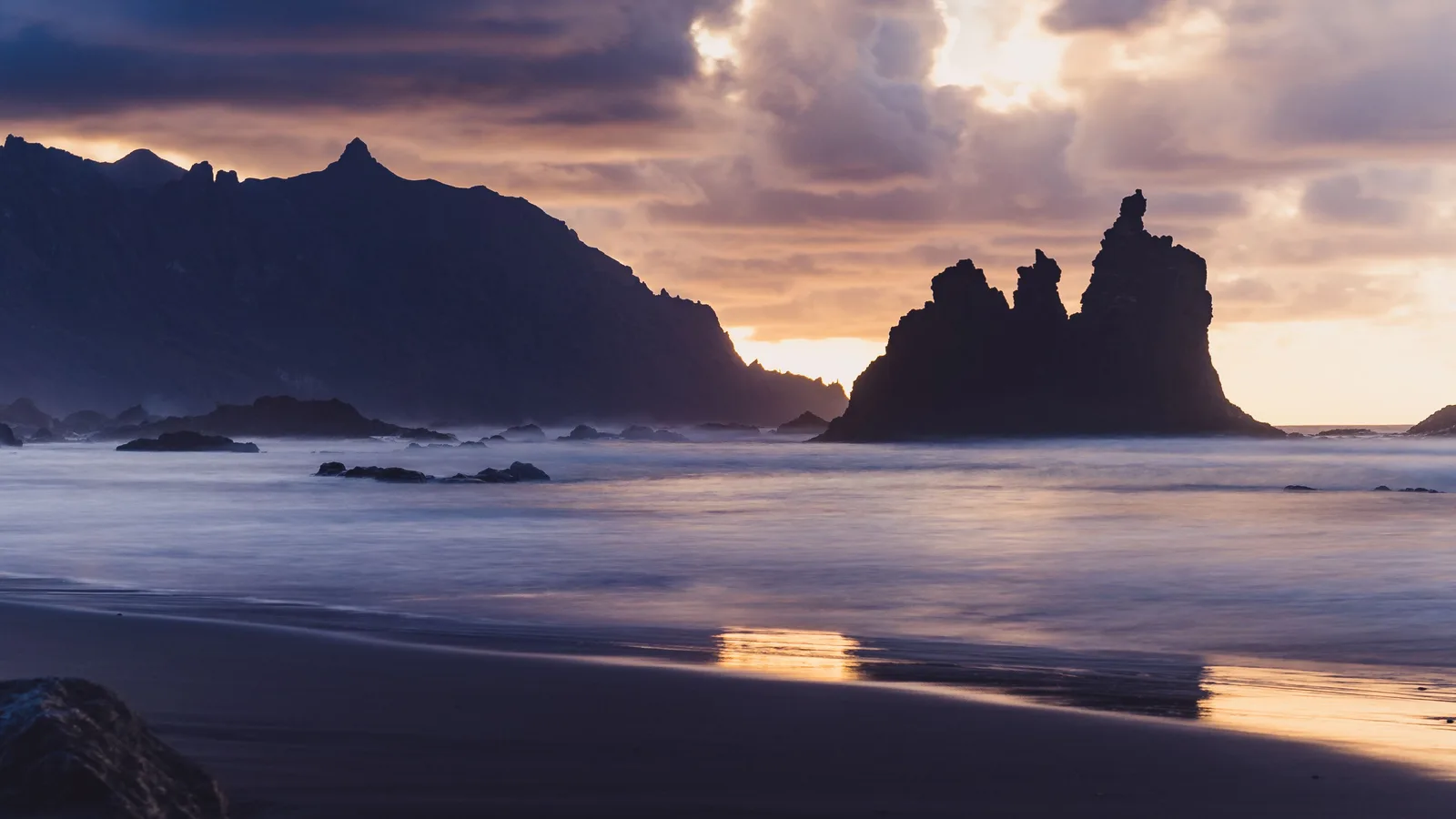
- Benijo and Almáciga (Anaga): among the most spectacular on the island, with the Roques de Anaga rising from the water; beaches of a natural, little-developed character, where the sea can nonetheless be very demanding.
- El Roque de las Bodegas (Anaga): the busiest of the Taganana area, with black sand, restaurants and a more family-friendly feel than Benijo and Almáciga; the sea can still bring sudden waves and currents.
The Anaga beaches pair perfectly with a trip around the area: see the guide on Taganana and Anaga.
The black-sand beaches of the south-west
Heading down towards Los Gigantes and Puerto de Santiago, the volcanic coast offers more accessible, lifeguarded black beaches:
- Playa de la Arena (Puerto de Santiago): black sand, easy access, services and lifeguards — family-friendly and ideal for a first black-sand beach day.
- Playa de los Guíos (Los Gigantes): a small black beach at the foot of the imposing cliffs, very striking and with several services, bars and restaurants; the waters are generally calm, but it's always worth checking sea conditions before going in.
Safety: the Atlantic isn't the Mediterranean
This is the most important part. Many black beaches — especially the north-facing ones — can have strong currents and demanding waves. Simple rules, but always to be respected:
- Watch the flags: green means bathing allowed, yellow means take great care, and red means bathing forbidden. Conditions can change during the day, so always follow the instructions of the supervising staff.
- Additional flags or signs may indicate the presence of jellyfish or other sea hazards.
- On the more wild-natured beaches (like Benijo or El Bollullo) supervision may be absent: judge the swim carefully and don't underestimate the sea.
- Don't swim alone in rough seas and keep an eye on children.
If you want a more sheltered swim, some natural pools can offer calmer conditions, but there too it's essential to check the state of the sea; for an overview of all the beaches, golden ones included, there's the guide on the best beaches in Tenerife.
How to get there and when to go
Many black beaches are reachable by public transport, mainly the TITSA buses (the guaguas); others — especially the Anaga ones — are easier by car. The north is on average cloudier and cooler than the south, so check the local weather: to find your way between areas and climate there are the guides on north or south Tenerife and on when to go.
And the Tenerife Premium Card?
Beaches are free: there's nothing to pay here. The Tenerife Premium Card comes into play around the beach day — restaurants, activities and partner excursions — where it gives access to discounts at partners, with percentages and conditions that vary from partner to partner. Enjoy the beach for free and, if you decide to eat out or book an activity nearby, check whether you can save with the card.
In short
Black-sand beaches are the most authentic Tenerife: Playa Jardín and El Bollullo in the north, the wild Benijo and Almáciga in Anaga, the easy Playa de la Arena and Los Guíos in the south-west. Choose by how "wild" or how equipped you want it, always respect the flags and the lifeguards, bring flip-flops for the scorching sand — and enjoy a sea like no other.