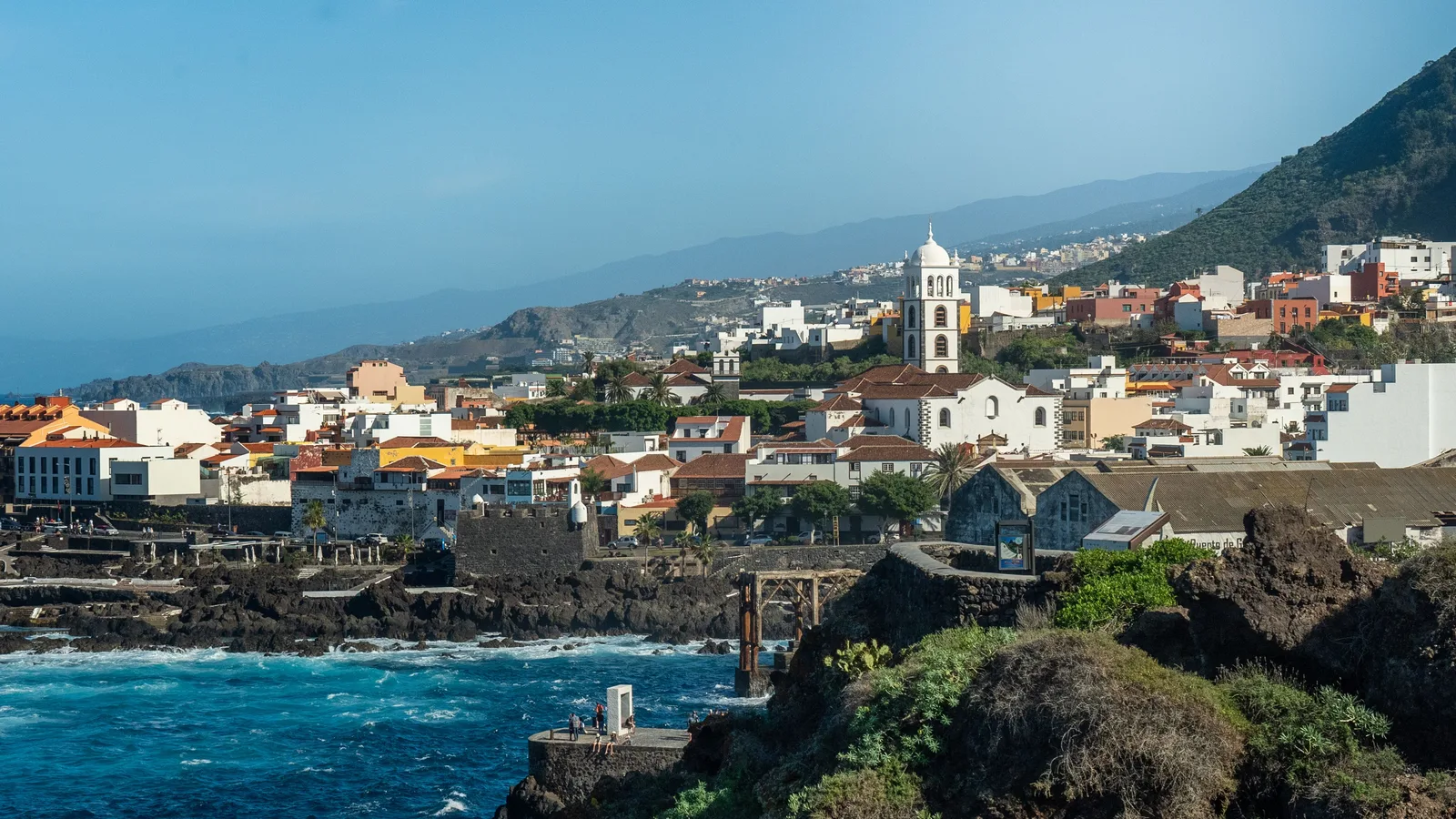
Garachico is one of the most beautiful and surprising towns in northern Tenerife: a place literally reborn from lava. It was the island's most important port until, in 1706, an eruption buried it; today it's a compact, charming old town that preserves a valuable architectural heritage from the 16th and 17th centuries (declared a Bien de Interés Cultural in 1994). And it was that very lava flow, cooling in the sea, that created the natural pools of El Caletón, its signature attraction. Here's the story, what to see and how to plan it.
The story: the town reborn from lava
On 5 May 1706 the Trevejo volcano erupted, with activity lasting about two months: the lava flowed down towards Garachico and buried its harbour, at the time the busiest in Tenerife. The town was almost completely devastated, though some buildings managed to survive; fortunately, the eruption caused no fatalities. From that catastrophe Garachico was reborn, rebuilding itself around what had survived — which is why today it's told as "the town that came back from the lava".
What to see in Garachico
The centre is small and walkable. The must-sees:
- El Caletón: the natural pools born from the lava that reached the sea — volcanic rock basins at the ocean's edge, the town's most famous and scenic bathing spot, free to access.
- Castillo de San Miguel: the 16th-century fortress facing the sea, built to defend the coast and one of the few buildings that survived the eruption, now home to the Centro de Información Patrimonial.
- Iglesia de Santa Ana: the main church, whose construction began in the 16th century, damaged by the 1706 eruption and later restored, with distinctive wooden Mudéjar-style features.
- Plaza de la Libertad: the town's living-room square, with the great laurel, the Simón Bolívar monument and the historic buildings around it.
- Convento de San Francisco and Puerta de Tierra: the historic convent (1526) and the old gate of the former harbour, a testament to the Garachico of before the eruption.
For an overview, you can head up towards San Juan del Reparo, where the old path offers splendid views of the town and the 1706 lava flows.
El Caletón: bathing in the lava pools
El Caletón is the heart of the Garachico experience: volcanic rock pools at the ocean's edge, free. They're natural pools and don't guarantee safe conditions at all times: with rough seas or a high tide the waves can surge into the basins, so always check the state of the sea and the signs before going in. It's part of the world of Tenerife's natural pools, which we cover in a separate guide.
How to get there and when to go
Garachico is on the north-west coast, reachable by car or by TITSA buses (guaguas): line 363 links Puerto de la Cruz, Icod de los Vinos, Garachico and Buenavista del Norte in about an hour and a half. The north is on average cooler and cloudier than the south, so check the local weather: to find your way between areas and climate there are the guides on north or south Tenerife and on when to visit Tenerife. It's perfect for half a day, especially paired with other stops in the north.
Where to eat
Garachico is great for a stop at the table: fresh fish and Canarian cooking in the old town and near the seafront. To find your way among typical dishes and traditional places, start with the guides on what to eat in Tenerife and on the guachinches.
And the Tenerife Premium Card?
Strolling through Garachico and bathing at El Caletón costs nothing. The Tenerife Premium Card can be used at participating partners: before you pay, check whether the activity or restaurant you choose is included and what conditions apply.
In short
Garachico is the perfect stop to grasp Tenerife's volcanic and historic soul: a beautiful town, reborn after the 1706 eruption, with El Caletón and its lava pools, the Castillo de San Miguel and a postcard old town. Cooler and more historic than the big southern tourist areas, it's walkable in half a day — and it comes with one of the island's most fascinating stories.