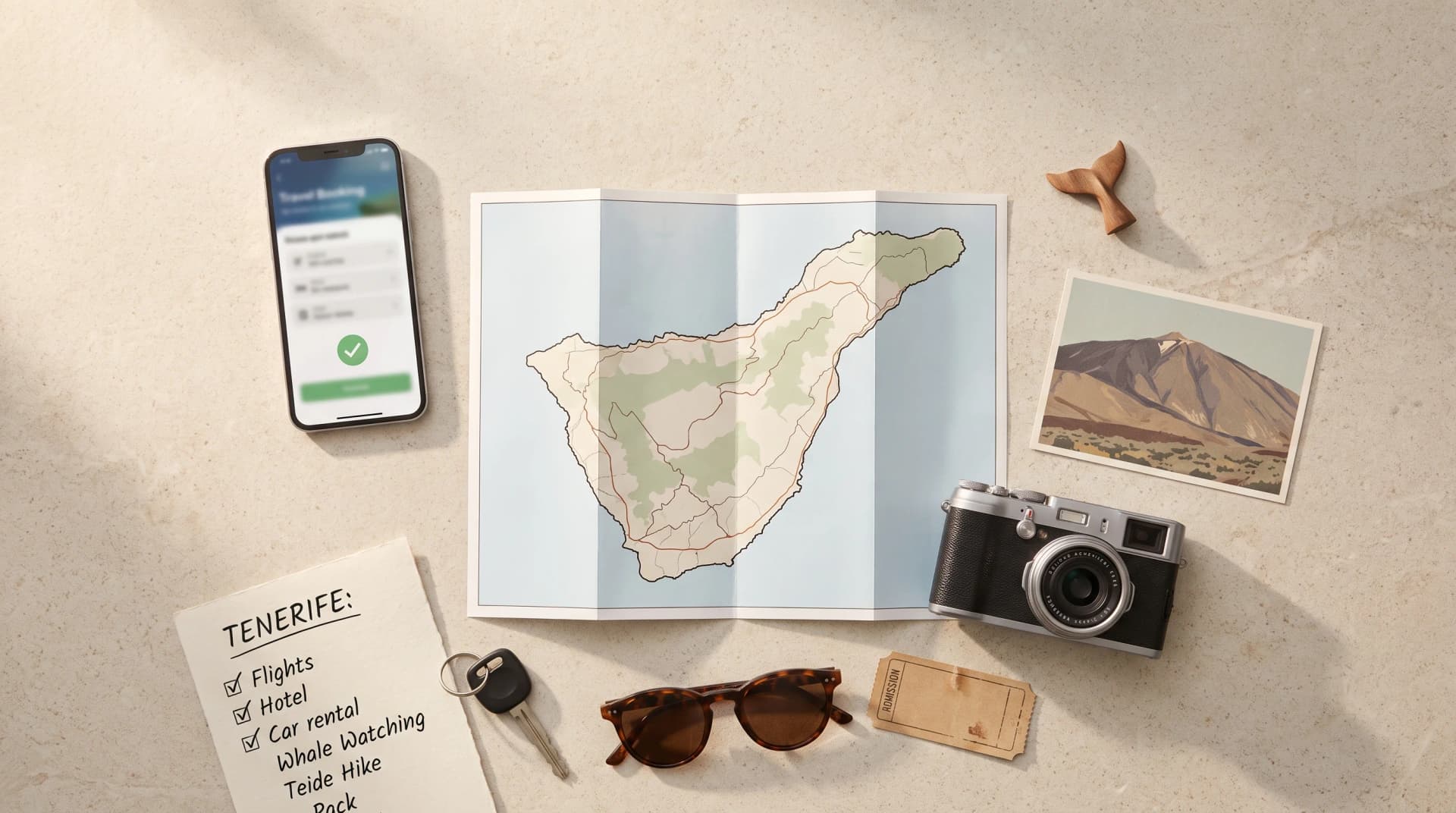
Is it your first time in Tenerife? This is the umbrella guide to organising everything stress-free: when to go, where to stay, how to get around, what to see, where to eat and how much it costs. Tenerife is a big and surprisingly varied island — volcano, forests, black and golden beaches, colonial towns — so the key is to understand its geography and choose your base well. Here's the big picture, with links to the detailed guides for each topic.
First things first: understand north and south
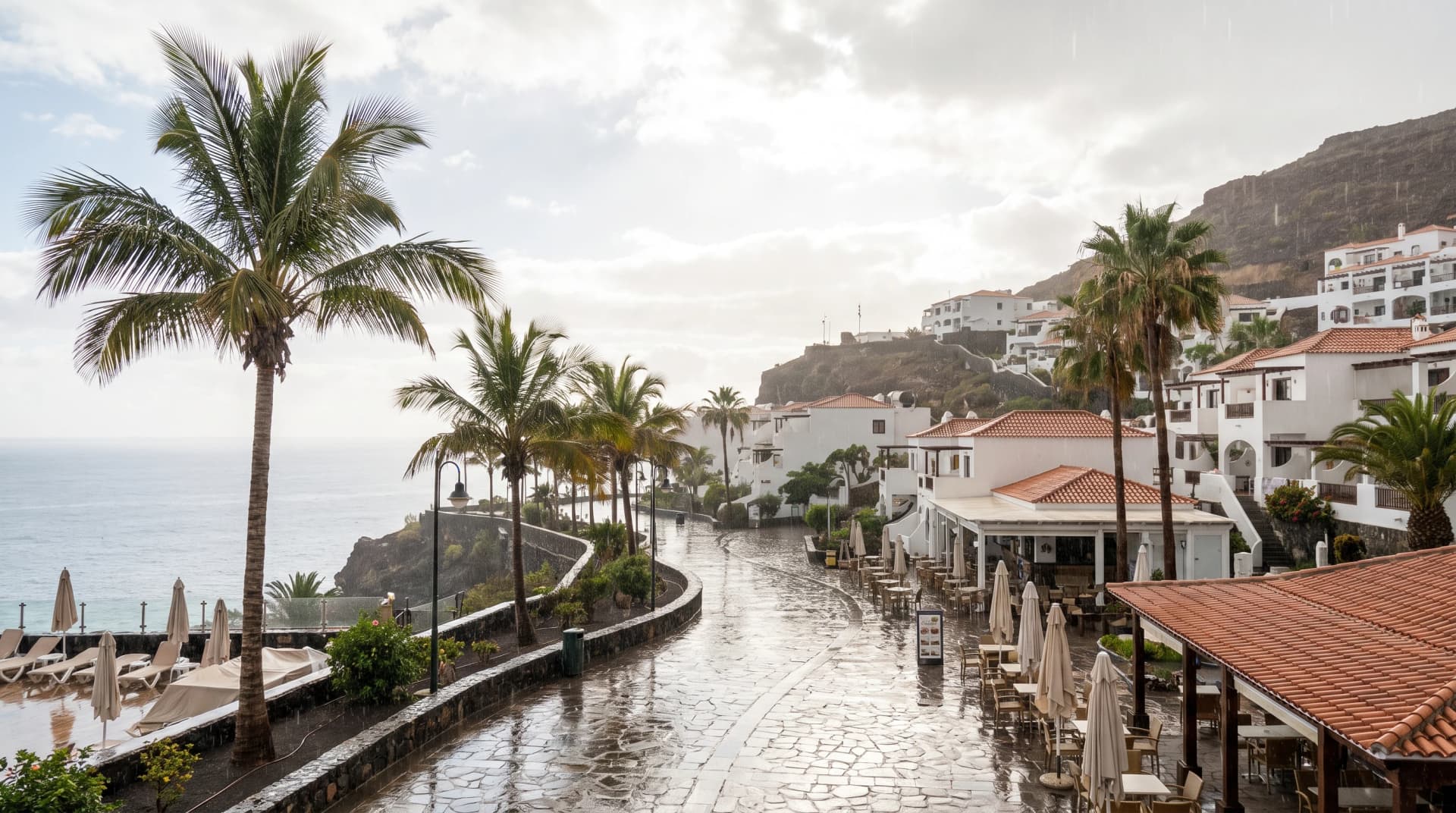
Tenerife roughly splits into two souls: the south, sunnier and drier, with the big tourist areas and the beaches; and the north, greener and cooler. In between, the metropolitan area of Santa Cruz and La Laguna adds a strong cultural and historical dimension, while at the centre rises the Teide. Understanding this difference is the first step to not getting the holiday wrong: we explain it in the guide on north or south Tenerife.
The golden rule: don't try to see the whole island in a day
Tenerife looks compact on the map, but the elevation changes and mountain roads can make journeys longer than expected, and the north, the south and the high-altitude areas can have very different weather on the same day (the island has many microclimates). The most useful tip for a first trip is to group your visits by area: a day for the north, one for Anaga and Santa Cruz/La Laguna, one for the Teide and one for the south-west, leaving room for beaches and rest.
When to go
The good news is that Tenerife has a mild climate all year round — which is why they call it "the island of eternal spring". The south is sunnier, the north cloudier and greener; the sea stays accessible even in winter, though the water temperature can feel cool. To choose the best period by climate, sea and prices there's the guide on when to visit Tenerife.
Where to stay
The right base matters more than anything else, especially if you don't want to drive every day. The southern areas (Costa Adeje, Los Cristianos, Las Américas) are handy for beaches and services; the north and the metropolitan area (Puerto de la Cruz, La Laguna) offer a greener, more historic feel, with good connections. To find your way there's the guide on where to stay without a car.
How to get around
Tenerife can be visited without a car too, especially if you pick a well-connected base and focus on the main cities and coastal spots. The TITSA buses (guaguas) connect much of the island, while the tram is mainly useful in the Santa Cruz–La Laguna area. For the Teide, Anaga, Masca and many inland villages, though, a car makes getting around much easier: a cheap solution is to rent one only for the days you need it. All the details in the guide on car hire in Tenerife.
What to see the first time
On your first trip go for the big classics, which tell all the island's souls:
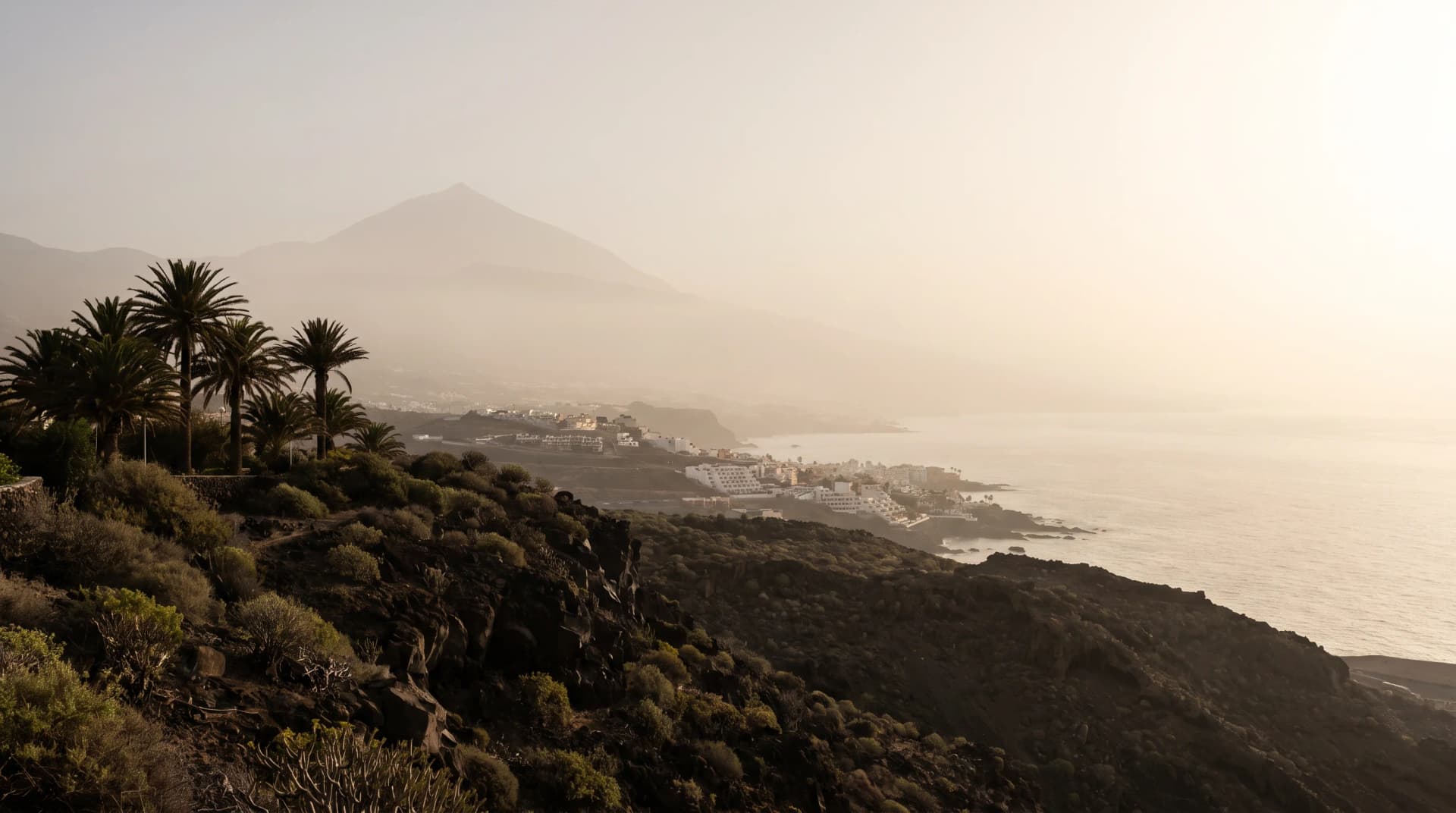
- The Teide: Spain's highest point (3,715 m) and the island's symbol; to reach the summit you need to plan ahead, as the final access requires a permit.
- The beaches: black volcanic or golden, for every taste.
- The natural pools: volcanic rock basins shaped by lava and the sea, often free to access.
- The metropolitan area: Santa Cruz and San Cristóbal de La Laguna, cities rich in culture and history (La Laguna is a UNESCO site).
- The nature of Anaga: laurel forests and wild beaches.
- The ocean: whale watching is one of the island's most distinctive experiences, especially along the south-west coast.
For a taste of the must-do experiences start with the guide on what to do in Tenerife; for the volcano there's the one on climbing the Teide, and for the sea the ones on the best beaches and the natural pools.
Where and what to eat
Eating well in Tenerife can be affordable, especially if you choose traditional places and guachinches over the more touristy restaurants on the seafront. The typical dishes — papas arrugadas with mojo, fresh fish, cheeses — are the best way to taste the island. Bear in mind that traditional guachinches, tied to selling their own home-made wine, often open seasonally and not all are open year-round. Start with the guides on the guachinches and on what to eat in Tenerife.
How much it costs and how not to overspend
Tenerife can be cheap or expensive depending on your choices. For a realistic idea of the budget by category there's the guide on how much a week in Tenerife costs; and to fill the holiday without spending, the list of free things to do and the mistakes that make you spend double.
And the Tenerife Premium Card?
On a first trip it's natural to want to do lots of attractions and activities: this is exactly where the Tenerife Premium Card can help, giving access to discounts at partners across the island — activities, attractions and restaurants — with percentages and conditions that vary from partner to partner. Enjoy for free everything that's free (nature, beaches, villages) and, when you pay for something, check whether you can save with the card.
In short
For your first time in Tenerife: understand the difference between north and south, choose the right base, get around with public transport and a car only when needed, spend the first days on the big classics (Teide, beaches, Santa Cruz and La Laguna, Anaga, ocean), eat local and keep an eye on the budget. With a little planning, your first Tenerife will also be the first of many.